What is matcha — everything worth knowing before your first bowl
Matcha is powdered green tea leaf — one ingredient, nothing added. You do not steep and strain it: the powder is suspended in water and drunk together with the leaf. Everything else follows from that single difference.
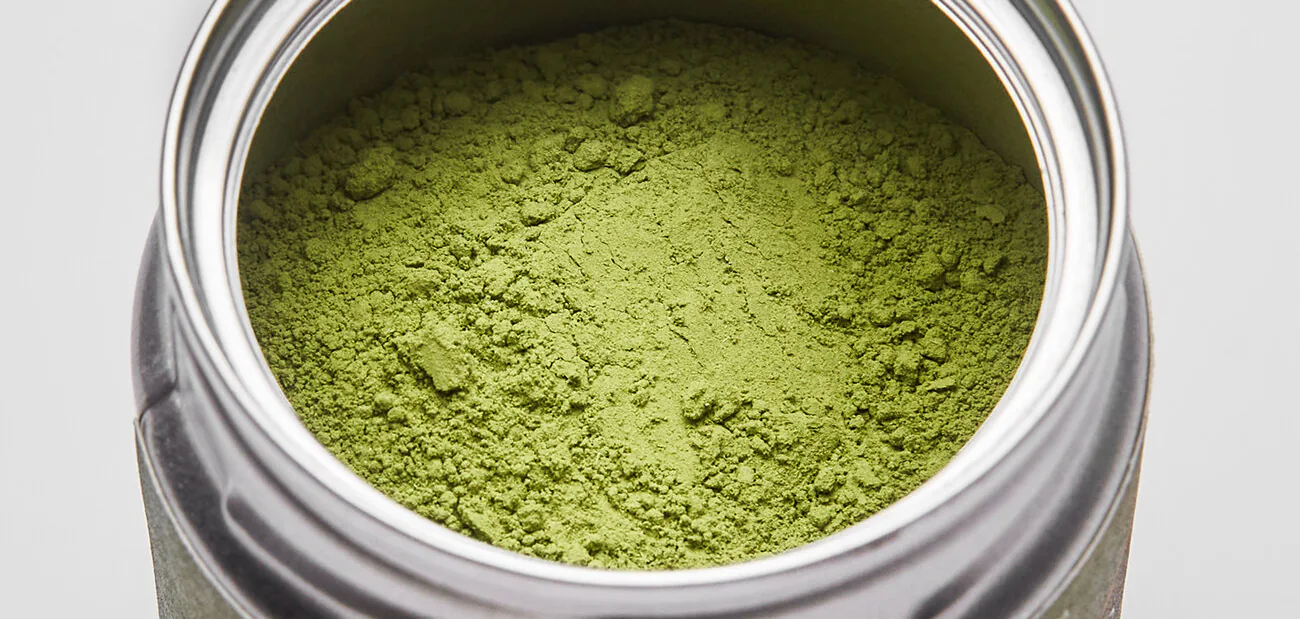
Matcha is green tea in the form of a very fine powder, milled from the leaves of the Camellia sinensis bush, which spends several weeks growing in shade before harvest. The ingredient list is one item long: tea leaf. Nothing else.
The key difference from every other tea is simple: you do not strain it. When you steep leaves, only part of what they held passes into the water and the rest is thrown away. Matcha you drink whole.
How it is made — five stages
- Shading. Three to four weeks before harvest the field is shielded from the sun. The plant responds by producing more chlorophyll and amino acids — hence the intense green and the umami sweetness.
- Picking. The best raw material is the youngest leaves at the tip of the shoot, taken in the season's first harvest. For higher grades this is done by hand.
- Halting oxidation. The leaves are steamed right after picking. This step is what keeps the tea green instead of browning as black tea does.
- Removing veins and stems. What remains is the leaf flesh alone — an intermediate product called tencha. Veins are fibrous and bitter, so they never reach the powder.
- Stone milling. Very slowly, on the order of tens of grams an hour. Slow milling does not heat the material, and heat destroys aroma.
The result is a powder with particles of a few micrometres — fine enough to form a suspension in water rather than settling at the bottom.
Why this is not simply ground tea
The most common misunderstanding. Ground sencha is not matcha and never will be, for three reasons: it grew in full sun (fewer amino acids, more tannins), it still contains veins and stems, and a coffee grinder produces particles 10–20 times coarser while heating the material. The result is a cloudy, gritty, bitter drink.
We compare the two worlds at length here: matcha vs green tea →
What it tastes like
Unlike anything else on the tea shelf. Well-made ceremonial matcha is thick, creamy and distinctly umami — closer to a vegetable broth or buttered spinach than to a fruit tea. A short bitterness remains at the end, roughly as in dark chocolate.
What should not be there: harsh bitterness, a puckering mouth, a hay-like aftertaste. If you taste those, the cause is usually water that was too hot or a poor powder rather than matcha itself — we set it out in why matcha tastes bitter.
An honest warning: the first bowl rarely delights. A palate used to sweet drinks reads umami as odd. The third usually tastes entirely different.
Two grades you need to tell apart
| Ceremonial | Culinary | |
|---|---|---|
| Harvest | first, youngest leaves | later, older leaves |
| Colour | vivid, bright green | darker, duller |
| Taste | sweet, umami | distinctly bitter |
| Used for | drinking plain, lattes | baking, ice cream, smoothies |
This is not a split into better and worse but into two different uses. Culinary grade is meant to be strong and bitter, because in a cake it has to cut through sugar and butter. Drunk on its own it will simply be unpleasant — and that is the most common reason people say they dislike matcha. Details: ceremonial or culinary →
How much caffeine it holds
A serving made from 2 g of powder is 60–70 mg of caffeine — about the same as an espresso and markedly more than a cup of ordinary green tea (25–35 mg). Matcha is not a "light" drink.
It does behave differently from coffee at a similar dose, because it contains L-theanine — an amino acid coffee has none of. It slows caffeine absorption, so the energy spreads evenly over 4–6 hours, with no sharp peak and no crash. The numbers and comparisons: how much caffeine matcha has →
Three ways it is drunk
- Usucha ("thin") — the everyday version: 2 g of powder to 60–70 ml of water at 70–80°C, whisked for 15–20 seconds into a fine foam.
- Koicha ("thick") — the ceremonial version: 4 g to 30 ml of water, worked slowly to the consistency of runny honey. It exposes the quality of a powder mercilessly.
- Latte — a stronger concentrate on 40 ml of water, topped up with milk heated to 60–65°C. Powder never goes straight into milk, or clumps remain.
The full guide with ratios and temperatures: how to make matcha step by step →
What you need to start
Less than the photographs online suggest. Three things are genuinely essential:
- A sieve — the most important and most often skipped. The powder compacts into clumps that no tool will break.
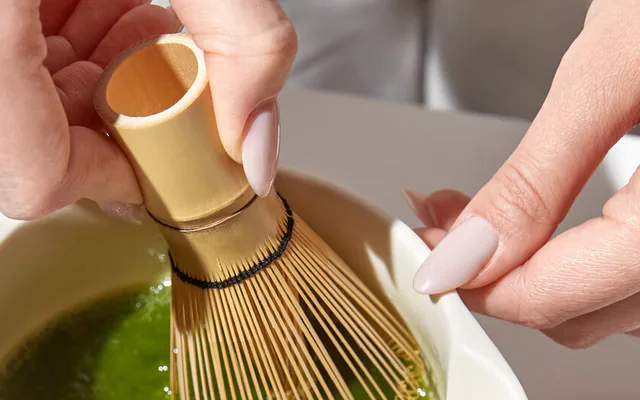
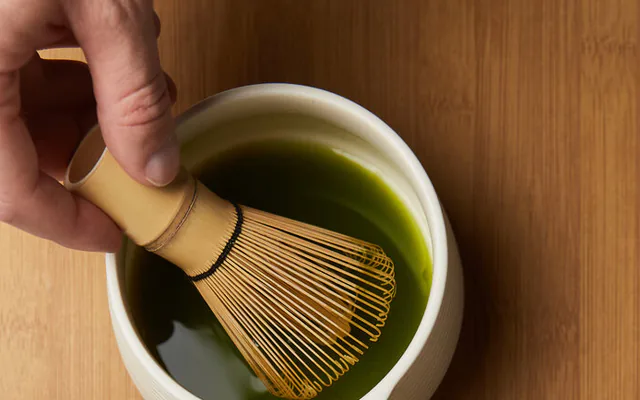
- Something to whisk with — a bamboo whisk (chasen) is best, but a milk frother or a screw-top jar work too.
- A wide bowl (chawan) — it gives the whisk room to move. A coffee mug is too narrow.
A thermometer kettle is convenient but not necessary: boil the water and leave it for 3–4 minutes. If you have no whisk, see the methods without a chasen →
Where it comes from and where it grows today
Preparing tea by whisking a powdered leaf is several centuries old and grew out of the tea ceremony tradition — which is also where the vocabulary still in use comes from: usucha, koicha, chasen, chawan.
Today matcha is produced on plantations in several Asian countries, and quality is decided less by the address than by the method: whether the bush was shaded, which harvest it is, whether the veins were removed and whether the powder was milled on stone or in an industrial mill. A producer who does not state this usually has a reason.
What specifically to check before buying is described here: how to recognise good matcha →
How to store it
Matcha degrades faster than any other tea, because a ground leaf has hundreds of times more surface in contact with air. Airtight, dark, cool and away from smells — and use an opened pack within 4–6 weeks. That is the full-flavour window, not a safety date. The rules and the fridge trap: how to store matcha →
Where to start
With the smallest tin of ceremonial grade and the milder profile. A 30 g tin is around 15 servings — a month if you drink it every other day, which is enough to get through the "the first bowl tastes strange" stage and find out whether this drink is for you.
SABI is milder and forgives mistakes in preparation; IKI is sharper and more intense. Both are first-harvest ceremonial matcha.
What is matcha?
It is green tea in the form of a very fine powder, milled from Camellia sinensis leaves shaded for several weeks before harvest. It has one ingredient — tea leaf. Unlike other teas it is not steeped and strained but suspended in water and drunk together with the leaf.
How does matcha differ from green tea?
Matcha is green tea, simply in another form. It grows in shade before harvest, which raises its amino acid and chlorophyll content, and it is drunk as the powdered whole leaf rather than an infusion. That is why it holds more caffeine and tastes thicker and sweeter than sencha.
What does matcha taste like?
Thick, creamy and distinctly umami — closer to a vegetable broth than a fruit tea, with a short bitterness at the end like dark chocolate. Harsh bitterness and a puckering mouth are symptoms of a brewing error or a poor powder, not features of matcha.
How much caffeine does matcha contain?
A serving from 2 g of powder contains 60–70 mg of caffeine, roughly the same as an espresso. Thanks to L-theanine the energy spreads evenly over 4–6 hours, with no sharp peak and no crash.
Can I make matcha by grinding green tea?
No. Matcha is made from leaves shaded before harvest and stripped of their veins, milled very slowly on stone. Ground sencha gives a cloudy, bitter powder with particles too coarse to stay suspended, so it settles at the bottom.
What is the difference between ceremonial and culinary matcha?
Ceremonial comes from the first harvest and the youngest leaves — bright, sweet and meant for drinking. Culinary, from later harvests, is darker and distinctly bitter because it was designed for baking, where it must cut through sugar and fat.
What do I need to start drinking matcha?
A sieve, something to whisk with and a wide bowl. A chasen whisk is best, but a milk frother or a screw-top jar will do. A thermometer kettle is convenient, though boiling the water and letting it stand 3–4 minutes is enough.
How much matcha can I drink a day?
For most adults one to three servings a day sits in the usual range. The reference point is about 400 mg of caffeine daily from all sources, which corresponds to roughly 5–6 servings of matcha, provided you are not also drinking coffee or tea.
How long does matcha stay fresh?
About 4–6 weeks of full flavour after opening. Later it is not spoiled, but it loses colour, aroma and sweetness. An unopened tin typically keeps for 12 months from packing.