How to make matcha without a chasen — six methods and one that fails
A whisk is not a requirement for drinking matcha — it is the best tool, but not the only one. Below are six methods that genuinely work, one that never does, and an honest account of what you give up.
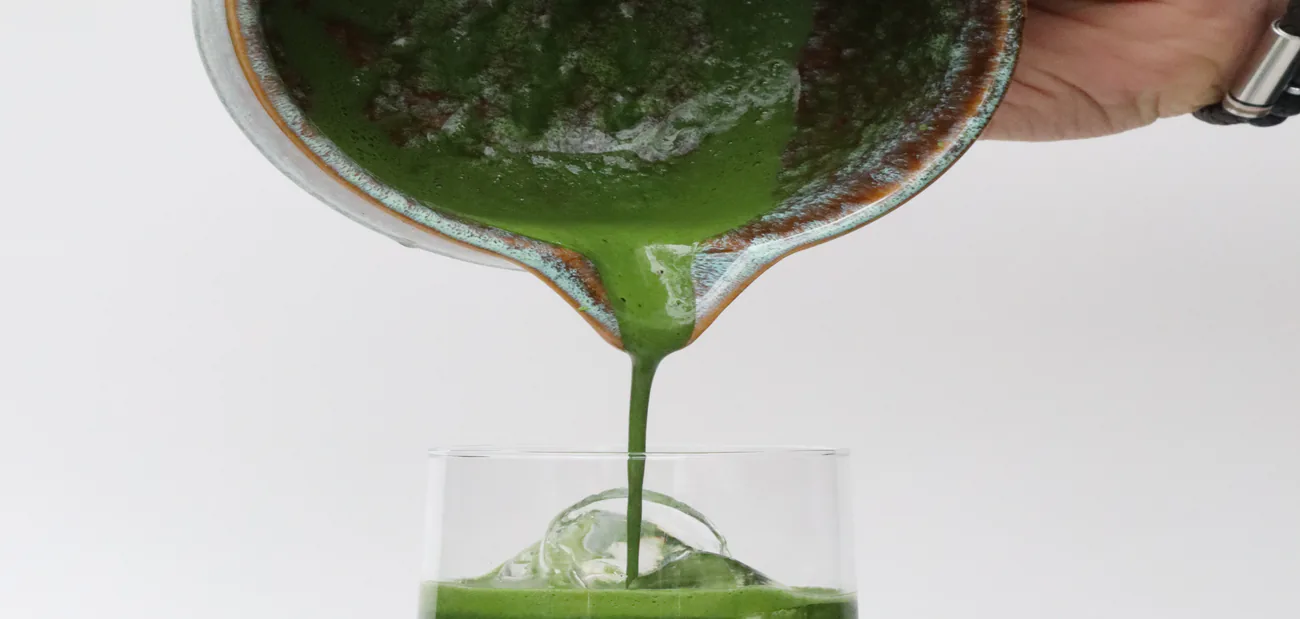
The problem to solve is always the same: matcha is a powder with particles measured in a few micrometres that does not dissolve in water but hangs suspended in it. The particles cling together and form clumps. The tool has to break those clumps and introduce air — only then is the drink smooth.
Before you choose a tool: sift
This is the most commonly skipped step and the one that solves most problems. Matcha compacts in its tin under its own weight — not because it is damp, but because that is how a very fine powder behaves.
Sifting through a fine sieve (the kind used for icing sugar) takes five seconds and removes the agglomerates before they ever touch water. After sifting, every method on this list works better, and a kitchen whisk only starts working at all.
If you have no sieve, press the powder against the wall of a dry bowl with the back of a spoon. It is worse, but distinctly better than nothing.
1. Electric frother — the best substitute
An ordinary battery-powered milk frother costs about as much as two coffees out and breaks up clumps without argument. Technique: add 2 g of powder, pour in 30 ml of water at 70–80°C, froth for 10 seconds into a uniform paste, and only then add the rest of the water and froth for another 10 seconds.
That order matters more than the device itself — paste first, liquid second. It applies to every method on this list.
What is missing: the foam comes out coarser and collapses faster than after a chasen, because the whisk head introduces large bubbles rather than hundreds of tiny ones.
2. A jar or a shaker — no equipment at all
The travel method and the simplest there is. Put the powder in a jar with a lid, pour in 50 ml of lukewarm water, close it and shake vigorously for 20–30 seconds. Then top up with water or milk.
The water must be lukewarm or cold — never seal hot water in an airtight vessel, because pressure will force the lid off. That is an advantage anyway: at low temperature fewer catechins come out, so the drink turns out sweeter. The full iced recipe: iced matcha →
3. A small jug blender
The best choice when you are making matcha lattes for several people at once. Add powder, milk, ice and syrup if you use it, blend for 20 seconds. There will be no clumps and the foam will be dense.
Note: do not blend hot milk in a sealed jug, for the same reason as above.
4. A French press — the underrated contender
If you have a cafetière at home you also own one of the best tools for matcha — and almost nobody knows it. The dense mesh of the plunger does exactly what is needed: it forces the suspension through a fine screen and aerates it with every stroke.
- Add 2 g of sifted powder, pour in 60 ml of water at 70–80°C.
- Insert the plunger and pump 15–20 times, without pressing all the way down.
- Top up with water or milk.
The foam comes out surprisingly fine — of all the whiskless methods this is the closest to a chasen. Extra benefit: you make two or three servings at once. Drawback: washing up is more of a nuisance than rinsing a frother.
5. A kitchen whisk plus a sieve
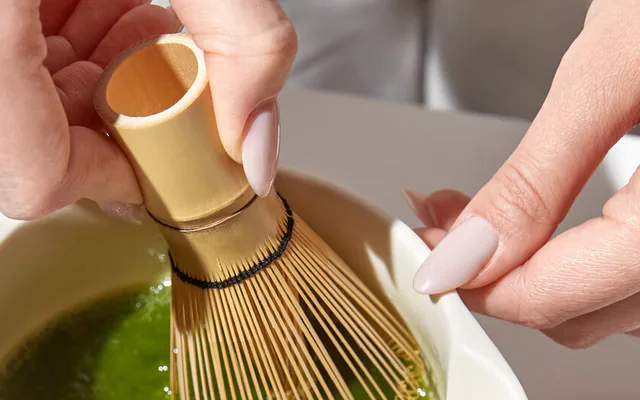
It works, but only with sifting. A wide-looped whisk on its own does not break agglomerates — it pushes them around. Sift the powder through a fine sieve straight into the bowl, add a little water, work it into a paste with the back of a spoon, then whisk briskly back and forth, not in circles.
The motion matters: a circular one creates a vortex that gathers the powder in the middle instead of breaking it up. A back-and-forth stroke, as with a chasen, cuts through the suspension and aerates it.
6. Sparkling water — a trick, not a joke
Work the powder into a paste with a spoonful of warm water, then top up with cold sparkling water. The bubbles break up the remaining clumps on their own and the drink comes out refreshing — good in summer, though it changes the character of the flavour.
What not to do: a spoon alone
Stirring with a spoon in a mug is the most common first attempt and the most common reason people give up. A spoon moves clumps around rather than breaking them: dark specks float on the surface, sediment settles at the bottom, and the drink is simultaneously watery and bitter. That is not the matcha's fault.
Comparison
| Method | Time | Clumps | Foam |
|---|---|---|---|
| Chasen | 15–20 s | none | fine, lasting |
| French press | 25 s | none | fine, lasting |
| Electric frother | 20 s | none | coarser, collapses sooner |
| Jar / shaker | 30 s | none | moderate |
| Blender | 20 s | none | dense, plenty |
| Whisk + sieve | 40 s | none if sifted | weak |
| Spoon alone | — | remain | none |
When something went wrong — quick diagnosis
| Symptom | Cause | What to do |
|---|---|---|
| Clumps on the surface | all the water added at once | make a paste with a spoonful first |
| Sediment after a minute | coarse milling or no aeration | check powder quality, drink straight away |
| Bitter and astringent | water too hot | come down to 70–80°C |
| Watery, no flavour | too little powder or too much water | 2 g to 70 ml |
| Foam collapses immediately | old matcha | check the colour and opening date |
| Drink yellowish, not green | the powder has oxidised | see storage |
The last two rows point to the powder, not the technique. If the foam will not hold despite a correct method, the age of the matcha is often the cause: how to store matcha →. And if bitterness itself is the problem, we set out its sources here: why matcha tastes bitter →
What you give up without a chasen
Honestly: less than purists suggest, but not nothing. The bamboo tines introduce hundreds of very fine bubbles — that foam is denser, longer-lasting and carries aroma, which makes the first sip softer. The difference is clear in plain usucha and almost imperceptible in a latte, where milk dominates anyway.
There is also one thing no device replaces: koicha, the thick matcha made from 4 g of powder in 30 ml of water. That is the consistency of paint rather than a drink — a frother stalls in it, a shaker has nothing to shake, and only the flexible tines of a chasen can work such a mass smooth.
If you drink matcha plain and daily, a whisk pays for itself in flavour within a week. How to choose one and not destroy it in days: choosing a chasen →
What to take travelling
The lightest kit that delivers good matcha away from home is a small screw-top jar plus powder measured out into a separate vial. Nothing spills, nothing needs power, and shaking works the same on a train as in a kitchen.
If you travel often, a battery frother fits in a side pocket and weighs about as much as a pen. A whisk is not worth carrying — bamboo tines snap in luggage and do not tolerate being repacked damp.
The rule that rescues every method
Always make the paste first. Two grams of powder plus a spoonful of water, worked smooth, and only then the rest of the liquid. Nine out of ten failed bowls come from flooding the powder with all the water at once — a clump that has once wrapped itself in water will not come apart again.
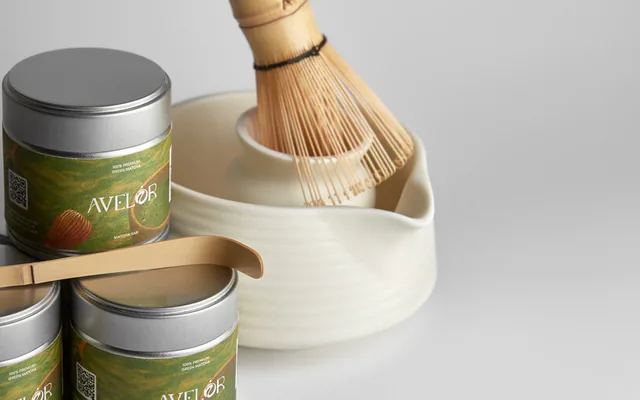
If you would rather have the whole kit at once, sets with a whisk, bowl and scoop are here: Avelor sets →
Can you make matcha without a whisk?
Yes. An electric milk frother works best, and a screw-top jar is ideal when travelling — 20–30 seconds of vigorous shaking breaks up the clumps. A blender is convenient for several servings at once.
Can I just stir matcha with a spoon?
Not in a way that gives a good drink. A spoon pushes clumps around without breaking them, so sediment settles at the bottom and the taste is watery and bitter at the same time.
How do I make matcha in a bottle or shaker?
Add 2 g of powder, pour in about 50 ml of lukewarm or cold water, seal tightly and shake for 20–30 seconds, then top up with water or milk. Never seal hot water in an airtight vessel — pressure will force the lid off.
Is a milk frother suitable for matcha?
It is very well suited and is the cheapest sensible substitute for a chasen. The foam is coarser and less durable, but there are no clumps and preparation takes 20 seconds.
Can I make matcha in a French press?
Yes, and it is one of the best whiskless methods. Add sifted powder, pour in water at 70–80°C and pump the plunger 15–20 times. The dense mesh aerates the suspension and gives foam closest to a chasen.
Do I need to sift matcha?
You do not have to, but it helps — the powder compacts in the tin under its own weight. Sifting through a fine sieve takes five seconds and makes every method work better; with an ordinary whisk it is effectively a condition of success.
Why do I have to make a paste first?
Because a clump flooded with all the water at once wraps itself in liquid and stops dispersing. Two grams of powder worked smooth with a spoonful of water solves the problem whatever tool you use.
Can I make koicha without a chasen?
In practice, no. Thick koicha (4 g of powder in 30 ml of water) has a consistency close to paint — a frother stalls in it and a shaker has nothing to shake. Only the flexible tines of a whisk can work such a mass smooth.
What should I take travelling to drink matcha?
A small screw-top jar and powder measured into a separate vial. Nothing needs power, and shaking works the same everywhere. Better to leave the whisk at home — bamboo tines snap in luggage.