Why matcha tastes bitter — six causes and a fix for each
Most people who "do not like matcha" drank it once — scorched with boiling water or made from baking powder grade. Bitterness is not a feature of good matcha but a symptom. Below are six causes and a concrete fix for each.
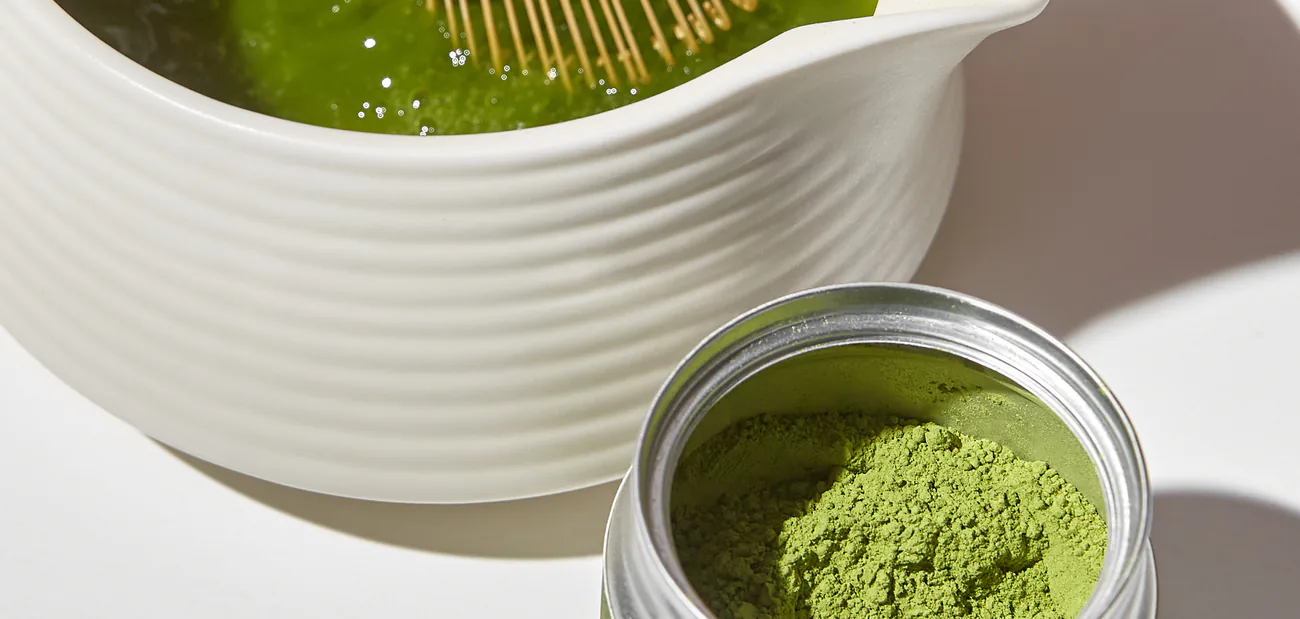
Well-made ceremonial matcha has a dense, faintly sweet umami base and a short, pleasant bitterness at the end — much like dark chocolate. If yours is sharply bitter, puckers the mouth or tastes of cut grass, something has gone wrong. Almost always one of six things.
Quick diagnosis
| What you taste | Most likely cause | Fix |
|---|---|---|
| Sharp bitterness, "burnt" note | water too hot | cool to 70–80°C |
| Astringency, dry mouth | too much powder for the water | 2 g to 70 ml |
| Grass, hay, flat flavour | culinary grade or late harvest | switch to ceremonial powder |
| Stale, cardboard aftertaste | old or badly stored | airtight, cool, no light |
| Clumps and sediment | no sifting, weak whisking | sieve + chasen, W motion |
| Yellowish colour, no foam | oxidised or low quality | judge by eye before buying |
| Chalky and dull despite good technique | hard water | try filtered water |
Where bitterness comes from — three groups of compounds
Before the fixes, it helps to know what is actually competing in the bowl. Three forces are at work in the tea leaf:
- Amino acids, above all L-theanine — they give sweetness and umami. They are what makes good matcha feel creamy despite containing no fat.
- Catechins (mainly EGCG) — they give astringency, that drying sensation on the tongue. It is not the same thing as bitterness, though we often confuse the two.
- Caffeine — bitter in itself. It is responsible for clean, sharp bitterness rather than for the drying feel.
What matters is the ratio, not the presence. Shading the bush before harvest raises amino acid content while limiting the development of catechins — which is why first-harvest ceremonial matcha tastes sweeter despite containing more caffeine. Bitterness does not come from strength but from a missing counterweight.
That also explains why the same mistakes bite so hard: water that is too hot leaches catechins and destroys amino acids at once, hitting both sides of that balance simultaneously.
1. Water too hot — culprit number one
Boiling water pulls the bitter catechins out of the powder and destroys the delicate amino acids that provide sweetness. The result is a drink that is sharp and hollow. The optimum is 70–80°C, and 70°C for the most delicate powders.
Without a thermometer: boil the water and leave it for 3–4 minutes, or pour it once between two vessels — each pour costs roughly 5–7°C. The full step-by-step procedure: how to make matcha →
2. The wrong ratio
The standard for usucha is 2 g of powder to 60–80 ml of water. A heaped teaspoon added by eye can easily be 4 g — koicha density at usucha water volume, hence the astringency. The opposite mistake exists too: too little powder gives a watery drink in which bitterness is the only distinct flavour left.
Kitchen scales settle this once and for all. A chashaku scoop is about 1 g — two scoops per bowl.
3. The grade of the powder
Culinary matcha is made from later harvests and less shaded leaves. It is cheaper, darker and distinctly more bitter — and it is meant to be, because it was designed for baking and heavily sweetened drinks, where sugar and milk knock the bitterness back. Drunk on its own it will simply be unpleasant.
If you drink matcha plain or with a little milk, you need first-harvest ceremonial grade. We set out the differences here: ceremonial or culinary →
It is also worth knowing that profiles differ even within ceremonial grade. One matcha is mild and creamy, another sharper and more green. That is neither a fault nor a virtue — it is a matter of cultivar and degree of shading. If you are returning to matcha after a bad experience, start with the milder profile: SABI forgives more than the intense IKI.
4. Age and storage
Matcha does not spoil in any safety sense, but it oxidises faster than any other tea — because it has an enormous surface in contact with air. After a few weeks in an open pack it loses its green, its aroma and its sweetness; what remains is bitterness and a cardboard note.
The mechanism matters here: the amino acids go first, while catechins are more stable. Old matcha does not become "more bitter" — it loses the sweetness that was balancing the bitterness. The effect on the tongue is the same, the cause entirely different.
The rules are simple: airtight, cool, dark, away from smells. Use an opened pack within weeks, not months. The details, including the fridge question: how to store matcha →
5. Not sifting
The powder compacts into clumps during transport alone. A clump dissolves unevenly: one mouthful gives you a concentrated dose, the next one plain water. Sifting through a fine sieve takes five seconds and noticeably changes how the flavour lands — the drink becomes smoother and bitterness stops hitting in spikes.
Then there is the order: always the paste first, meaning the powder worked into a spoonful of water before the rest goes in. A clump flooded with all the water at once wraps itself in liquid and will never disperse.
6. Whisking technique
A circular motion pushes the powder up the sides and does not aerate the drink. Whisk in a W or M shape, briskly, from the wrist, for 15–20 seconds, just below the surface. The resulting foam is not decoration — it changes how bitterness registers, because the bubbles carry aroma and soften the first contact with the flavour.
A seventh cause nobody writes about: the water
If you have corrected everything above and the drink is still chalky and flat, check the water. Hard water binds the compounds responsible for umami — calcium and magnesium strip matcha of its sweetness, leaving astringency with no counterweight. The effect is deceptively similar to old matcha.
The test is cheap: make one bowl with low-mineral bottled water and compare. If the difference is clear, the tea was never the problem.
How to fix it: one variable at a time
The commonest mistake when hunting the cause is changing everything at once — different water, different temperature, different amount of powder. Then you do not know what helped, and the problem returns with the next tin.
- Days 1–2: leave everything as it was and only bring the temperature down to 70°C. That fixes most cases.
- Days 3–4: if that did not help, weigh out exactly 2 g and use 80 ml of water instead of 60.
- Day 5: add sifting through a sieve.
- Day 6: one bowl with bottled water.
- Only then draw conclusions about the powder.
When the problem is not on your side
If the drink is still harsh after correcting every point, the powder is to blame. The signs are visible before brewing: a yellowish or olive colour instead of vivid green, a hay smell instead of sweet grass, no information about harvest or batch. Exactly what to look at: how to recognise good matcha →
Do not throw bitter matcha away
Powder that is not pleasant to drink on its own is still perfectly good in the kitchen. In baking, ice cream, smoothies and pancakes, sugar and fat mask the bitterness while the colour and tea aroma remain. That is precisely the use culinary matcha is designed for.
The second option is a latte: milk contains proteins that bind some of the catechins, so the same matcha tastes markedly softer in milk than in water.
If you prefer it gentler anyway
- More water. 2 g to 100 ml is still a correct usucha, simply lighter.
- Milk. Fat and protein bind some of the astringent compounds — a matcha latte → is gentler than a plain bowl.
- Cold. At low temperatures fewer catechins come out, so the drink is distinctly sweeter: iced matcha →
- A pinch of salt or honey. Controversial among purists, effective in practice — at the start of the journey it beats abandoning matcha altogether.
- Give it three bowls. A palate used to sweet drinks reads umami as strange on first contact. That passes faster than you would expect.
Should good matcha be bitter?
It should not be sharply bitter. Well-made ceremonial matcha has a dense, faintly sweet umami base and a short bitterness in the finish, much like dark chocolate. Harsh, astringent bitterness is a symptom of a preparation error or a poor powder.
What water temperature stops matcha being bitter?
70–80°C, and 70°C for the most delicate powders. Boiling water leaches catechins and destroys the amino acids responsible for sweetness, so only bitterness remains.
Why does my matcha taste of grass?
Most often it is culinary grade or powder from a later harvest — that grassy, flat profile is built into the raw material. The other possibility is old matcha that has lost its sweetness and aroma.
Can ceremonial matcha be bitter?
It can, if it is scorched with boiling water, overdosed or old. The grade alone does not protect against preparation mistakes — it only protects against bitterness built into the raw material.
Why is old matcha bitter?
Because it loses what balanced the bitterness. The amino acids behind sweetness and umami oxidise first, while the more stable catechins remain. The powder does not become more bitter — it stops being sweet.
Does hard water affect matcha bitterness?
Yes. Calcium and magnesium bind the compounds responsible for umami, so the drink comes out flat and chalky with astringency left unopposed. One bowl made with filtered water is enough to check.
What can I do with matcha that is too bitter to drink?
Do not throw it away — use it in baking, ice cream, smoothies or pancakes, where sugar and fat mask the bitterness while the colour and aroma remain. The other option is a latte: milk proteins bind some of the catechins.
Can I add sugar or honey to matcha?
You can, and it harms nobody, though purists will wince. At the start it is often better than giving up on matcha entirely. Over time most people stop needing to sweeten it, as the palate adjusts to umami.