How to recognise good matcha — 7 signals before you buy and after you open
Good matcha does not have to be taken on trust. Three things you can check on the label before paying, four more within the first minute of opening the tin. Below: the full set of signals and three tests that need nothing but water, a sheet of paper and your eyes.
Few markets are as uneven as matcha: the same word is used for baking powder, for a sugar blend and for ceremonial-grade tea. The good news is that the differences are visible to the naked eye — you only need to know what to look at.
Before buying: three things on the label
- Ingredients. There should be one: green tea leaf. Sugar, milk powder, flavouring, maltodextrin or "green tea extract" mean a blend — and explain the low price.
- Date. A harvest date is best, a packing date is enough, a bare best-before is too little. Matcha does not spoil like yoghurt, but it loses quality every month.
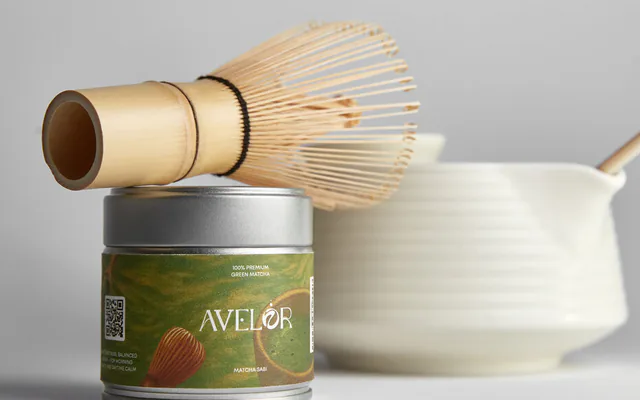
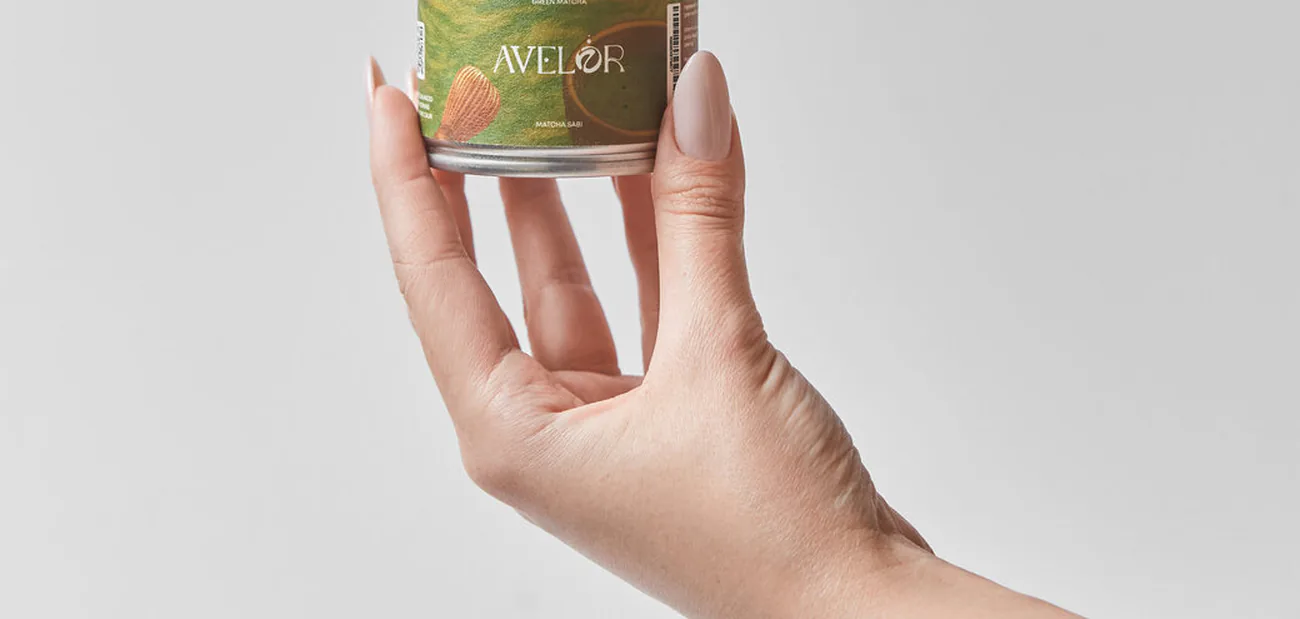
- Packaging. Opaque and airtight. A clear jar on a shop shelf is a product that faded before it reached you — light destroys matcha faster than time does.
It is also worth checking whether the seller states the country of origin at all. An honest label does not hide it. We state ours plainly, on every product page.
1. Colour — the fastest signal
Chlorophyll in a shaded leaf gives an intense, saturated green. The less shading and the later the harvest, the more the colour slides towards olive and yellow.
| Colour | What it means |
|---|---|
| Vivid jade green | first harvest, good shading — ceremonial grade |
| Muted, slightly olive green | later harvest or culinary matcha |
| Khaki, yellow-green, brownish | flat, overheated in grinding, or from an old harvest |
Judge it in daylight, not under a bulb — artificial light can pull green out of powder that has none.
2. Aroma
Open it and smell straight after breaking the seal. Good matcha smells of freshly cut grass, faintly sweet, sometimes with a marine note from the amino acids. Hay, dust, cardboard or anything scorched is a warning: the leaf was old, badly stored or overheated during grinding.
No smell at all is information too — fresh powder is never odourless.
3. Texture
Ceremonial matcha is ground to particles of about 5–10 micrometres, that is finer than flour. Rub a pinch between your fingers: it should feel silky like talc and cling slightly to the skin. Noticeable grit, or hard lumps that will not break under a finger, means a coarser grind.
Beware the false alarm: soft lumps are ordinary caking from moisture and static — which is exactly why matcha is sifted. Hard grit is a different matter.
4. Taste — the most honest test
Brew it with no sugar and no milk. Good matcha has clear umami, a smooth body and a sweetish, lingering finish. Slight bitterness at the start is fine and passes quickly.
What should not be there: sharp, astringent bitterness that stays on the tongue, and an "empty" taste — a grassy note with no depth behind it. If the drink only becomes drinkable once sweetened, it is not matcha for drinking neat.
Before writing a batch off, make sure the water did not kill it: boiling water pulls bitterness out of any matcha. The right range is 70–80 °C — how to brew matcha →
5. Foam
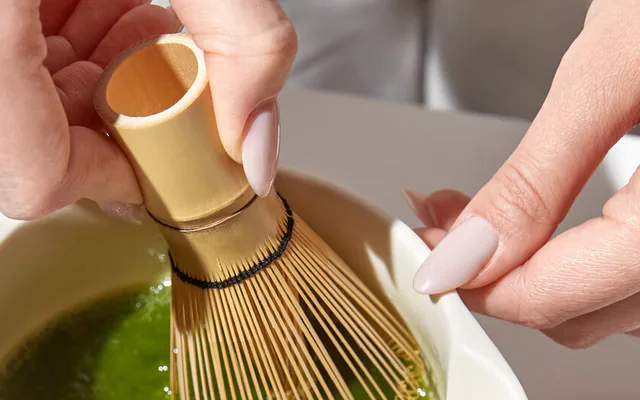
Whisked with a chasen, good matcha gives a dense, velvety foam of fine bubbles that holds for a few minutes. Large bubbles that vanish in seconds, or no foam despite correct technique, point to a coarser grind or flat powder.
6. Sediment in the bowl
Drink it and look into the bowl. A trace of sediment is normal. A distinct layer at the bottom means particles too large to stay in suspension — a coarser grind, typical of culinary grade.
7. Price — a signal, not proof
A high price guarantees nothing, but a very low one almost always means something: a later harvest, industrial grinding or a blend. How to read price so that offers become comparable, we set out here: how much matcha costs →
Three tests you can run in the kitchen
- The paper test. Scatter a pinch on white paper and spread it with a finger. The colour then shows honestly, without the packaging behind it, and every darker speck comes out.
- The cold water test. Stir half a teaspoon into a glass of cold water. Finely ground matcha forms a suspension and colours the water evenly; a coarser grind drops to the bottom quickly and leaves a clear layer on top.
- The no-additives test. One bowl, no sugar, no milk. It is the only test that cannot be gamed — and the only one that really settles the question.
What not to treat as a marker
- Kanji on the packaging. The characters and the Japanese vocabulary are the aesthetic of the category, not a certificate of quality and not a statement of origin — the country of origin belongs in the product description, and that is the only place to look for it.
- The words "premium" and "superfood". Neither is regulated in any way — anyone can print them.
- Shop photography. Saturating green in an editor takes one click. Judge colour after opening, not on a screen.
In short
Three signals you can check before paying: ingredients, date, packaging. Four more in the first minute after opening: colour, aroma, texture, then taste with nothing added. If all seven line up, you have matcha that needs nothing to mask it.
We describe both our lines — the gentler SABI and the vivid IKI — plainly, with origin and grade: see Avelor matcha →
What colour should good matcha be?
A vivid jade green, judged in daylight. A muted, olive tone points to a later harvest or culinary grade, while khaki, yellow-green or brownish means powder that is flat, was overheated during grinding, or comes from an old harvest.
Do lumps in matcha mean poor quality?
Not necessarily. Soft lumps that break under a finger are ordinary caking from moisture and static — which is why matcha is sifted before whisking. What is worrying is noticeable grit and hard specks that will not break down: that is a sign of a coarser grind.
Why is my matcha bitter?
Most often because the water was too hot — boiling water pulls bitterness out of any matcha, including very good ones. The right range is 70–80 °C. If the bitterness is still sharp and astringent at that temperature, the problem is in the powder itself: usually a later harvest or culinary grade.
What should be in matcha ingredients?
One entry: green tea leaf, that is 100% ground leaf. Sugar, milk powder, flavourings, maltodextrin or "green tea extract" mean a blend rather than matcha — and usually explain a low price better than any promotion.
Does sediment in the bowl mean bad matcha?
A trace of sediment is normal even with good powder. A distinct layer at the bottom means particles too large to stay in suspension, that is a coarser grind — typical of culinary matcha.
Does expensive matcha always mean good matcha?
No — a high price is no guarantee, because nobody regulates words like "premium" or "ceremonial". A very low price, on the other hand, almost always means something: a later harvest, industrial grinding or a blend with additives. Read price together with ingredients, date and packaging.