IKI, SABI or OMI — which Avelor matcha to choose and how they really differ
All three are ceremonial grade matcha, so the question is not “which one is good” but “which one fits the way you drink it”. The differences are about flavour profile and intended use — and they can be described without marketing fog.
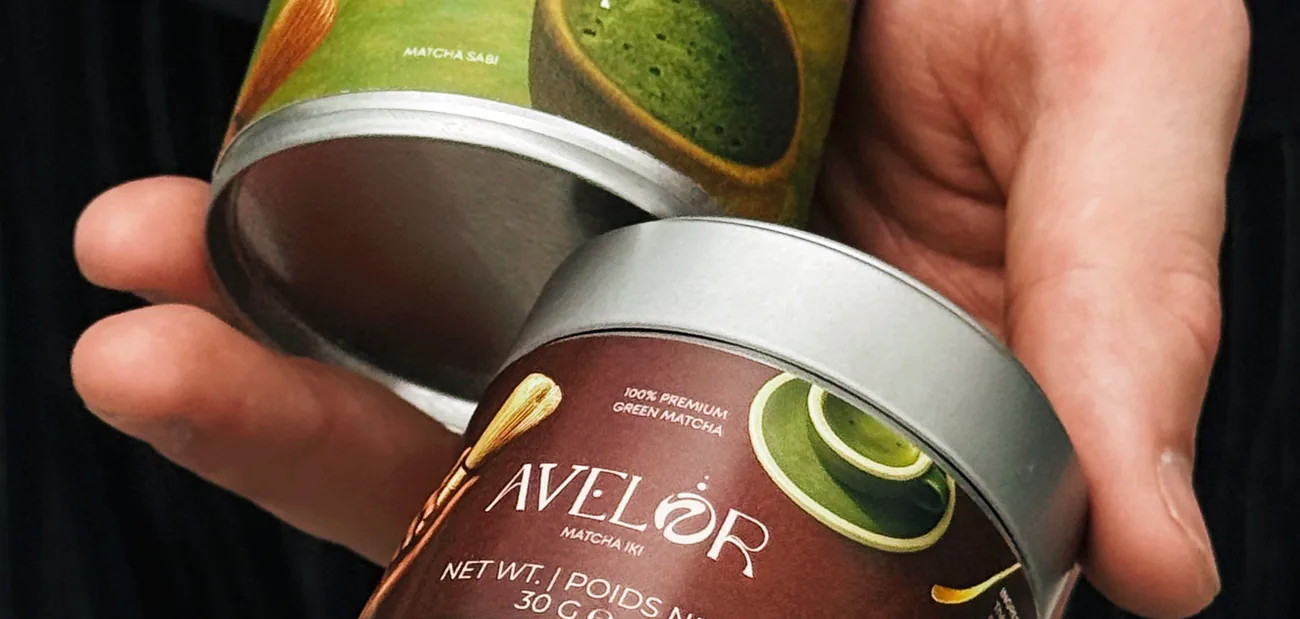
The shop carries three matcha lines: IKI, SABI and OMI. Each is ceremonial grade, and with each a serving is 2 g of powder. If you are standing in front of the shelf unsure which to take, this guide is meant to make the decision a two-minute job rather than a two-evening one.
The short answer
Choose IKI if you drink matcha straight, with water, and want sweet umami with creamy notes. Choose SABI if you want one matcha for every day: with water in the morning, in a latte in the afternoon. Choose OMI if you mostly make lattes and cold drinks and care about an intensely green colour and a mild taste with little bitterness. And if you are not sure, do not guess: take the sample set or the IKI & SABI duo and compare them in your own kitchen.
Three lines in one table
| Line | Profile | Best use | Formats |
|---|---|---|---|
| IKI (粋) | sweet umami with creamy notes; fresh, grassy-sweet aroma; intense yet smooth | straight, with water (usucha) | 30 g tin (about 15 servings), 100 g, 500 g, 1 kg |
| SABI (寂) | mild umami, light sweetness; fresh, green aroma; balanced strength | everyday — straight or as a matcha latte | 10 g sample, 30 g tin (about 15 servings), 100 g (about 50 servings), 500 g, 1 kg |
| OMI | mild, well-balanced taste, distinct umami, natural sweetness, low bitterness; smooth, creamy texture | latte, cold drinks, traditionally with water | 10 g sample, 40 g tin (about 20 servings), 100 g, 500 g, 1 kg |
The names IKI and SABI come from the vocabulary of aesthetics — they are the names of the lines, not a statement about composition or origin. Taste is what the “profile” column is for.
IKI — when the matcha takes centre stage
IKI leads the collection and carries the label “ceremonial premium”. It is made from the first spring harvest — the youngest leaves, from bushes shaded for four weeks — and ground ultra-fine. In the bowl that means sweet umami with creamy notes and a fresh, grassy-sweet aroma; the taste is intense yet smooth. Composition: 100% green tea leaf.
It is the line for people who drink matcha with nothing added and want to taste the nuances. It is at its most expressive as usucha: 2 g to 60–70 ml of water.
SABI — one matcha for the whole week
SABI is the everyday matcha: the same ceremonial class and the same clean composition as IKI (100% green tea leaf), in a milder, more universal profile. First harvest, fine grind, mild umami, light sweetness, a fresh green aroma and balanced strength. It is drunk straight or as a matcha latte — and that double use is its main advantage. If one person at home drinks matcha with water and another with milk, SABI suits both.
OMI — colour, creaminess and low bitterness
OMI is a ceremonial matcha with an intensely green colour and a smooth, creamy texture. The taste is mild and well balanced: distinct umami, natural sweetness, low bitterness. It works the traditional way, with water, but also in a matcha latte and in cold drinks. The tin holds 40 g, about 20 servings, and the large 500 g and 1 kg packs (doypack) are designed for cafés and restaurants.
If you drink it straight, with water
Water hides nothing, so this is where the differences between the lines are clearest. If you are after sweet umami with creamy notes, start with IKI. If you prefer a gentler bowl to drink every day without concentrating on each sip, take SABI. OMI can be prepared traditionally too; its strength is low bitterness. The rule is the same for all three: 2 g, water at 70–80 °C, never boiling.
If you mostly make lattes
Milk mutes both bitterness and the subtler notes, so in a latte what counts is colour, clear umami and no astringency. SABI and OMI are the natural choices here — both are described as matcha for lattes. You can make a latte with IKI and nobody will stop you, but part of what sets it apart will disappear under the milk. How ceremonial grade differs from culinary grade in a cup of milk is covered separately: ceremonial or culinary matcha.
For cold drinks
In a glass with ice the first thing you see is colour — and an intense green and a smooth texture are exactly what OMI is known for; cold drinks are listed explicitly among its uses. Whichever line you use, disperse the powder in a little water first and only then add the rest — matcha disperses more slowly in cold liquid.
For a café or an office
At several dozen servings a day a tin makes no sense. All three lines come in 100 g, 500 g and 1 kg packs. A kilogram is roughly 500 drinks. The OMI 500 g and 1 kg doypacks are prepared with food service in mind and recommended to venues for which the colour and taste of the finished drink matter. Terms and wholesale orders: business offer.
Not sure — test it
A flavour description is only a map. The cheapest and most honest route is to taste:
- Sample set — SABI, OMI and UBE, 10 g each. Two matchas to compare plus ube powder, which is a different product altogether (purple yam, not tea).
- IKI & SABI duo — two lines side by side, if you are torn between “with water” and “everyday”.
- Sets with a chasen — if you do not have a whisk yet, because without one comparing foam is pointless.
Always test as a pair: the same weight, the same amount of water, the same temperature of 70–80 °C, the same bowls. Plain usucha first, latte only afterwards. Change two things at once and you are comparing preparation, not matcha.
How to compare two matchas fairly
- Colour. Tip a little of each powder side by side onto a sheet of white paper and judge them in daylight.
- Aroma. Smell the dry powder, then the tea straight after whisking.
- Foam. Whisk both for the same length of time and see how fine the foam is and how long it holds.
- Aftertaste. Wait half a minute after a sip: what stays — sweetness, umami or astringency?
There is more on what to look for in how to recognise good matcha. And one caveat: taste is personal. If you like SABI better than IKI, that is not a mistake — it is your answer.
Which format to buy first
Start with a small tin: 30 g is about 15 servings, the 40 g OMI tin about 20. At one bowl a day you will finish it in two to three weeks, before the powder has time to lose its freshness. Once opened, matcha keeps its full flavour for roughly 4–6 weeks, so a 100 g pack (about 50 servings) only makes sense if you drink two servings a day or share it with someone. Larger formats are a calculation for a venue, not for one kitchen. How not to waste an open tin: how to store matcha.
Summary
IKI — with water, for sweet umami with creamy notes. SABI — every day, straight and in a latte. OMI — lattes, cold drinks and colour in the glass, also in large packs for venues. All three are ceremonial; what separates them is profile and purpose, not a “better” and a “worse” shelf. And if you are still undecided after reading this, two samples and ten minutes by the kettle will tell you more than any table.
What is the difference between IKI and SABI matcha?
Both are ceremonial grade, from the first harvest, with the same composition: 100% green tea leaf. IKI has a more intense yet smooth profile — sweet umami with creamy notes — and is at its best straight, with water. SABI is milder and more universal: it is drunk straight or as a matcha latte.
Which Avelor matcha is best for a latte?
For a latte, SABI or OMI is the natural choice. SABI is a universal everyday matcha, while OMI stands out for its intensely green colour, creamy texture and low bitterness. IKI can be served with milk too, but milk covers some of its subtler notes.
What is OMI matcha?
OMI is a ceremonial matcha with an intensely green colour, a smooth, creamy texture and a mild, balanced taste with distinct umami and low bitterness. It works with water, in a matcha latte and in cold drinks. It comes as a 40 g tin, a 10 g sample and in 100 g, 500 g and 1 kg packs.
Which matcha should I choose to start with?
If you want one matcha for everything, start with SABI — it is mild and works both with water and in a latte. If you are unsure, take the sample set (SABI, OMI and UBE, 10 g each) or the IKI and SABI duo and compare them under identical conditions.
How many servings are in a 30 g tin of matcha?
About 15 servings of 2 g each. The 40 g OMI tin gives about 20 servings, a 100 g pack about 50, and a kilogram is enough for roughly 500 drinks.
Is it better to buy a 30 g tin or a 100 g pack?
A tin to begin with. Once opened, matcha keeps its full flavour for about 4–6 weeks, and at one serving a day 30 g lasts two weeks. A 100 g pack pays off when you drink two servings a day or share it with another person.