Ceremonial vs culinary matcha — which to buy and how to tell them apart
Two tins on a shelf: one at £10, one at £30. Both say "matcha". The difference is not the label — it comes from when the leaf was picked, how long it grew in shade and what happened to the stems. Here is exactly what differs, how to check it at home, and which grade to use for what.
Let us start with something rarely said plainly: "ceremonial" and "culinary" are not legally protected categories. Nobody certifies these words, so any producer can print "ceremonial grade" on any powder. That does not make the distinction fictional — it means you need to be able to verify it yourself. This article is about how.
Where the difference comes from
- Harvest. The first harvest (ichibancha, May) gives the youngest leaves, richest in amino acids. Second and third harvests are older and more fibrous, with a higher share of bitter catechins.
- Shading. Bushes destined for ceremonial grade are covered for 3–4 weeks before picking. In shade the plant produces more chlorophyll and L-theanine — hence the colour and the sweetness. Culinary leaf is shaded briefly or not at all.
- Leaf selection. Ceremonial grade uses only the leaf flesh; stems and veins are removed (tencha). Ground stem adds bitterness and a greyish cast.
- Milling. Stone mills grind slowly, around 30–40 g per hour, without overheating the powder. Industrial mills are faster and cheaper, but heat degrades the aroma.
The price of ceremonial grade therefore comes not from packaging but from the fact that one bush yields far less of it than of culinary powder.
A home test — no equipment needed
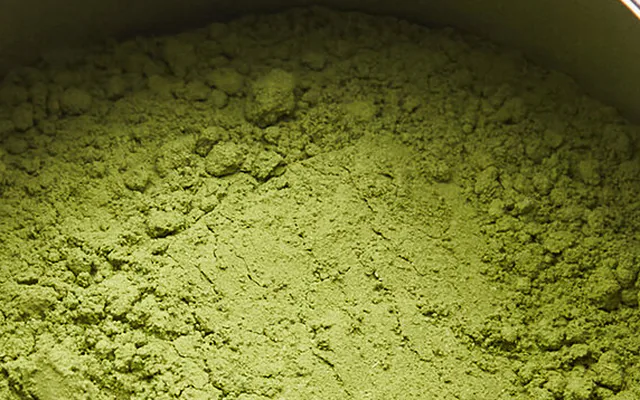
- Colour. Ceremonial grade is vivid, almost electric green. Culinary is dull and olive, sometimes with a yellow or grey cast. Colour tracks chlorophyll, which tracks shading.
- Touch. Rub a pinch between your fingers. Good matcha feels like talc and clings slightly to the skin. Grittiness means a coarser grind.
- Smell. Ceremonial grade smells sweet and vegetal — fresh-cut grass, sometimes a marine note. Hay, dust or a roasted note signals older leaf or overheating.
- Taste in water. The most honest test: whisk 2 g into 70 ml of water at 70–80 °C, with no milk and no sugar. Ceremonial grade brings umami and natural sweetness, with bitterness in the background. Culinary is often hard to drink this way — which is normal, because it was never made for it.
Which grade for which use
| Use | Grade | Why |
|---|---|---|
| Matcha in water (usucha, koicha) | Ceremonial | Nowhere to hide — every flaw lands in the bowl |
| Matcha latte | Ceremonial | Milk dilutes, but does not remove bitterness |
| Cakes, ice cream, creams | Culinary | Sugar and fat mask bitterness; no need to overpay |
| Smoothies | Culinary | Fruit dominates the flavour anyway |
| Café menu | Ceremonial | Guests compare you with the competition sip by sip |
The practical rule: if you drink matcha, buy ceremonial. If you bake with it, culinary is enough and the smarter financial choice.
What it costs, and why "cheap" often is not
A serving is 2 g, so a 30 g tin of good ceremonial matcha yields about 15 servings. Per serving, the gap between a cheap grade and a good one is usually a matter of pennies — less than the gap between a chain coffee and one made at home.
The flip side: cheap matcha that needs three spoons of sugar to be drinkable ends up in the back of the cupboard and is wasted entirely. The most expensive matcha is the one you never finish.
What to watch for when buying
- No harvest or packing date. Matcha ages quickly — a year after milling the colour dulls regardless of grade.
- Transparent packaging. Light destroys chlorophyll. Good matcha comes in an opaque tin or a barrier pouch.
- "Ceremonial grade" with no specifics. Ask about harvest, growing region and testing. A serious seller answers without hedging.
- A very large pack to start. Once opened, matcha should be used within 4–6 weeks. A kilo at home guarantees half of it is wasted — unless you run a café.
Where to start
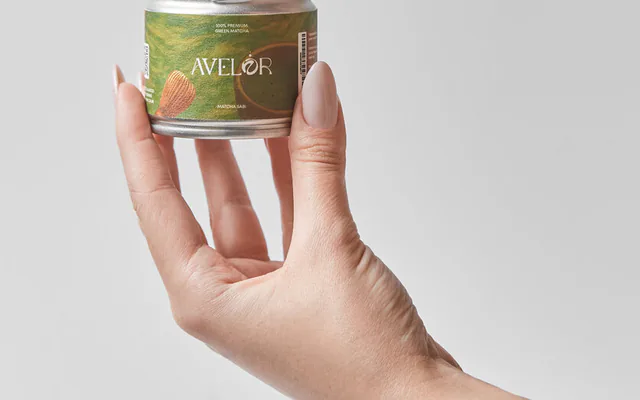
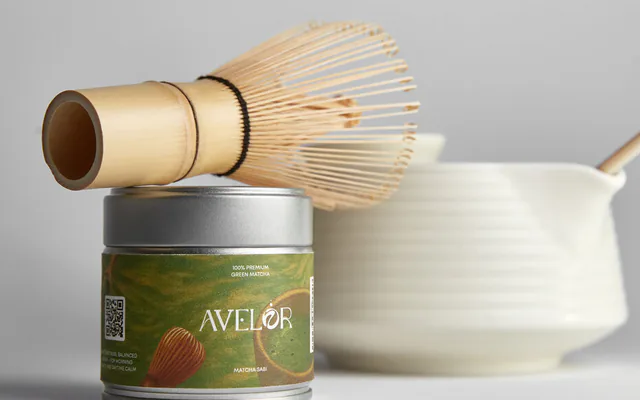
If you are new to this, a 30 g tin of ceremonial grade makes the most sense — 15 servings, enough for an honest two-week trial, and it will not go stale in the cupboard. See Avelor ceremonial matcha, or take the IKI & SABI duo to compare two flavour profiles side by side.
Running a venue and costing it per serving? That is a different calculation — covered in our guide to buying matcha wholesale →
What is the difference between ceremonial and culinary matcha?
Harvest and leaf processing. Ceremonial is first harvest, shaded for 3–4 weeks, made only from leaf flesh with stems removed and stone-milled. Culinary comes from later harvests, is darker in colour and noticeably more bitter.
Is "ceremonial grade" a certified term?
No. It is a commercial description that nobody regulates — any producer can use it. That is why it is worth checking colour, aroma, grind and taste in plain water, and asking about harvest and origin.
Which matcha should I use for a latte?
Ceremonial. Milk dilutes the flavour but does not remove bitterness — a latte made with culinary grade still tastes bitter and usually needs sugar to cover it.
Is culinary matcha worse?
Not worse, just made for something else. For baking, ice cream and smoothies it is entirely sufficient, and with sugar and fat the difference is imperceptible. It is not suited to drinking straight.
How can I check matcha quality at home?
Four tests: colour (vivid green, not olive), touch (silky, not gritty), smell (sweet and vegetal, not hay-like) and taste in plain water at 70–80 °C with no milk or sugar.
How much does a serving of ceremonial matcha cost?
A serving is 2 g, so a 30 g tin gives about 15 servings. Per serving, the difference between cheap and good matcha usually comes down to pennies.