Matcha benefits — what the research actually shows (and what it does not)
Matcha is often described as a cure-all, which is the fastest way to lose trust in it. So here is what is actually known: the composition, the numbers and the findings — along with a clear marker of where the evidence ends and the marketing begins.
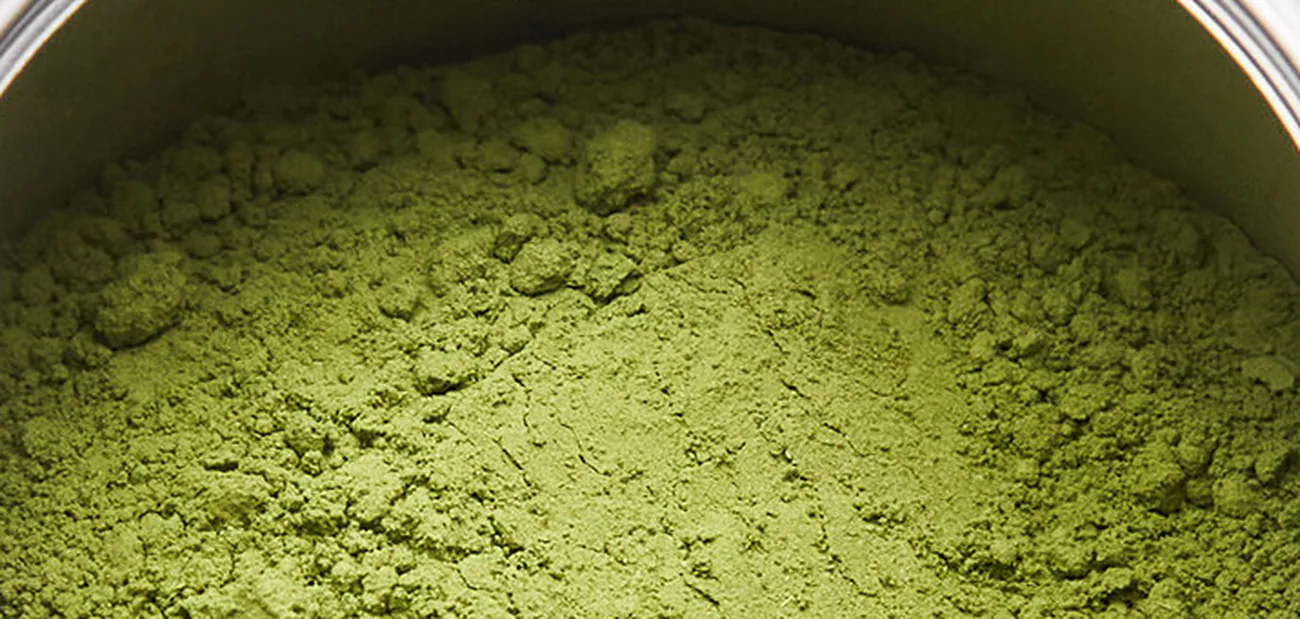
Matcha differs from every other tea in one respect: you drink the whole leaf rather than an infusion of it. The leaf is shaded before harvest, dried and ground to a powder that you suspend in water and consume entirely. That is why its composition and effect are not the same as ordinary green tea — and it is the starting point for everything below.
What is in one serving
A standard serving is 2 g of powder. Approximately, it contains:
- Caffeine: 60–70 mg — roughly an espresso (63 mg), clearly less than a mug of filter coffee (95–120 mg).
- L-theanine: 20–40 mg — an amino acid found almost exclusively in tea, present at higher concentration in matcha because you consume the whole leaf.
- Catechins, including EGCG — a group of polyphenols with antioxidant activity.
- Chlorophyll — responsible for the intense colour, elevated because the plants grew in shade.
- About 3 kcal, zero sugar, a single-ingredient composition: tea leaf.
These figures are indicative — content varies with cultivar, harvest and how heavily the plants were shaded. Variation between batches is normal and does not indicate an inferior product.
L-theanine and caffeine — the best-documented effect
This is the most interesting part and the one with the strongest research footing. Caffeine and L-theanine taken together behave differently from caffeine alone. Studies of the combination consistently point to improved attention and focus with less over-stimulation than the same dose of caffeine on its own.
In practice this gets described as "calm focus": energy builds gently and holds for several hours, without a sharp peak and crash. People who react badly to coffee often tolerate matcha better — not because it contains less caffeine (it is comparable to espresso), but because L-theanine changes the character of the effect. We expand on this here: matcha vs coffee →
Antioxidants — what is known and what is over-claimed
- What is certain: matcha contains a high concentration of polyphenols with well-documented in vitro antioxidant activity, and because you consume the whole leaf you take in more of them than from an infusion.
- What is studied but unresolved: how that translates into hard health outcomes in humans. Much of the research used isolated EGCG at doses far above a cup of tea, or was carried out in animals or cell cultures.
- What must not be claimed: that matcha treats or prevents disease, or "detoxifies" the body. Such statements have no basis in food law or in the data.
The honest conclusion: matcha is a nutrient-dense, single-ingredient, sugar-free drink that works well as a replacement for sweetened beverages. That is reason enough to drink it — no miracles required.
Matcha, metabolism and weight
This is the most over-stretched topic. The facts: tea catechins have been studied for effects on thermogenesis and fat oxidation, and the observed effects were real but small, dose-dependent and variable between individuals. Matcha is not a weight-loss product.
Where it genuinely helps is simpler: a serving of matcha in water is about 3 kcal. Swapping a daily 250–400 kcal sweetened coffee for unsweetened matcha is a meaningful change — through arithmetic, not metabolism.
When to be careful
- Caffeine sensitivity. Two to three servings a day is 120–210 mg of caffeine. Best avoided in the evening.
- Pregnancy and breastfeeding. Guidance generally caps caffeine around 200 mg a day — roughly three servings of matcha, but counting every other source too. Worth discussing with your doctor or midwife.
- Low iron. Tea polyphenols reduce absorption of non-haem iron from a meal. The fix is simple: drink matcha between meals rather than with them.
- Medication. If you take medicines regularly, ask a doctor or pharmacist — this applies to any high-polyphenol product, not matcha specifically.
Quality changes the composition — that is not marketing
L-theanine content depends directly on how the plant was shaded before harvest, while bitter catechins increase in older, sunnier leaves. That is why first-harvest ceremonial matcha has a different profile from culinary powder made from later harvests: more sweetness and umami, less astringency. It is agronomy, not packaging. We compare the grades here: ceremonial vs culinary matcha →
To start with a quality that demonstrates the difference, see Avelor ceremonial matcha.
How much caffeine is in matcha?
A 2 g serving contains roughly 60–70 mg of caffeine — about the same as an espresso and clearly less than a mug of filter coffee (95–120 mg). The exact figure depends on cultivar and harvest.
Is matcha healthier than green tea?
Matcha is the whole leaf ground to powder, so one serving delivers more catechins and L-theanine than an infusion, where the leaf stays in the pot. It is a difference of quantity created by how it is consumed, not a different plant.
Does matcha help with weight loss?
It is not a weight-loss product. Research on tea catechins shows only small effects on thermogenesis. The real benefit is simpler: a serving in water is about 3 kcal, so it replaces sweetened drinks without adding calories.
How much matcha can you drink per day?
For most adults, one to three servings a day sits within typical caffeine guidance. If you are caffeine-sensitive, pregnant, or on regular medication, check with a doctor.
Does matcha have side effects?
Rarely, at sensible amounts. The main factor is caffeine — too much can cause restlessness or disturbed sleep. Tea polyphenols also reduce non-haem iron absorption, so matcha is better between meals than with them.
Does matcha contain sugar?
No. Pure matcha is a single ingredient — ground tea leaf — at about 3 kcal per serving. Sugar only appears in pre-mixed latte blends, which is why the ingredient list is worth reading.