How much matcha a day — practical ranges, warning signs and how to build a routine
For most healthy adults a sensible range is one to three servings a day. But the number alone means nothing until you add your coffee and settle on the timing — and those two things decide whether matcha works for you.
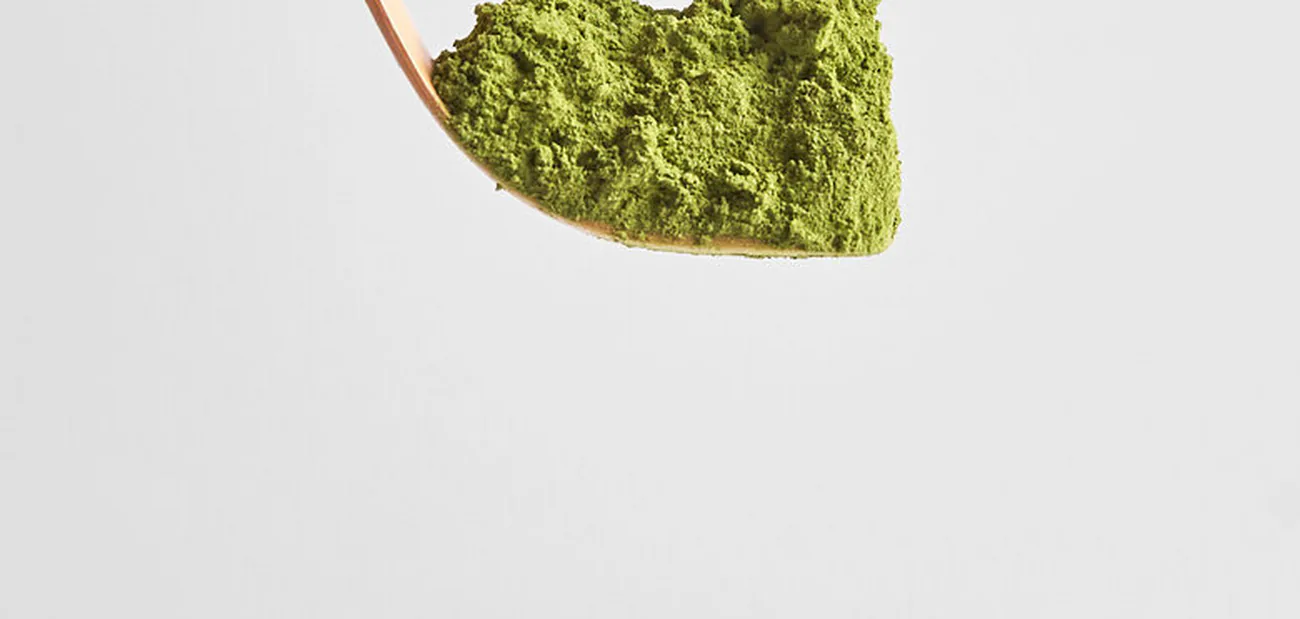
Let us give the answer first and then take it apart: 1–3 servings a day is the range most regular matcha drinkers settle into. The upper limit implied by caffeine sits higher, but there is rarely a reason to push towards it.
Where the limit comes from
Not from matcha but from caffeine. The commonly cited reference for healthy adults is up to 400 mg of caffeine a day from all sources. A serving of matcha from 2 g of powder is 60–70 mg, so in theory 5–6 bowls would fit.
In theory — because almost nobody drinks matcha alone. Here are realistic versions of a day:
| What you drink during the day | Caffeine | Matcha left |
|---|---|---|
| Matcha only | — | up to 5–6 servings |
| 1 espresso | ~63 mg | up to 4–5 servings |
| 1 filter coffee | ~110 mg | up to 4 servings |
| 2 filter coffees | ~220 mg | up to 2 servings |
| 2 coffees + cola + chocolate | ~290 mg | 1 serving |
The practical conclusion: if you drink coffee, matcha does not get its own separate allowance. It all counts together. Detailed figures for different drinks: how much caffeine matcha has →
Why 1–3 rather than "as much as fits"
The 400 mg limit is a safety ceiling, not a recommended dose. Three reasons to stay below it:
- Tolerance. With regular drinking the perceived effect fades within 1–2 weeks. Raising the dose to get it back leads nowhere — you simply move the baseline.
- Sleep. Caffeine has a half-life of 5–6 hours. A fourth bowl almost always falls too late in the day.
- Stomach. Catechins are astringent and in larger amounts more often cause discomfort, especially on an empty stomach.
What that means in grams and packs
| Servings a day | Powder per month | Pack |
|---|---|---|
| 1 every other day | ~30 g | 30 g tin |
| 1 daily | ~60 g | 100 g |
| 2 daily | ~120 g | 100 g plus spare |
| 3 daily | ~180 g | larger format |
This is also the answer to which pack to buy. You choose it by how fast you drink, not by price per gram — matcha loses its full flavour within 4–6 weeks of opening, so too large a stock simply ages. The rules: how to store matcha →
What time of day
This question matters more than the number of servings. A simple arrangement that works for most people:
- First serving: in the morning, preferably after breakfast rather than on an empty stomach.
- Second serving: early afternoon, around 1–2 p.m. This is the one that replaces an afternoon coffee.
- Third serving (if at all): no later than eight hours before bed.
If you are caffeine-sensitive, the whole arrangement shifts to the morning. It is worth knowing that the rate at which caffeine is broken down varies several-fold between people — largely down to the liver enzyme CYP1A2, and genetically determined. Someone else's experience is therefore a weak guide here.
Signs that it is too much
The body signals excess fairly clearly. If you notice any of these, drop one serving and observe for three days:
- trouble falling asleep or lighter sleep,
- a racing heart or a jittery feeling,
- irritability and unease with no cause,
- an afternoon headache,
- stomach discomfort after drinking.
Separately: a headache while cutting back is usually a withdrawal symptom rather than a sign of excess. It passes within a few days. More: matcha side effects →
Who should drink less
- In pregnancy and while breastfeeding — guidance usually cites around 200 mg a day from all sources, roughly 2–3 servings with no other caffeine. The clinician decides: matcha in pregnancy →
- Teenagers — recommendations for young people are markedly lower than for adults and depend on body weight.
- If you are low in iron — not so much less, as with a gap from meals and iron preparations.
- With heart conditions, high blood pressure, anxiety disorders or ongoing medication — that is a question for a doctor, as some medicines interact with caffeine.
Can you drink matcha every day?
For a healthy adult, one or two servings daily is unremarkable and requires no breaks. There is no reason for "detoxes" or cyclical abstinence — those are internet ideas, not guidance.
One situation where a break makes sense: when you want to reset your tolerance. After 1–2 weeks without caffeine the perceived effect returns. That is a choice about sensation, not about health.
How to start without overdoing it
- Week 1: one serving a day, always at the same time in the morning. Change nothing else.
- Week 2: if sleep is unchanged, add a second serving around 1–2 p.m.
- Week 3: stay at two, or try a third — but only in the morning.
- At any point: if any of the signs above appear, step back by one serving.
One change at a time, with coffee counted into the same pool. It is the only way to learn something about yourself rather than about a statistical adult.
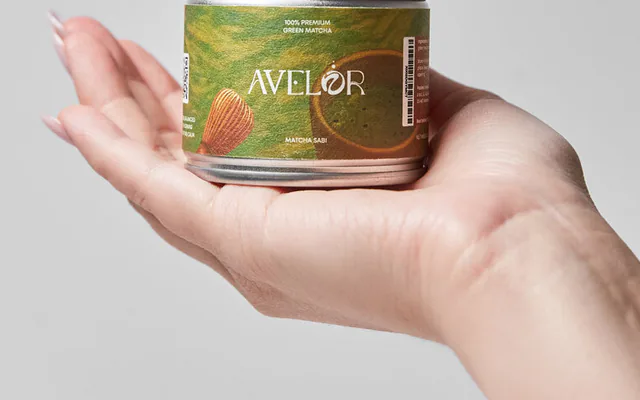
If you are just starting, take the smallest tin of ceremonial grade — it lasts a month drinking every other day and lets you see how you react: see Avelor matcha →
How much matcha can I drink a day?
For most healthy adults a sensible range is 1–3 servings a day. The caffeine-based limit sits higher — around 400 mg a day from all sources, which is 5–6 servings — but only if you are not also drinking coffee or tea.
Can I drink matcha every day?
For a healthy adult, one or two servings daily is unremarkable and needs no breaks. A break only makes sense if you want to reset your tolerance — the perceived effect returns after 1–2 weeks.
How much matcha a day if I also drink coffee?
Subtract the coffee caffeine from the same pool. With two filter coffees (about 220 mg) there is room for roughly two servings of matcha. Everything counts together; matcha has no separate allowance.
How do I know I am drinking too much matcha?
Typical signs are trouble falling asleep, a racing heart, irritability, an afternoon headache and stomach discomfort. Drop one serving and observe for three days.
What time should I drink matcha?
The first serving in the morning after breakfast, the second in the early afternoon. The last no later than eight hours before bed, since caffeine has a half-life of 5–6 hours. If you are caffeine-sensitive, keep it to the morning.
How many grams of matcha will I use in a month?
At 2 g per serving: about 30 g drinking every other day, about 60 g drinking once a day, and about 120 g at two servings. That is also the answer to which pack to buy — it should last 4–6 weeks.
Do I need to take breaks from matcha?
There is no such recommendation for healthy adults. Cyclical abstinence and "detoxes" are internet ideas. The only sensible reason for a break is to restore the perceived effect of caffeine.