Can matcha be bad for you? Side effects, dosage and who should be careful
Matcha is a single-ingredient drink — ground tea leaf. The problems people blame on it almost always come down to three things: too much caffeine, the wrong time of day, or poor raw material. Point by point, without scaremongering and without miracle promises.
Let us start with the part that cannot be worked around: we are not doctors and this is not medical advice. What follows is what is known about the composition of the drink and the commonly used reference points. If you take medication, are pregnant or have a diagnosed condition, that question goes to a doctor, not to a tea shop.
The short answer
For a healthy adult, one or two servings of matcha a day is unremarkable — roughly the caffeine of one or two espressos. Trouble starts in four situations: too large a dose, an empty stomach, the wrong hour and poor raw material. The first three are up to you; the fourth depends on what you buy.
1. Caffeine — the usual culprit
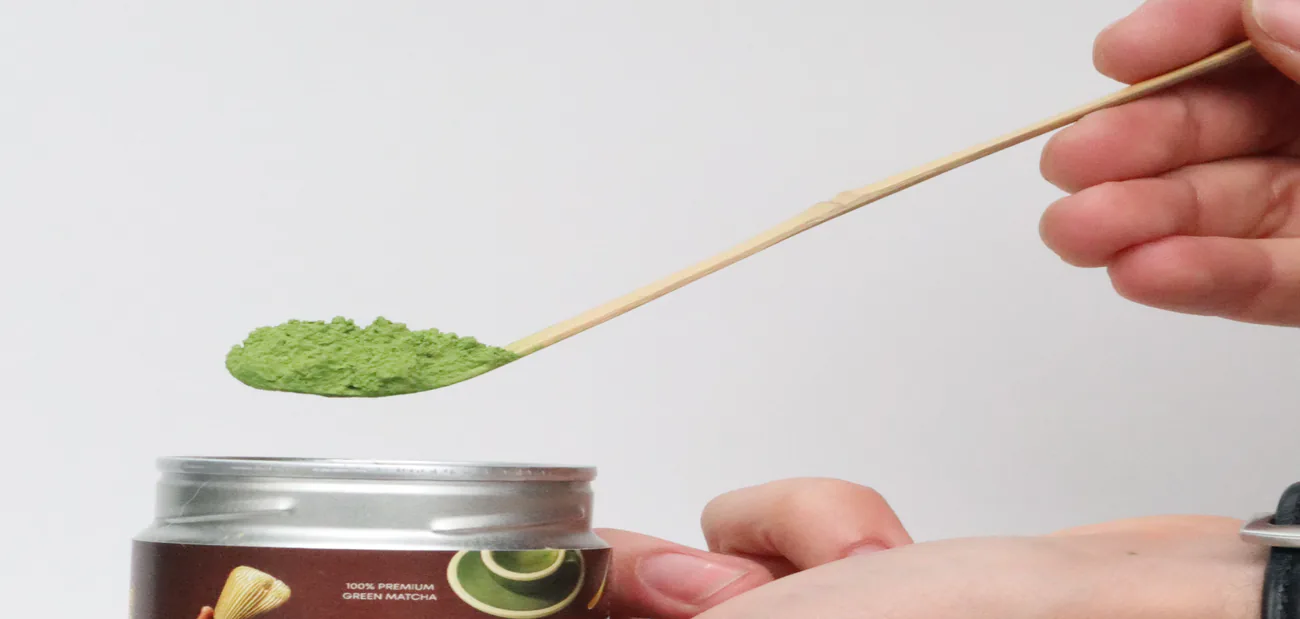
A standard serving (2 g of powder) carries 60–70 mg of caffeine, the level of an espresso. That is far more than brewed green tea, which many people use as their mental reference — hence the surprise. We covered the full comparison with coffee, cola and energy drinks separately: how much caffeine matcha has →
The commonly cited reference for healthy adults is up to 400 mg of caffeine a day from all sources combined. That is about five to six servings of matcha — but only if you drink no coffee, tea or energy drinks alongside. Few people live like that, so the realistic ceiling is lower.
The symptoms of exceeding your own tolerance are dull and predictable: raised heart rate, irritability, shaky hands, trouble falling asleep. They are no different from coffee, because the substance is the same.
2. Matcha on an empty stomach
This is the most common beginner mistake and the easiest to fix. Matcha on a completely empty stomach can cause nausea and a dry, astringent feeling — tannins are responsible, together with caffeine stimulating gastric acid.
The fix is trivial: drink it after breakfast or with it, or in a milk version — fat and protein noticeably soften the effect. If you like starting the day with matcha, start with matcha latte →, not with straight usucha.
3. Iron and meal timing
The polyphenols in tea — matcha included — reduce the absorption of non-haem iron, the kind that comes from plants: grains, pulses, leafy vegetables. This is a documented mechanism, not forum folklore. It does not apply to the same degree to iron from meat.
The practical conclusion is simple and costs you nothing: leave about an hour between matcha and an iron-rich meal or an iron supplement. Anyone with anaemia or at risk of deficiency should settle this with a doctor.
4. Raw material quality — the one point a shop controls
Matcha is the whole ground leaf, not an infusion you throw away. You drink everything that was in the leaf, including what the plant took up from the soil. That is why asking about laboratory testing of the batch (heavy metals, pesticide residues) makes more sense here than with any other tea.
This is a real difference between suppliers, not a marketing device. A good supplier will show batch results; anonymous marketplace powder has nothing to show. How to judge quality by colour, smell and labelling: how to recognise good matcha →
Who should take care
- Pregnant and breastfeeding women. Caffeine guidance is stricter here — around 200 mg a day from all sources is the figure usually quoted, roughly three servings. A conversation for your doctor, not for your own arithmetic.
- People low in iron. See point three — spacing from meals and supplements.
- People on medication. Caffeine interacts with a number of drugs. The leaflet and a pharmacist answer this better than the internet.
- People sensitive to caffeine or sleeping badly. Caffeine has a half-life of several hours; matcha after 3 p.m. can stay with you all night.
- Children. There is no reason to give a child a drink carrying espresso-level caffeine.
What matcha does not do
A separate paragraph, because this category holds more promises than facts. Matcha is food, not medicine: it does not cure disease, does not replace treatment and does not "detox" anyone. European law explicitly forbids attributing medicinal properties to food, and that is a good rule — it stops tea being sold as therapy. What research on the leaf's components actually shows is here: matcha properties →
How many servings a day make sense
| Situation | Sensible ceiling |
|---|---|
| Starting out, no coffee | 1 serving in the morning, for a week |
| Daily drinker, no coffee | 2–3 servings, the last before 3 p.m. |
| You drink coffee too | 1 serving plus your usual coffee — count the total |
| Caffeine sensitive | 1 serving in the morning; watch your sleep for a few days |
If everything is fine after a week, there is no reason to change anything. If something is off, first cut the dose and move the hour — blame the drink last.
In summary
Matcha is neither a super-medicine nor a hazard. It is a strong single-ingredient caffeinated drink that a healthy adult tolerates well when it is taken sensibly, after food and in the first half of the day. The rest is a question of powder quality — and that shows in the colour, the smell and in whether the supplier has anything to prove it with.
Is matcha bad for your stomach?
On a completely empty stomach it can cause nausea and an astringent feeling — tannins and caffeine stimulating gastric acid are responsible. Drinking it after breakfast or as a latte makes the problem disappear.
How much matcha can you drink per day?
For a healthy adult the commonly cited reference is up to 400 mg of caffeine a day from all sources, which is about five to six servings of matcha. Realistically, if you also drink coffee, one or two servings is the sensible ceiling.
Does matcha block iron?
It does not flush iron out, but tea polyphenols reduce the absorption of non-haem, plant-based iron. An hour between matcha and an iron-rich meal or supplement settles it.
Can you drink matcha while pregnant?
Caffeine guidance in pregnancy is stricter — around 200 mg a day from all sources is the usual figure. That is a question for your doctor, because the whole diet counts, not matcha alone.
Does matcha contain heavy metals?
Matcha is the whole ground leaf, so you drink everything the plant took from the soil. That is why laboratory testing of the batch genuinely matters here — a credible supplier can be asked for it, an anonymous powder cannot.
What is the best time of day for matcha?
Morning or early afternoon, after food. Caffeine has a half-life of several hours, so a serving after 3 p.m. can make falling asleep harder for sensitive people.