Organic matcha and lab testing — what a certificate really means and what to ask a seller
You drink matcha together with the leaf — there is no infusion to strain, you consume the raw material itself. That single sentence explains why questions about residues and batch testing carry a different weight here than with a tea bag.
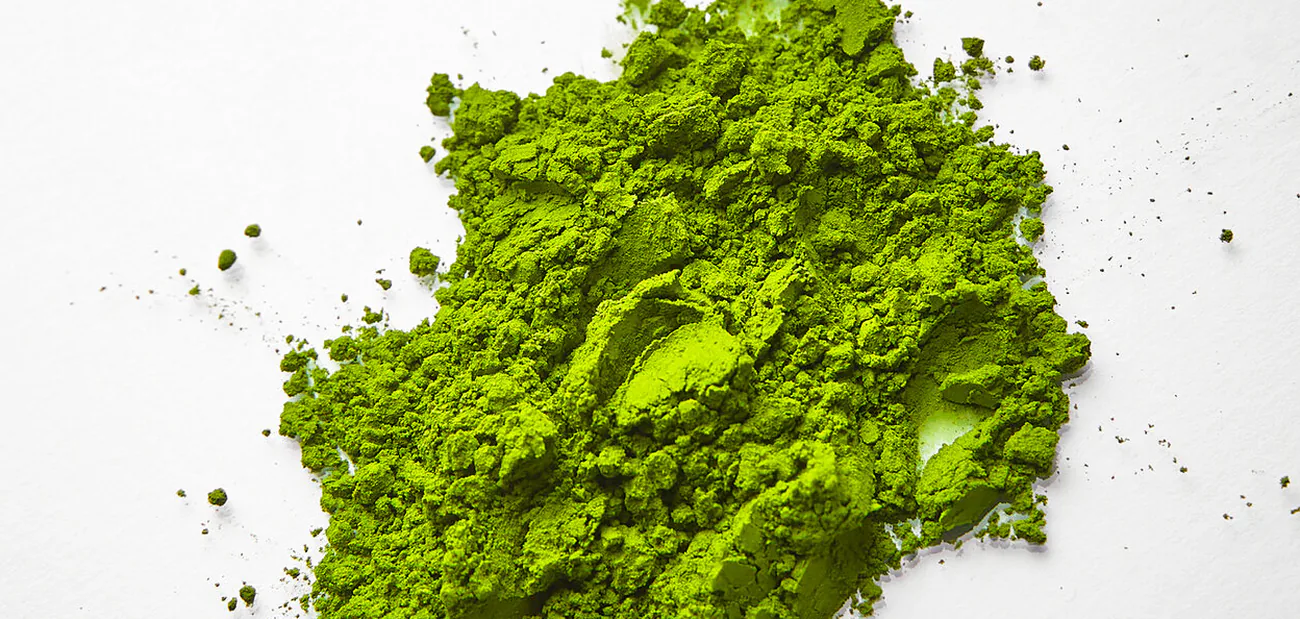
With ordinary tea, only what washes out of the leaf in a few minutes reaches your cup. With matcha, everything does: the whole ground leaf, along with whatever was on it and in it. Which is why it is worth knowing what the labels mean, and what counts as proof rather than a declaration.
What “organic” means — and what it does not
In the European Union the words “organic”, “bio” and “eco” are legally protected (Regulation 2018/848). A producer cannot use them without a certificate issued by an authorised control body, and imported products need documentation confirming equivalent standards.
On a pack you recognise a real certificate by three things at once:
- The logo — the white leaf made of stars on green (the “euro-leaf”).
- The control body code in the format XX-BIO-000 or XX-ECO-000, where XX is the country code.
- An origin statement (“EU / non-EU Agriculture”).
What the certificate does not promise: that the matcha tastes good, is fresh, comes from the first harvest, or is free of heavy metals. It covers how the plant was grown, not the grade of the raw material — organic matcha from a late harvest is exactly as bitter as non-organic.
Organic is not the same as tested
| Organic certificate | Batch testing | |
|---|---|---|
| What it covers | farming and processing methods | the specific lot that goes on sale |
| Who issues it | a control body | a laboratory |
| How often | periodic farm inspections | batch by batch |
| What it says about heavy metals | nothing | exactly as much as was tested |
Heavy metals are the clearest example: lead and cadmium come from soil and air, not from spraying. Organic farming does not change that at all — only a test can tell you.
What is actually worth testing
- Pesticide residues — a multi-residue screen covering hundreds of substances at once. The EU sets maximum residue levels (MRLs), and food from outside the Union is subject to checks when placed on the market.
- Heavy metals — above all lead, cadmium and arsenic.
- Microbiology — the powder is dry, but it passes through many hands along the supply chain.
- Colourants and adulteration. A real problem in the cheapest segment: powder tinted or blended with cheaper material to improve the colour. Colour sells, and colour can be faked — taste and a lab result cannot.
How to read a certificate of analysis
A report that means anything has five elements. Any one missing is an answer in itself:
- A batch number matching what you are holding. A report without a batch number describes nothing in particular.
- The test date and the production date of the lot. A document from three years ago describes goods from three years ago.
- The laboratory and its accreditation (ISO/IEC 17025). That is the difference between a measurement and an opinion.
- The scope — how many substances the panel covered. “Tested for pesticides” without a scope means nothing.
- Results with the limit of quantification (LOQ) and a reference to the legal limit. “Not detected” only makes sense when you know below which threshold.
Warning signs
- A “quality certificate” issued by the producer itself. That is a declaration, not a certificate.
- The word “organic” with no control body code. In the EU that is simply not compliant.
- Health promises such as “detox”, “boosts immunity”, “burns fat”. Regulation 1924/2006 forbids attributing such properties to food without an authorised claim, and for green tea no such claims exist. A seller who uses them either does not know the rules or does not care — and it rarely stops at marketing.
- No information about origin at all. Country of origin is a fact any honest seller states without hesitation.
- A price far below the market. First-harvest ceremonial matcha has a raw-material cost; powder three times cheaper than the market is cheaper for a reason — usually a later harvest, higher grinding yield and worse taste. Market ranges are in how much matcha costs.
Six questions for a seller
- Which batch will I receive, and when was it packed?
- Was the batch lab tested, and what did the panel cover?
- What is the origin of the raw material?
- Which harvest is it — first or later?
- How long has the powder been with you since grinding?
- Can I get a sample before a larger order?
Honest answers to those six say more about quality than any graphic on a website. If a seller is evasive about batch and date, the rest of the conversation hardly matters.
Organic or not — how to decide
If an organic certificate matters to you in itself, buy a product that carries one — and check the control body code. If your priority is safety and taste, look at whether the seller tests batches and can discuss it in specifics. The best case is both; the worst is neither, with “100% natural” graphics in the foreground.
At Avelor we test batches in a laboratory and state the origin of the raw material in the product description — that information should be public, and with us it is. If you buy for a venue and need documentation with every delivery, say so with your order: B2B offer. To try first, the simplest route is the sample set — you judge taste and colour yourself before committing to a larger format.
One last thing that gets lost in certificate debates: what decides the quality of the cup in practice is freshness and harvest, not a sticker. How to judge that yourself is in how to recognise good matcha.
Does matcha have to be organic to be good?
No. An organic certificate describes the farming method, not the grade of the material — organic matcha from a late harvest is as bitter as non-organic. Taste is decided by harvest, shading, freshness and the way it is ground.
How do you recognise a genuine organic certificate?
By three elements together: the EU leaf-of-stars logo, the control body code in the format XX-BIO-000 or XX-ECO-000, and an origin statement. The word “organic” without a control body code is not a certificate.
Can matcha contain heavy metals?
Metals such as lead and cadmium come from soil and air, so they can occur in any plant material, organic included. The only way to know is a laboratory test of the specific batch — an organic certificate says nothing about it.
What should a batch test report contain?
A batch number matching the pack, the test date, the name of an accredited laboratory (ISO/IEC 17025), the scope of the panel, and results with the limit of quantification and a reference to the applicable limits.
Why do residues matter more in matcha than in other teas?
Because you drink the whole ground leaf rather than a strained infusion. With classic tea only part of the leaf content reaches the cup; with matcha, everything that was in it does.
Does “lab tested” on a pack mean anything?
Only if a document stands behind it: batch number, date, laboratory and scope. Without those it is a marketing line, and it is worth simply asking the seller about it before buying.