How much does matcha cost — price per gram in a tin, in 100 g and by the kilo
The price on the tin means nothing until you divide it by grams. The same sum can buy you fifteen servings or five hundred. Below: the only number that lets you compare offers honestly — and the point at which the bigger format stops being a saving.
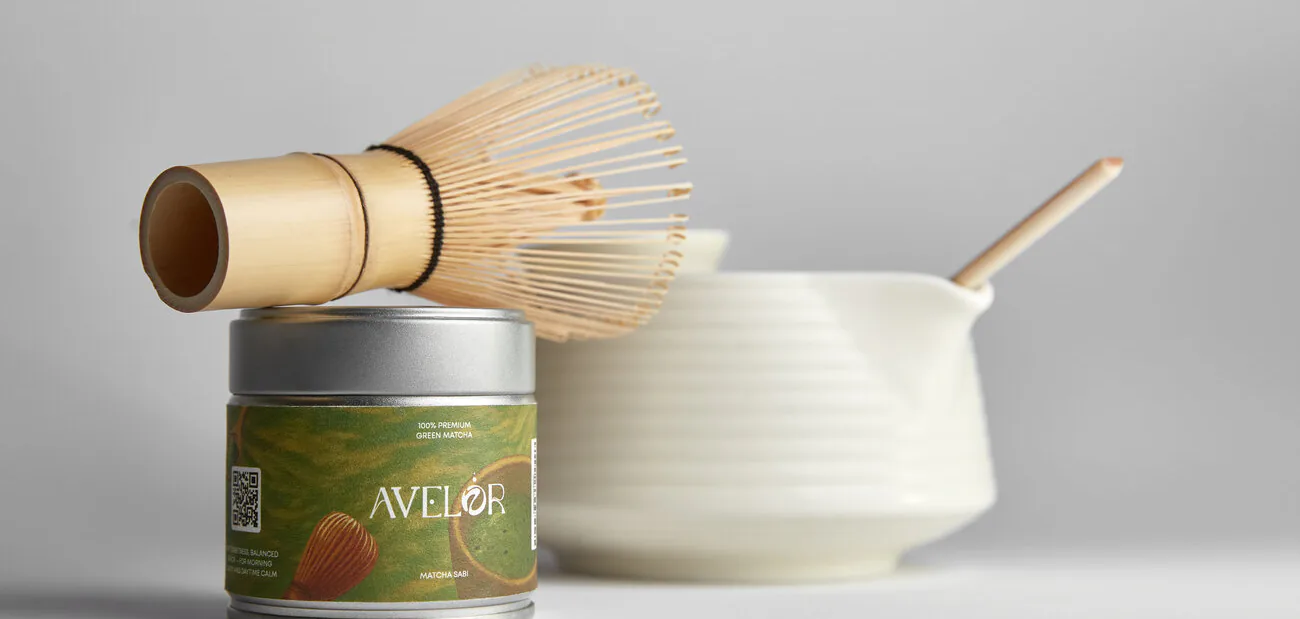
Matcha is sold in packs from 10 g to 1 kg, and shelf prices differ by orders of magnitude. Comparing them directly is pointless. The only figure that lets you put two offers side by side is the price per gram — start there.
First convert to grams and to servings
A standard serving is 2 g of powder. Hence the simple arithmetic worth doing before any purchase:
| Format | Servings per pack | How long at one serving a day |
|---|---|---|
| 10 g (sample) | 5 | under a week |
| 30 g (tin) | 15 | 2 weeks |
| 100 g | 50 | about 7 weeks |
| 500 g | 250 | over 8 months |
| 1 kg | 500 | over 16 months |
That last column matters more than it looks — we come back to it when asking when a large format stops paying off.
Market ranges — what to expect
Prices move from harvest to harvest, but the orders of magnitude have held for years. Per gram, the market splits roughly like this:
| Class | Price per gram | What for |
|---|---|---|
| Flavoured powder (with sugar, milk powder) | very low | this is not matcha — it is a blend |
| Culinary matcha | low | baking, heavily sweetened lattes |
| Ceremonial matcha | mid to high | drinking neat, latte without masking |
| Single collector lots | very high | a curiosity, not an everyday buy |
If an offer looks clearly cheaper than everything around it in the same class, that is not a bargain — it is a different class of goods, or a blend. We break the classes down here: ceremonial or culinary matcha →
Where the price difference comes from
- Harvest. The first harvest gives the youngest leaves, the most amino acids and the least bitterness. Later harvests are cheaper to produce and taste distinctly worse neat.
- Shading. Weeks under netting is a real cost and a real drop in yield — and it is precisely what builds umami and colour.
- Grinding. Slow stone grinding yields tens of grams an hour and does not overheat the leaf. Industrial grinding is many times faster and cheaper, and it shows in taste and aroma.
- Leaf sorting. Removing veins and stems before grinding raises the cost and at the same time removes a source of bitterness.
- Packaging. A tin with an inner sachet costs more than a plain bag — but it is what keeps the powder from going flat within a week.
When a larger format genuinely pays off
Price per gram falls with every step up in size — no exceptions. The catch is that once opened, matcha loses to time: it oxidises, fades and turns bitter. A kilo bought "to save money" by someone drinking one serving a day lasts over a year, and for most of that time it will no longer be what they paid for.
A practical rule: buy the format you will finish within 2–3 months of opening.
| How much you drink | Sensible format |
|---|---|
| a few times a week | 30 g |
| one serving daily | 100 g |
| 2–3 servings daily, or a household | 100 g, possibly 500 g with good storage |
| café, bakery, catering | 500 g or 1 kg |
If you go large anyway, storage stops being a detail: how to store matcha →
For cafés: cost per serving against the menu price
In hospitality the maths is different, because a kilo goes in weeks rather than years — and then the lowest price per gram works in full. At kilo format the raw-material cost per serving typically drops to around a quarter of what a retail customer pays buying a 30 g tin.
At a typical menu price for matcha latte, the powder itself is usually in the low tens of percent of the drink — the rest is milk, labour and margin. That is why matcha is a high-margin line in a café, provided you buy it in the right format. We put numbers on it here: matcha on a café menu →
What not to buy, however cheap
- Powders with sugar or milk powder. Check the ingredients — matcha has one: green tea leaf.
- Packs with no harvest date, or at least a packing date. Without it you do not know what you are buying.
- Transparent packaging. Light destroys matcha faster than time does.
- Culinary sold as ceremonial. You will spot it by colour and bitterness — exactly how, in how to recognise good matcha →
Three sentences to take away
Convert every offer to a price per gram, because that is the only comparable number. Choose the largest format you will drink within a quarter — not the largest you can afford. And if a price sits well below the rest of the market in the same class, read the ingredients before calling it a bargain.
Current prices for every SABI and IKI format are in the shop: see Avelor matcha →
How much does matcha cost per gram?
It depends on the class. Culinary matcha is the cheapest, ceremonial costs several times more per gram, and single collector lots can go several times higher again. Offers far below the rest of the market in the same class are usually blends with sugar or milk powder rather than bargains.
How many servings are in a pack?
At a standard 2 g serving: 30 g gives 15 servings, 100 g gives 50, 500 g gives 250 and a kilo gives 500. It is the simplest way to compare two packs of different sizes.
Is it worth buying a kilo of matcha?
It is worth it if you finish it within 2–3 months of opening — so in a café, bakery or catering operation. At home a kilo lasts over a year, and for most of that time the matcha will already be flat, so the saving per gram is eaten by the loss in quality.
Why is ceremonial matcha more expensive than culinary?
It comes down to the first harvest, weeks of shading the bushes, removing veins and stems before grinding, and slow stone milling. Each step lowers production yield and raises cost, and in return gives colour, umami and the absence of bitterness.
How much does one serving of matcha cost?
The cost per serving is simply the price per gram times two. At kilo format it usually works out at around a quarter of what someone pays for the same matcha in a 30 g tin — and that is the whole economics of buying in bulk.
How can you tell matcha is too cheap?
Check three things: the ingredients (there should be one — green tea leaf), the presence of a harvest or packing date, and the packaging (opaque and airtight). A gap in any of these usually explains a low price better than any promotion does.