Matcha wholesale pricing — how to read a price list and calculate your entry cost
Two wholesale offers are almost never directly comparable: different pack sizes, different tiers, different delivery terms, sometimes a different currency. They can, however, be reduced to one number — the net price per gram including delivery — and only that number means anything.
Matcha is a product where the gap between formats is often larger than the gap between suppliers. So a conversation about price lists should start with the unit, not the amount.
The only unit that counts
Net price per gram, with delivery included. Not the price per pack, not the “from” figure at the top of the list, and not the gross price, because you reclaim VAT. The formula is trivial, which is exactly why it works:
(net price per pack + delivery attributable to that pack) ÷ number of grams = cost of 1 g
Once three offers are in that shape, the cheapest headline usually turns out not to be the cheapest in the ledger — most often because of delivery or a logistics minimum.
Why a kilogram is so much cheaper per gram
Because in a small format you mostly pay for everything except the matcha. The tin, the label, the check, the packing and the order handling cost almost the same for 30 g as for 1 kg — they are simply spread over thirty times fewer grams.
| Format | Price per gram (proportionally) | Why keep it |
|---|---|---|
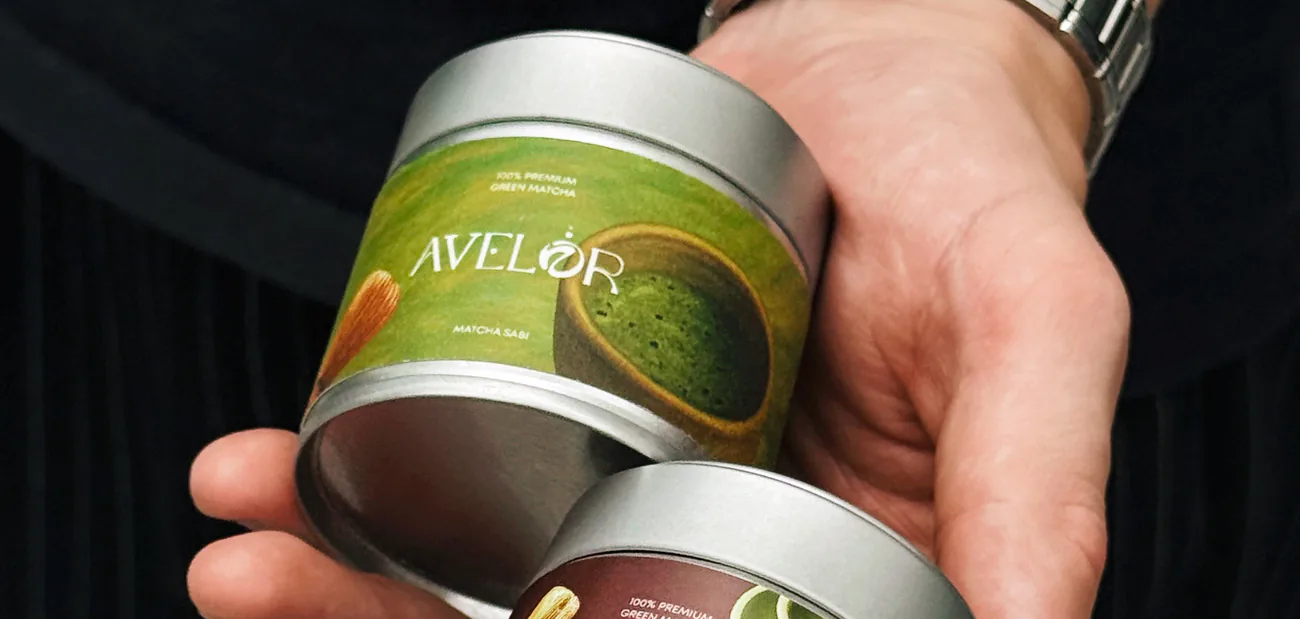
| 30 g tin | ≈ 4× the kilogram price | retail shelf, gifting |
| 500 g | ≈ 1.2× the kilogram price | smaller venue, test before a bigger order |
| 1 kg | the reference point | daily bar work |
These are market proportions, not specific amounts — amounts move, proportions stay. The ranges behind retail prices are in how much matcha costs.
What a wholesale price is really made of
- Raw material — harvest (the first is dearer), degree of shading, leaf grade.
- Grinding — slow stone milling yields tens of grams per hour; that is a real cost, not folklore.
- Packaging and protection — barrier bag or tin, protective atmosphere; it decides how much of the quality reaches the bar.
- Logistics and market entry — imports from outside the EU add duty, import VAT, customs agency handling and inspections.
- Batch testing — a fixed cost per batch, so it weighs most on small batches.
- Storage and rotation — matcha ages quickly, so stock is not only tied-up cash but also a quality risk.
A supplier who can break their price into these parts usually knows what they sell. One who says only “that is the price” is usually a middleman.
From price per gram to price on the menu
- Matcha cost per cup = cost of 1 g × grams per serving. The standard is 2 g for a classic latte, 2–3 g for a stronger or iced version.
- Drink cost = matcha + milk + sweetener + cup, lid and straw (the line most often forgotten in takeaway).
- Menu price = drink cost ÷ target food cost. In hospitality the typical target is 18–25%, a multiplier of 4–5.5.
- Sanity check: compare the result with the cappuccino price in your venue. A matcha latte almost always lands higher, and that is fine — provided the cup justifies it.
The full calculation with variants (plant milk, 500 g versus 1 kg) is in cost of a matcha latte serving.
Costs that are not in the price list
- Delivery charged per order, not per kilogram. On a single kilo it can shift the per-gram price by a double-digit percentage.
- Logistics minimums — “free delivery above X” is often set above your real consumption.
- Importing from outside the EU yourself — duty, VAT, agency, possible inspections and time. A cheap offer from the other side of the world stops being cheap once those are added.
- Exchange rate on a price list in EUR or USD — a real risk on an annual contract.
- Paid samples and the cost of testing in the venue (barista, milk, time).
- Losses to ageing if you buy more than you use in a reasonable time — see does matcha go bad.
Volume tiers or a contract
With tiers you pay less per gram the more you take at once — but you tie up cash and carry the rotation risk. With an annual agreement and partial deliveries the price usually sits between tiers, while the goods arrive fresh and the warehouse stays with the supplier.
A simple test: work out how many kilograms you use per month and buy so that an opened pack is finished in 4–6 weeks. If the tier with the best price requires a three-month stock, the saving is eaten by the quality drop in months two and three.
What to demand in an offer
- Net price per gram for every tier and format, in one currency.
- MOQ and the delivery cost at that quantity.
- Lead time — days from order to unloading, and what happens when stock runs out.
- Batch consistency — whether you will get the same matcha for the coming months or “something similar”.
- Documentation — batch number, packing date, testing scope.
- A sample from the same batch you will actually receive.
- Payment terms and complaint conditions.
A request built from those seven points gets comparable answers — and immediately shows who has goods and who only has a price list.
Warning signs in a price list
- A “from” price with no pack size and no tiers.
- No information about harvest or grade — “premium” is an adjective, not a grade.
- Refusal to send a sample from a specific batch.
- A price well below the market for a declared ceremonial grade. How to verify quality is in organic and lab testing and how to choose a matcha supplier.
Before you send the enquiry
Work out three numbers: monthly usage in grams, your target food cost, and the price you can realistically put on the menu. With those, you are talking specifics rather than “your best offer”. Our tiered pricing and the 500 g and 1 kg formats are here: business offer; if you want to compare taste first, start with the sample set.
How much does wholesale matcha cost?
Prices depend on harvest, grade and format, but one thing decides: the net price per gram with delivery included. A kilogram usually works out about four times cheaper per gram than a 30 g tin, because in a small format you mostly pay for packaging and handling.
How do you price a matcha latte on a menu?
The matcha cost per cup is the cost of one gram times the grams per serving (usually 2 g). Add milk, sweetener and takeaway packaging, then divide the total by your target food cost — in hospitality most often 18–25%, a multiplier of 4–5.5.
What is a typical minimum order?
Most often one kilogram or a few 500 g packs. More important than the MOQ itself is whether delivery at that quantity pushes up the price per gram — so always ask for a price including transport.
Is a larger stock worth the lower price?
Only if the opened pack is used within 4–6 weeks. Matcha loses colour and sweetness after opening, so a tier saving can disappear into quality loss and tied-up cash.
Will I get a sample before a wholesale order?
A serious supplier sends a sample from the same batch they will deliver — that is standard. A refusal, or a sample “from another batch”, is itself information about their quality control.
What should a request for quotation contain?
Monthly usage in grams, the format you want, delivery country and timing. In return, ask for the net price per gram at each tier, MOQ, delivery cost, lead time, batch number and testing scope, plus payment terms.