How to store matcha so it keeps its colour and flavour
Matcha is the one tea that degrades fast — it is a ground leaf with an enormous surface area exposed to air. Good matcha stored badly loses its colour within weeks. Here are the four things that destroy it, what to do about each, and how to spot a powder that is past its best.
Four things destroy matcha, always the same four: oxygen, light, moisture and heat. A ground leaf has a vast surface area, so it reacts to them far faster than loose-leaf tea. All of storage is about shutting those four out.
Why matcha in particular goes off so quickly
Loose-leaf tea is a rolled, dried leaf — air mostly reaches its outer surface. Matcha is that same leaf milled to a powder with particles measured in single-digit to low double-digit micrometres. The same mass of raw material suddenly has hundreds of times more surface in contact with oxygen. What takes years in leaf tea happens in weeks in matcha.
Three things go first, and they are precisely the ones you paid for:
- Chlorophyll — responsible for the colour. It breaks down under light and heat, and the green shifts to olive, then yellow.
- L-theanine and amino acids — responsible for umami, that sweet, brothy depth. They oxidise first, which is why old matcha tastes flat.
- Delicate aroma compounds — they escape every time you open the tin.
What remains are the catechins, which are more stable and taste astringent. Hence the classic profile of stale matcha: bitterness with no sweetness behind it. That is not a fault of the batch but a consequence of storage — we covered the other causes in why matcha tastes bitter.
The rules in short
- Airtight. The original tin with a good seal, or a gasketed container. Not a pouch closed with an elastic band.
- Dark. Opaque packaging. Light breaks down chlorophyll — precisely what gives matcha its colour.
- Cool. The fridge after opening, with one important caveat (below). An unopened tin is perfectly happy in a cupboard.
- Dry and away from smells. Matcha absorbs odours like baking soda. Never next to coffee, spices or cheese.
- Use within 4–6 weeks of opening. That is the real shelf life for drinking, not for safety.
What to keep it in — containers compared
The container does more work here than the shelf it sits on. A short comparison of what you will actually encounter:
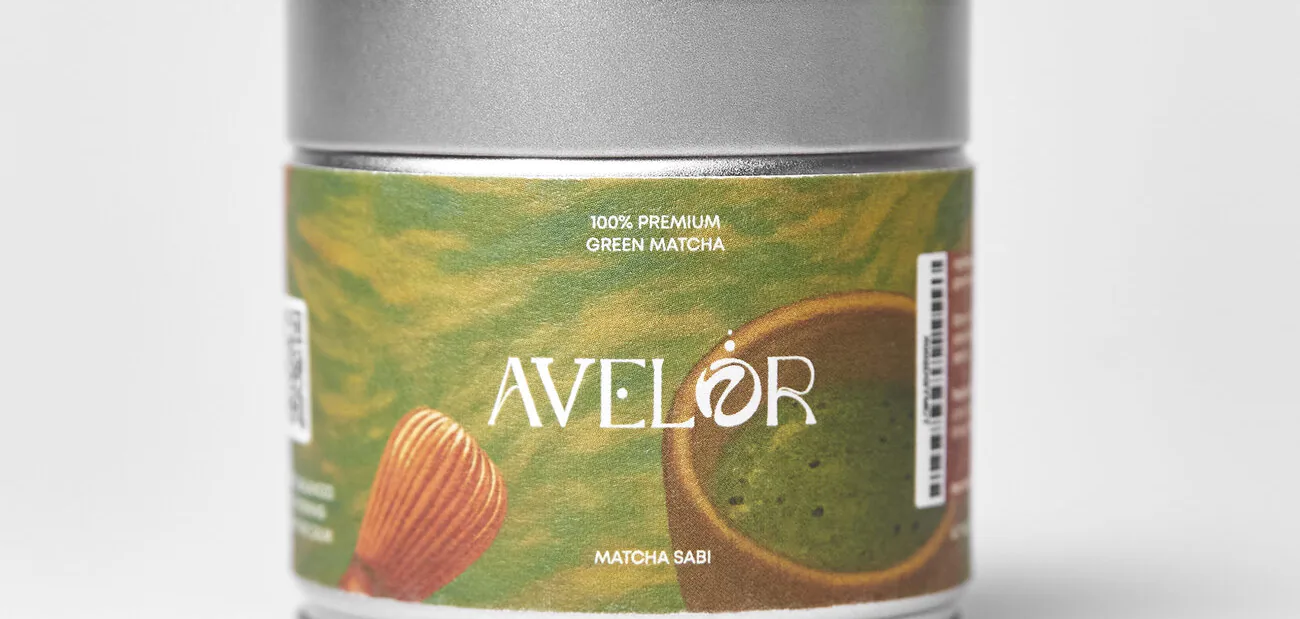
- Original tin with an inner lid — the standard for good matcha and usually the best choice. Opaque, rigid, double-sealed. Nothing to decant.
- Container with a silicone gasket — good, provided it is opaque. Clear ones only inside a dark cupboard.
- Glass jar on the worktop — the worst of the common options. It looks striking and costs you the colour in a fortnight.
- Zip-lock pouch — for transport, not storage. A zip seal is not oxygen-tight and the film lets smells through.
- Vacuum container — best in theory, rarely necessary at home. It earns its place with large formats.
If you buy matcha in a bag or a large pack, decant it into an airtight, opaque tin straight away — and do it once, not at every serving.
The fridge — yes, with one condition
The fridge slows oxidation and it genuinely works. There is a trap, though: a cold tin brought out onto the worktop collects condensation, and moisture in matcha is the end of it — clumps and lost aroma.
The correct order:
- Take the tin out of the fridge closed.
- Wait 20–30 minutes until it reaches room temperature.
- Only now open it and measure out your serving.
- Close it and put it back.
This single rule decides whether the fridge helps or hurts. A tin opened straight from the cold collects moisture at every use — after a month the result is worse than leaving it in a cupboard.
If you drink matcha daily and finish a tin within a month, a cupboard is fine too — as long as it is dark, dry and away from the hob. The fridge earns its keep with larger packs and slower consumption.
Large formats: the two-tin rule
With 500 g or a kilogram, opening the main pack every day is the worst thing you can do — each opening exchanges the air above your entire stock.
The solution used in cafés is simple and works just as well at home:
- Keep the main pack closed, cool and dark. You open it once a week.
- Decant a few days' worth into a small working tin.
- Day to day, reach only for the small one.
Your stock then ages at the rate of an unopened pack rather than one opened three times a day. More on working with large formats in our piece on matcha on a café menu.
How to tell matcha has gone stale
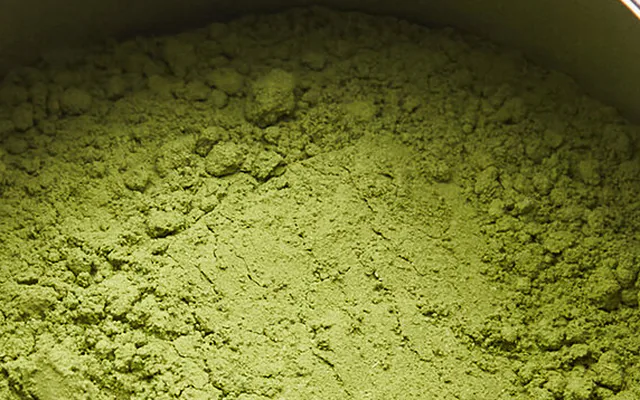
- Colour. Vivid green turns dull, then olive, then yellowish. This is the first and most reliable signal.
- Smell. Fresh matcha smells sweet and vegetal. Old matcha smells of hay, dust, or nothing at all.
- Taste. Umami disappears first, leaving bare astringent bitterness.
- Foam. Fresh matcha whisks to a dense, fine foam. Old matcha gives a thin foam with large bubbles that collapses quickly.
- Texture. Fresh powder is fluffy and sifts without resistance. Clumping means moisture has got in.
The simplest test at home: tip a pinch onto a sheet of white paper and compare it with what you remember from day one. Against white, colour lies less than any other signal. We gathered more markers in how to recognise good matcha.
Stale matcha is not spoiled in any safety sense — it simply stops tasting of much. Do not throw it away: it works in baking, smoothies and ice cream, where sugar and fat mask the lost nuance.
The five most common mistakes
- Storing it above the hob or next to the kettle. Heat and steam — two of the four factors at once.
- A clear jar on the worktop. It looks lovely and costs you the colour in two weeks.
- A wet spoon. One drop of water in the tin clumps the powder and accelerates decay. Always a dry spoon or a bamboo chashaku.
- Buying in bulk to save money. A kilogram at home guarantees the second half ends up in cake.
- Keeping it in the freezer. Freezing and thawing means repeated condensation. The fridge is enough.
How long matcha lasts
- Unopened, cool and dark: typically 12 months from packing, as printed on the tin.
- Opened: 4–6 weeks at full flavour, then a gradual decline.
- Opened and badly stored: it can lose its colour in two weeks.
It helps to separate two dates. The one on the packaging tells you how long the product is fit to consume. The window described here is something else: the period in which matcha is worth what you paid. A year-old powder will not harm anyone, but it is no longer the thing you bought.
Match the pack size to how fast you drink
This is the most effective storage method there is: do not own more matcha than you will drink. Roughly, at about 2 g per serving:
- 30 g — around 15 servings. A month if you drink it every other day. The natural choice for home.
- 100 g — around 50 servings. For a daily drinker, or two people in one household.
- 500 g and 1 kg — catering formats. A café gets through them in a week; at home they will age.
If you are torn between two sizes, take the smaller one. The saving per gram never makes up for drinking matcha that has lost its colour. See the formats in the shop →, and if you are buying for a venue, check the wholesale terms.
Does matcha need to be kept in the fridge?
After opening the fridge helps, because it slows oxidation. One condition: take the tin out closed and let it reach room temperature for 20–30 minutes before opening, otherwise water condenses on the cold powder.
How long can I use matcha after opening?
Around 4–6 weeks at full flavour. After that matcha is not spoiled, but it loses colour, aroma and umami, leaving only bitterness.
How do I know if matcha has gone stale?
By colour first — vivid green turns olive and then yellowish. Then: a hay-like smell instead of a sweet vegetal one, no umami in the taste, and a thin foam with large bubbles instead of a dense, fine one.
Can I freeze matcha?
Better not. Freeze–thaw cycles mean repeated condensation, and water is the worst thing for matcha. The fridge is entirely sufficient.
What should I do with old matcha?
Do not bin it — it works in baking, ice cream and smoothies. Sugar and fat mask the lost nuance, so in a cake the difference is practically undetectable.
Which matcha pack size should I choose?
One you will finish in 4–6 weeks. A 30 g tin is about 15 servings, so a month if you drink it every other day. The 500 g and 1 kg formats make sense in a café, not in a kitchen.
Can I decant matcha into a different container?
Yes, as long as it is airtight and opaque. With large packs it is actively recommended: keep the stock sealed and work from a small tin that you refill once a week.
Is clumped matcha still drinkable?
The clumps themselves are harmless — just sift it. But if the powder has clumped inside the tin, moisture has got in, and by then the flavour has usually suffered too.
Does matcha have an expiry date?
It has a best-before date on the packaging, usually around 12 months. That is not the same as the full-flavour window, which is 4–6 weeks once opened. Older matcha is safe, it simply stops being what you paid for.