Matcha and metal spoons — does metal really harm matcha?
The short answer: a steel teaspoon will not ruin your matcha. The “no metal” rule is a blend of tradition, a few real but entirely different problems, and one misunderstanding — it is worth pulling them apart.
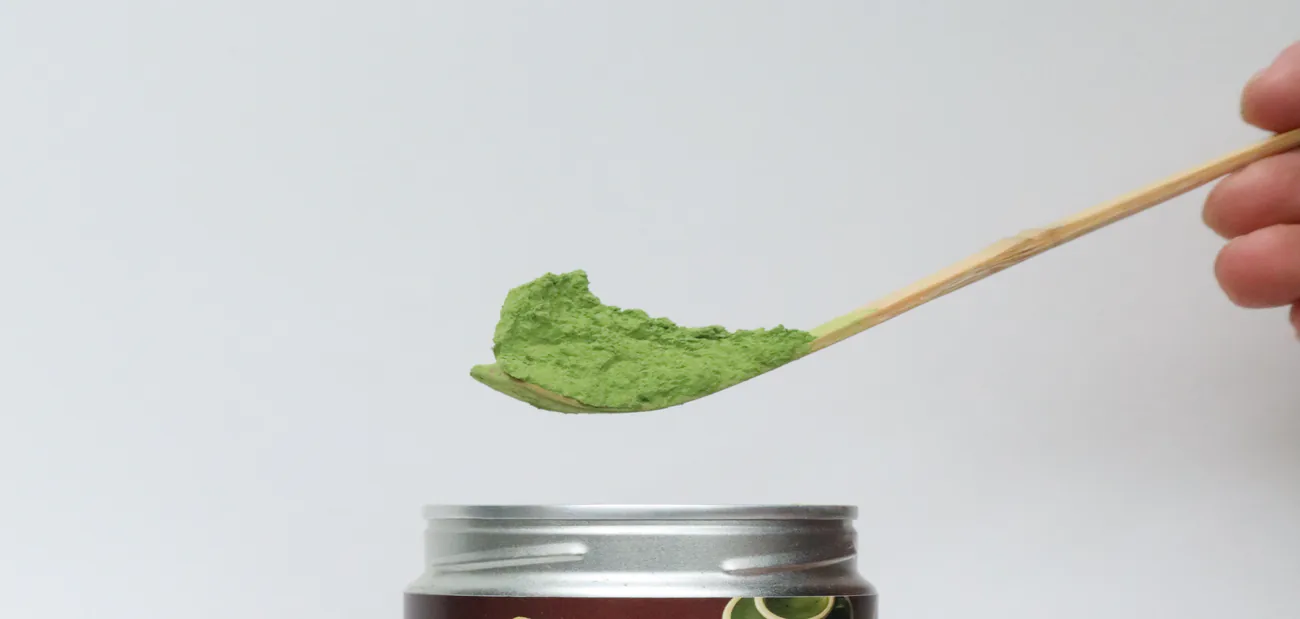
“Matcha must never touch metal” is repeated in guides so often that hardly anyone asks where it comes from. We checked it point by point. The verdict: brief contact between dry powder and stainless steel changes nothing you could measure or taste. There are, however, four grains of truth inside the myth — and each of them is about something other than the spoon.
The short answer
- A steel teaspoon, a steel sieve, a milk frother with a steel coil — fine. Matcha sieves are made of steel mesh, and matcha itself is commonly sold in metal tins.
- A wire whisk in a ceramic bowl — we advise against it, but because of scratches and poor foam, not chemistry.
- Prepared matcha kept for hours in a reactive-metal vessel (unlined aluminium, copper, unenamelled cast iron) — this one really is best avoided.
There is no evidence that momentary contact with metal “destroys antioxidants” or “kills nutrients”. We know of no study showing that — it is a phrase copied from one guide to the next.
Reason one: tradition
In the tea ceremony the powder is scooped with a bamboo scoop (chashaku) and whisked with a bamboo whisk (chasen). These tools have been part of the ritual for centuries, and nobody had a reason to swap them for metal ones: bamboo is light, easy to work, quiet and gentle on ceramics. Over time “it is done with bamboo” turned into “metal is not allowed” — and those are two different statements. The first describes a custom; the second implies a chemical reaction which, with a steel teaspoon, simply does not happen.
Reason two: scratches and weaker foam
This is a real problem, but a mechanical one. A hard metal whisk, or a spoon stirred vigorously in the bowl, can, over time, scratch the glaze — a soft one especially — or leave grey metal marks on it. Powder settles in the scratches, the bowl becomes harder to clean and loses its looks sooner.
The second issue is foam. A chasen has roughly 80–100 fine, springy tines that break up lumps and drive air into a shallow layer of liquid at the same time. A kitchen balloon whisk has a handful of thick wires and is designed for a mixing bowl, not for 70 ml of water — it aerates noticeably worse and leaves lumps behind. How to pick a whisk is covered in how to choose a chasen, and what works when you do not have one in matcha without a chasen.
Reason three: reactive metals and long contact
Here the myth brushes against chemistry. Prepared matcha is a warm, slightly acidic liquid rich in polyphenols, and polyphenols readily bind metal ions, iron in particular. If such a drink sits for a long time in a vessel made of reactive metal — unlined aluminium, copper, unenamelled cast iron — it can pick up a metallic taste and turn darker. The same mechanism makes strong tea darken when it meets iron.
Three words matter: reactive, wet, long. Stainless steel is covered by a thin, passive layer of chromium oxides and behaves practically inertly in contact with food — which is why pots, cutlery and sieves are made of it. Dry powder on a steel teaspoon for three seconds meets none of the three conditions.
Reason four: static
The most practical argument for bamboo has nothing to do with chemistry. Matcha is ground extremely fine, and in dry air — in winter, with the heating on — it picks up static easily. The powder then clings to a metal spoon: some stays on it, some scatters around the bowl, and hitting the same dose twice in a row becomes harder. Powder usually clings less to bamboo, and the narrow shape of a chashaku makes it easy to tip everything out. This is about convenience and a repeatable dose, not about the quality of the drink.
Try it yourself
You do not have to take our word for it. Weigh out two 2 g servings from the same tin: scoop one with a steel teaspoon and the other with a bamboo scoop. Sift both through the same sieve, add the same amount of water at 70–80 °C and whisk them the same way. If the scooping tool is the only difference, you will find none in taste or colour. Change the water temperature or the dose instead and you will notice it straight away — those are the variables that really decide the bowl, not the material of the spoon.
Tool, material, verdict
| Tool | Material | Verdict |
|---|---|---|
| Scooping spoon | stainless steel | fine as long as it is dry; powder may cling in dry air |
| Chashaku scoop | bamboo | the most convenient; two scoops are about 2 g |
| Sieve | stainless-steel mesh | fine — this is the standard |
| Chasen whisk | bamboo | best foam, gentle on the glaze |
| Electric milk frother | steel coil | fine, especially for lattes |
| Balloon whisk | steel wire | weak foam, can scratch the bowl — if at all, use it in a glass or jug |
| Storage tin | sheet metal, usually with a food-grade lining | fine — airtight and lightproof |
| Insulated travel mug | stainless steel | for a short while, yes; for many hours, no — because of heat and oxygen, not the steel |
| Saucepan, jug, mug | unlined aluminium, copper, unenamelled cast iron | avoid for prepared matcha |
What is fine and what to avoid
You can safely use:
- A steel teaspoon — provided it is dry. Moisture carried into the tin harms the powder far more than any metal does.
- A steel sieve — sifting is the simplest route to a lump-free drink.
- An electric frother — the steel coil touches the drink for a dozen or so seconds.
- A metal tin — an airtight tin protects the powder from light, air and foreign smells. More in how to store matcha.
Better avoided:
- Storing prepared matcha in a reactive-metal vessel — here the metallic taste and darker colour are real.
- A flask, for many hours. Not because of the steel: hot matcha kept for hours loses colour and freshness in any vessel, because heat and oxygen do that on their own. We cover the effect of heat in water temperature for matcha.
- A wire whisk in a ceramic bowl (chawan) — a waste of both glaze and foam.
How to measure 2 g without a chashaku
- A scale accurate to 0.1 g. Place the sieve on the bowl, tare the scale and tip the powder straight onto the sieve. This is the most reliable method.
- A level teaspoon is roughly 2 g — but only once the excess has been struck off. A heaped one is already 3–4 g.
- When the powder is full of static, tap the spoon against the rim of the sieve and sift straight into the bowl. Less is spilled and the dose stays repeatable.
Why grams matter more than teaspoons is explained in how many grams of matcha per serving.
Summary
A bamboo scoop and whisk are worth having — for convenience, for the foam and for the bowl, not out of fear of metal. If all you have to hand today is a steel teaspoon and a sieve, your matcha will taste exactly the same. The things to watch are different ones: moisture in the tin, water that is too hot, and a prepared drink left for hours in a reactive vessel. If you are looking for a complete kit for preparing matcha, have a look at sets and gifts.
Why should matcha not touch metal?
It is mostly a myth that grew out of tradition: the tea ceremony uses a bamboo scoop and a bamboo whisk. Brief contact between dry powder and stainless steel changes neither taste nor colour. The real issues are scratched bowls, weaker foam and long contact between the prepared drink and a reactive metal.
Can you use a metal spoon for matcha?
Yes, a dry stainless-steel teaspoon is fine. The only drawback is practical: in dry air the fine powder picks up static and clings to metal, which makes an even dose harder to measure. That the spoon is dry matters more than what it is made of.
Does metal destroy the antioxidants in matcha?
There is no evidence that brief contact with a metal spoon or sieve destroys anything. Polyphenols can bind metal ions, but that concerns long contact between a warm, prepared drink and a reactive metal such as cast iron, copper or unlined aluminium. Stainless steel behaves practically inertly towards food.
Can I whisk matcha with a metal whisk?
A wire balloon whisk aerates matcha noticeably worse than a chasen, which has around 80–100 fine tines, and it can scratch the glaze of a ceramic bowl. An electric frother with a steel coil, on the other hand, works well, especially for lattes. The reason is mechanical, not chemical.
Can matcha be stored in a metal tin?
Yes, matcha is commonly sold in metal tins. An airtight tin protects the dry powder from light, air and smells. What should be avoided is something else: keeping the prepared drink for many hours in a vessel made of reactive metal.
How do I measure 2 g of matcha without a bamboo scoop?
Most reliably with a scale accurate to 0.1 g, tipping the powder straight onto a sieve placed on the bowl. Without a scale, take a level teaspoon with the excess struck off — that is roughly 2 g. A heaped teaspoon is already 3–4 g.