What water temperature for matcha — and why boiling water ruins it
Water at 70–80 °C. One number, and it accounts for most of the difference between matcha you want to drink and matcha you have to rescue with sugar — because temperature decides what exactly you pull out of the powder.
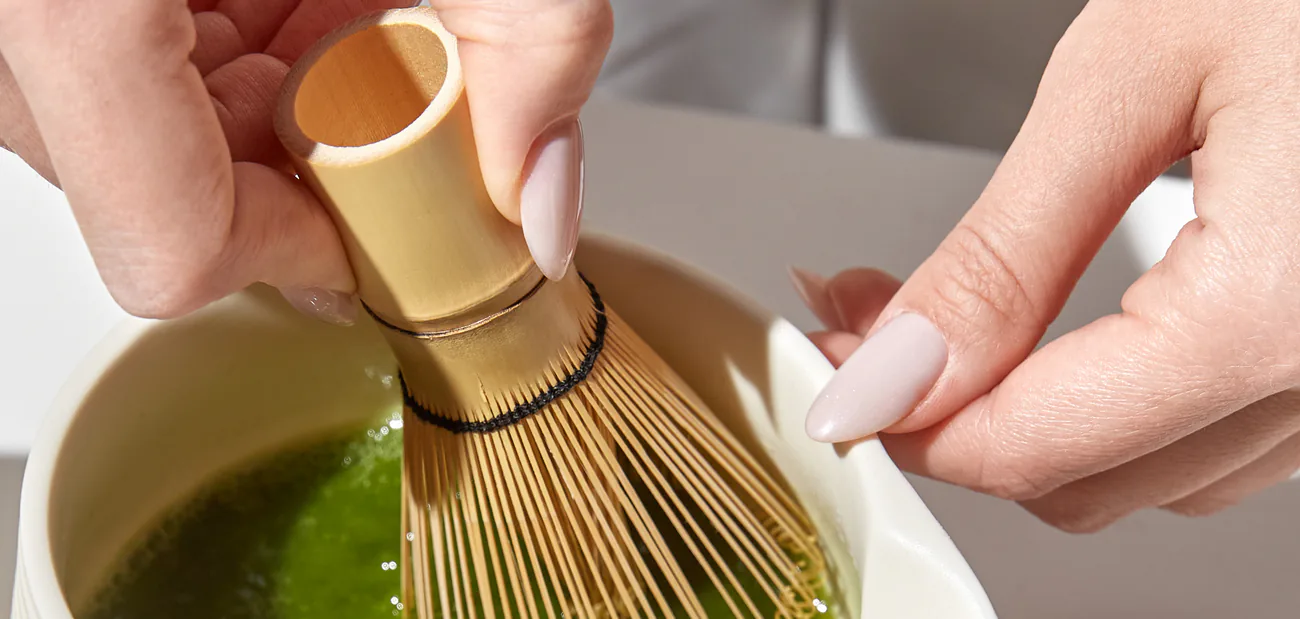
You do not brew matcha: you disperse the powder in water and drink the lot. Even so, temperature matters here more than with ordinary tea, because compounds with different tastes move into water at different speeds — and that speed depends on how hot the water is.
The short answer
- 70–80 °C — the working range for ceremonial matcha.
- 75–80 °C — when you want full body and dense foam (usucha).
- 65–70 °C — when the powder leans bitter, or you are just starting out.
- 80 °C is the ceiling. Above it comes a bitterness you cannot undo.
What temperature actually does
The leaf holds two groups of compounds that pull the taste in opposite directions. Amino acids (above all L-theanine) give sweetness and umami — they dissolve readily even at low temperatures. Catechins give bitterness and astringency — they need heat, and above roughly 80 °C their extraction accelerates sharply.
Boiling water therefore does two things at once: it pulls out maximum bitterness and kills the delicate foam that carries aroma. The effect is instant and irreversible — scalded matcha cannot be made good again.
| Water | What you get |
|---|---|
| 60 °C | very gentle, sweet, but thin — little body, weak foam |
| 70 °C | safe: sweetness with a hint of bitterness, good for beginners |
| 75–80 °C | the full picture: umami, density, velvet foam |
| 90 °C | bitterness moves to the front, sweetness retreats |
| 100 °C | sharp bitterness, collapsed foam, a hay-like finish |
Hitting the temperature without a thermometer
- Boil and wait. Boiling water in an open vessel loses about 10 °C in the first two to three minutes, then more slowly. Five minutes in a ceramic bowl usually lands around 78–80 °C.
- Pour between vessels. Each transfer into a cool vessel takes off roughly 5–7 °C. Kettle to jug to bowl does the job.
- Mix by ratio. Two parts boiling water to one part tap water (about 20 °C) gives roughly 73 °C.
- A variable-temperature kettle. The simplest answer if you drink matcha daily — set 80 °C and stop thinking about it.
Water is more than temperature
Hardness is the second variable almost nobody mentions. Calcium and magnesium bind the compounds responsible for umami, and the drink turns flat and chalky — many people read that as a sign of old matcha. Soft to medium-hard water works best (as a guide, up to 80 mg/l CaCO₃), which in practice means filtered or low-mineral bottled water.
Distilled water is not the answer either: with no minerals at all the taste comes out hollow. The rule of thumb is simple — water that makes good coffee will make good matcha.
What about cold water?
It works, and it makes sense. At low temperature catechins move into water very slowly while amino acids still dissolve — which is why cold matcha is noticeably sweeter and almost free of bitterness. The cost is density: the foam is thinner and the powder needs longer mixing.
- Cold whisking: water at 5–10 °C, chasen or shaker, 30–40 seconds instead of 15.
- Cold brew: 3 g to 300–400 ml, shake and refrigerate for 2–4 hours; shake again before serving.
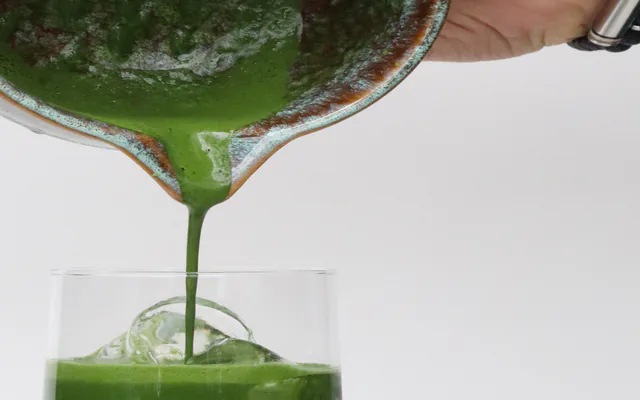
- Add ice at the end — whisking in iced water is a fight with the suspension, not a preparation.
Full method and variations: iced matcha.
Hot or cold — which to choose
| You want | Choose |
|---|---|
| full umami and dense foam | 75–80 °C, whisked with a chasen |
| maximum sweetness, no bitterness | water at 5–10 °C or cold brew |
| to judge the quality of a powder | always hot, 75–80 °C |
| a bottled drink for the day | cold, 3 g to 300–400 ml |
Milk for a latte: 60–65 °C
Milk heated above 65 °C starts to change flavour — a cooked-milk note appears and smothers the matcha aroma. Disperse the matcha in 30–40 ml of water at 70–80 °C and add the milk separately, warmed to 60–65 °C. Plant milks can be even more sensitive: oat milk above 70 °C tends to split.
Why people say not to use metal
The question comes up constantly and carries a lot of myth. The facts:
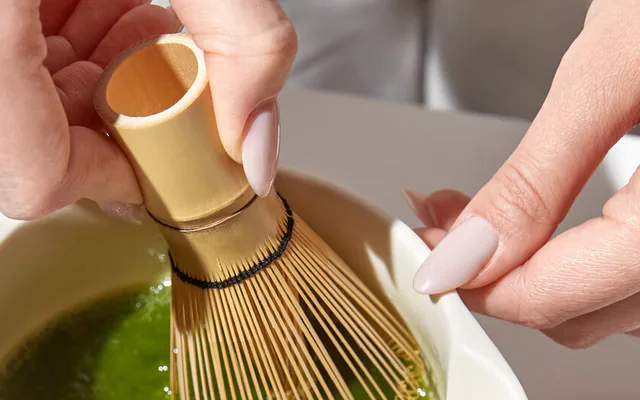
- The tradition has practical reasons, not magical ones. A bamboo scoop and chasen do not conduct heat, do not scratch a ceramic bowl and leave no metallic note in a very delicate drink. A stainless steel sieve, meanwhile, is completely standard — every kitchen in the world uses one.
- Brief contact with dry stainless steel changes nothing. Scooping matcha with a clean, dry spoon is safe; there is no reaction fast enough to matter.
- The real risk is moisture. A spoon straight from the dishwasher or wiped with a damp cloth carries water into the tin — and water means clumping and accelerated ageing.
- Reactive metals are worth avoiding. Copper and aluminium can leave a taste in acidic drinks; stainless steel does not.
In short: bamboo is better, but mostly because it is dry, light and gentle on ceramics. A dry steel spoon is not a mistake — a wet one is.
Three mistakes that cost the most flavour
- Pouring straight from the kettle. The most common cause of bitterness in home-made matcha.
- All the water at once. Paste from a few millilitres first, then the rest — otherwise you get lumps and no foam.
- One temperature for everything. Go lower for culinary powder, which carries more catechins; with a very young, sweet matcha you can go to the top of the range.
If the drink is still bitter at 75 °C, temperature is no longer the cause — the other reasons are in why matcha tastes bitter. The whole procedure step by step: how to make matcha.
What is the ideal water temperature for matcha?
70–80 °C. For ceremonial matcha, 75–80 °C works best — it gives full umami and dense foam. Above 80 °C the extraction of catechins, and therefore bitterness, rises sharply.
Can you use boiling water for matcha?
You can, but there is no reason to: boiling water pulls out maximum bitterness and collapses the foam. The effect cannot be reversed — scalded matcha will not become a good drink again.
How do you judge the temperature without a thermometer?
Boil the water and wait four to five minutes in a ceramic vessel (roughly 78–80 °C), or pour it twice between vessels — each transfer removes about 5–7 °C. You can also mix two parts boiling water with one part cold.
Can matcha be made with cold water?
Yes. In cold water catechins dissolve slowly, so the drink is sweeter and almost free of bitterness. It needs longer mixing (30–40 seconds with a chasen or in a shaker) and the foam will be thinner.
Does hard water spoil matcha?
Yes. Calcium and magnesium bind the compounds responsible for umami and the drink turns flat and chalky. Soft to medium-hard filtered water works best; distilled water, by contrast, tastes hollow.
Is a metal spoon bad for matcha?
A dry stainless steel spoon does no harm — the contact is far too brief to change anything. The problems are wet metal, which carries water into the tin, and reactive metals such as copper or aluminium. Bamboo wins on practicalities: it stays dry, it is light and it does not scratch ceramics.