What does matcha taste like — what to expect from your first bowl
Matcha does not taste like green tea from a bag, and it is not sweet. Made well it is dense, creamy and clearly umami, with a short bitterness right at the end. Made badly it is simply bitter — and that is the one difference worth learning to notice.
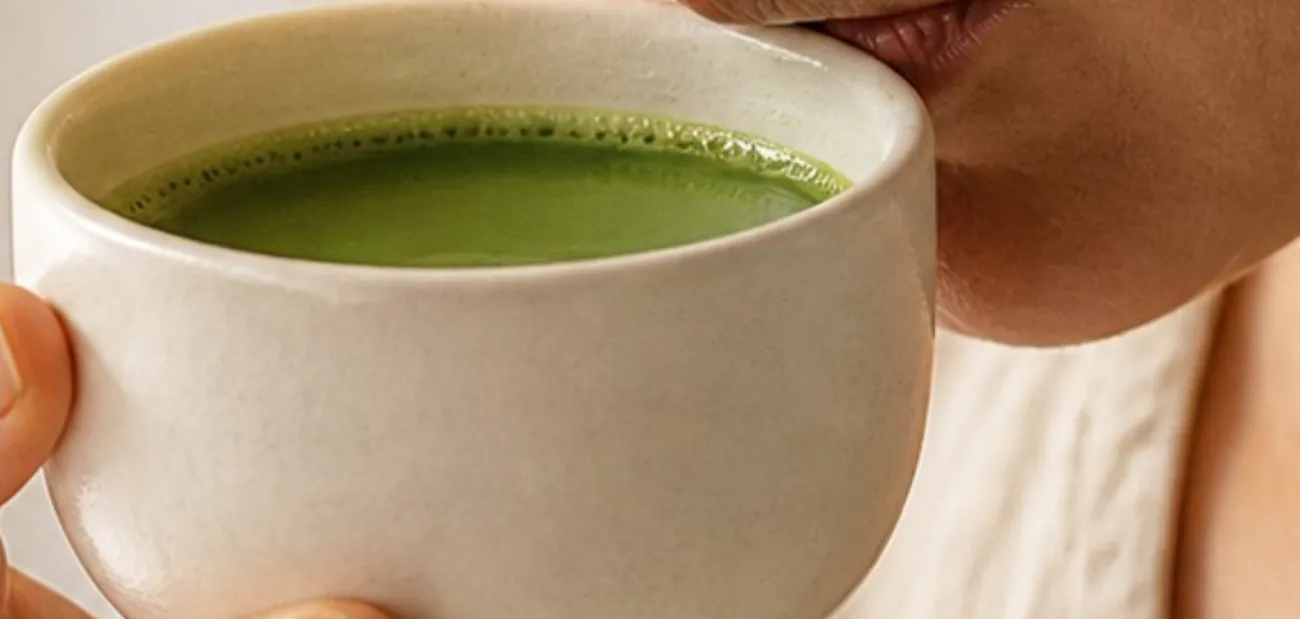
Matcha is hard to describe because European kitchens have no good reference for it. The closest things are spinach wilted in butter or vegetable broth — something savoury and green with a fat, creamy texture. Only at the end comes a short bitterness, roughly like dark chocolate.
Five things you taste at once
| Sensation | Where it comes from | How strong it should be |
|---|---|---|
| Umami | amino acids, mainly L-theanine | dominant |
| Sweetness | the same amino acids plus leaf sugars | clear but not sugary |
| Bitterness | catechins | short, at the finish |
| Astringency | tannins | barely there |
| Aroma | volatiles of fresh leaf | green, grassy, clean |
The proportions between them are the whole difference between grades. In ceremonial matcha the first two cover the other three. In cheap powder it is the other way round — which is why it needs sugar to be drinkable.
Why it is so creamy
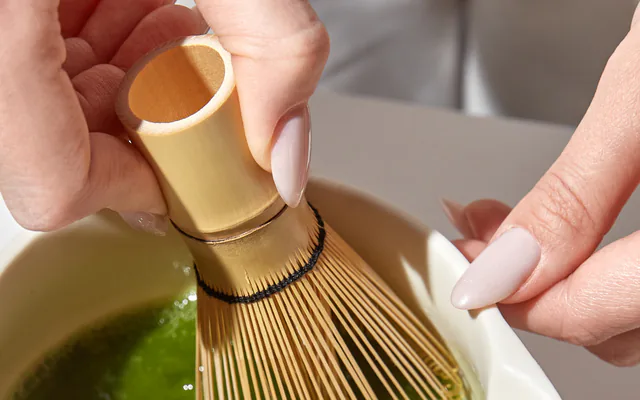
You drink a suspension, not an infusion. The particles are a few micrometres across and do not settle immediately, and the tongue reads that as body and “fattiness”, even though there is no fat in the drink. The same mechanism gives the velvet foam: the chasen aerates the suspension and the micro-bubbles carry aroma.
The flavour itself comes from shading the plantation for a few weeks before harvest. In shade the plant makes more amino acids and fewer tannins — hence sweetness and umami instead of a puckering mouth. The whole process is in what matcha is.
What should not be there
- Sharp, lingering bitterness. Either the water was too hot or the powder comes from a late harvest. Usually the former — water temperature changes the taste more than anything else.
- Hay, dust, “old tea”. The powder has aged. Curiously, old matcha does not get more bitter — it stops being sweet, because amino acids oxidise faster than catechins.
- A fishy, marine note. Usually moisture, or strong smells stored nearby.
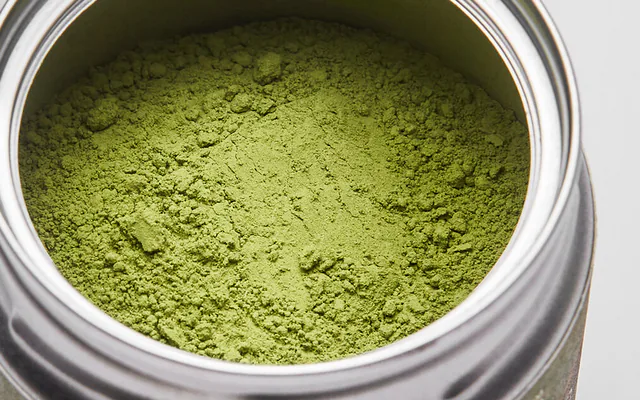
- Sand on the tongue. Ground too coarsely, not sifted, or clumped.
- Nothing at all. Too little powder in too much water — see ratios.
What changes the taste in your kitchen
| Variable | Which way the taste moves |
|---|---|
| Water at 90 °C instead of 75 °C | more bitter, less sweet |
| Hard water (high calcium) | flat, chalky — umami disappears |
| 3 g instead of 2 g in the same water | denser, but also more astringent |
| Not sifting | lumps and a grainy impression |
| A tin opened three months ago | less sweetness, flat aroma |
The good news: every one of these is on your side of the counter. The bad news: one of them is enough to make good powder taste bad.
Straight, with milk, iced
Straight you hear everything — the umami and the faults. It is the only way to judge the powder.
With milk the taste turns mild and nutty and pleases almost everyone. Fat mutes bitterness, so a latte forgives weak matcha — which is exactly why it is useless for comparing quality.
Iced matcha is noticeably sweeter: at low temperature catechins move into the water slowly while the sweetness stays. If bitterness is your main objection, start with the cold version.
The first bowl rarely wins you over
That is normal and worth saying plainly. A palate used to sweet drinks reads umami as foreign — the first impression is often “strange, vegetal, slightly marine”. The third bowl already tastes different, and after two weeks most people start to find a sweetness they could not hear at the beginning.
A plan that works: a week of lattes to get used to the aroma, then a week of iced, and only then hot usucha straight.
How to compare two matchas honestly
- The same weight of powder (2 g) and the same volume of water (70 ml) — by scale, not by spoon.
- The same water and the same temperature, measured rather than guessed.
- Both sifted, both whisked for the same time.
- Alternate sips, with plain water in between.
- Judge three things separately: aroma, body and finish (how long the bitterness lasts).
Run that test and the difference shows up in the first sip — and very often the more expensive one is not the better one, because freshness decides. What to look for when buying: how to recognise good matcha.
How to describe it when someone asks
Comparisons to food work better than comparisons to tea: “a green broth with a nutty note and a short bitter line at the end”. Anyone told “sweet green tea” will be disappointed. Anyone told “thick, vegetal, with foam” usually arrives with the right expectations.
To taste how two profiles differ, start with small tins: IKI is sharper and greener, SABI is gentler and creamier.
Is matcha bitter?
Good ceremonial matcha has only a short bitterness at the finish, balanced by sweetness and umami. Long, sharp bitterness usually means water above 80 °C, too much powder, or culinary grade used as a drink.
Does matcha taste like green tea?
No. Green tea is infused and strained; matcha is drunk together with the leaf, which gives a dense, creamy texture and far stronger umami. It is closer to vegetable broth than to a bagged infusion.
Why does my matcha taste like grass or hay?
A fresh-cut grass note is fine and typical of young leaves. Hay, dust and “old tea” mean oxidation: the powder has been open too long, or was kept in warmth and light.
Is matcha sweet?
It has a natural sweetness from amino acids, but it is not sweet like a sugared drink. If you taste no sweetness at all, the usual causes are water that is too hot, hard water, or old powder.
Which matcha is best to start with?
A gentler, creamy profile, served as a latte or iced. First-harvest ceremonial grade forgives more preparation mistakes than culinary grade, so early attempts simply taste better.
Do you need to add sugar to matcha?
You do not, and with good powder there is no point. If the drink is undrinkable without sugar, the problem is usually the quality of the matcha or the water temperature, not the lack of a sweetener.