Matcha vs green tea — the same leaf, two entirely different drinks
Matcha and sencha come from the same plant, Camellia sinensis. The difference is not the species but what is done to the leaf before it reaches the bowl. Everything else follows from that: colour, caffeine, flavour and price.
The question "matcha or green tea" is badly framed, because matcha is green tea. The sensible question is what separates a powder made of the whole leaf from an infusion of dried leaves.
Three differences from which everything else follows
- Shading. Bushes destined for matcha are shielded from the sun for several weeks before harvest. The plant responds by producing more chlorophyll and amino acids — hence the intense green and the characteristic umami sweetness. Tea for ordinary infusion is picked from bushes grown in full sun.
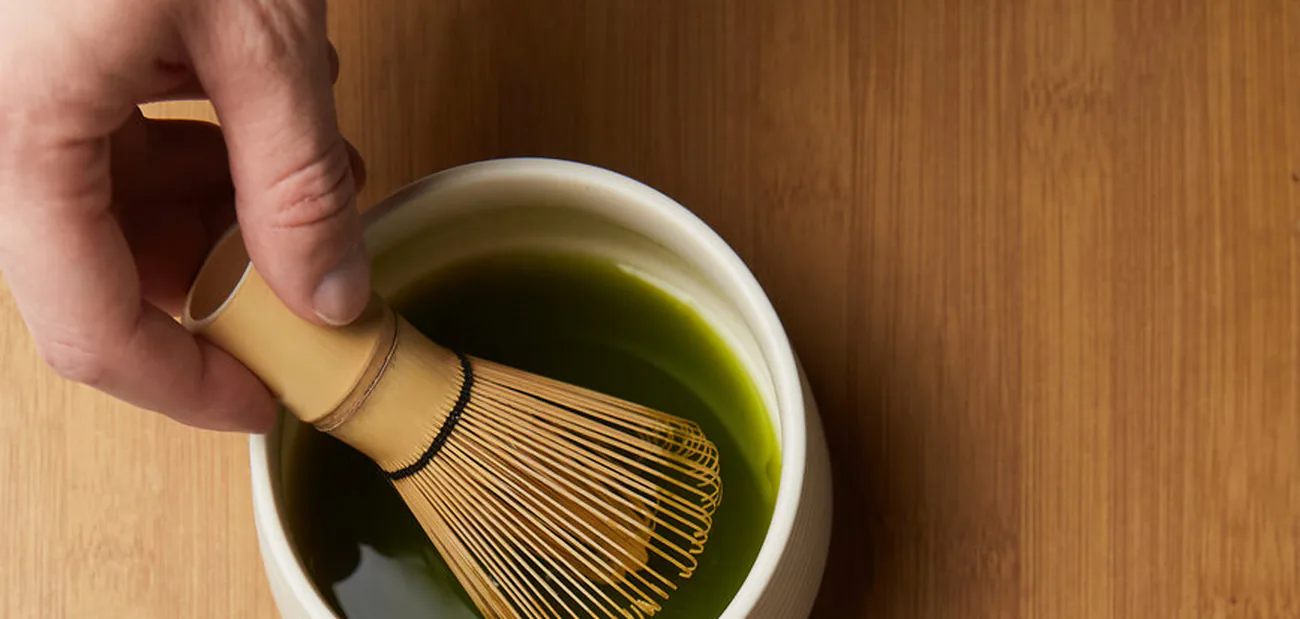
- The whole leaf instead of an infusion. Sencha is an infusion: you steep the leaves, drink the water and discard the rest. Matcha is a suspension — you drink the ground leaf entire. Everything the leaf contained ends up in the bowl rather than the bin.
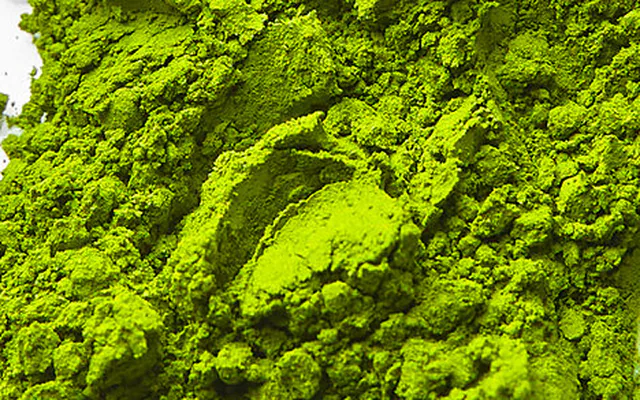
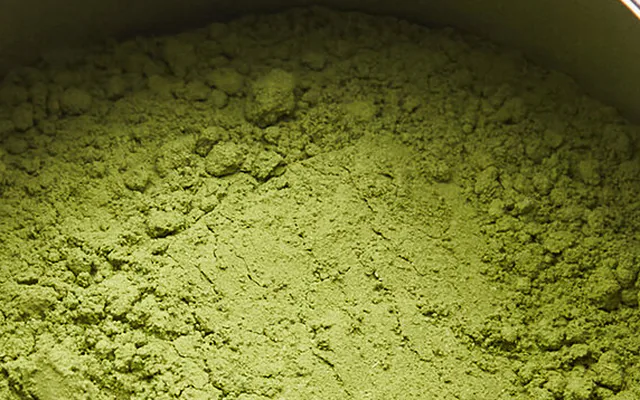
- Stone milling. The leaf stripped of veins and stems (tencha) is milled very slowly into a dust with particles measured in single-digit micrometres. Slow milling does not heat the powder, and heat is what destroys aroma.
Side by side
| Matcha (2 g) | Green tea — infusion (240 ml) | |
|---|---|---|
| What you drink | the whole ground leaf | an extract from leaves |
| Caffeine | 60–70 mg | 25–35 mg |
| Cultivation | final weeks in shade | full sun |
| Colour | vivid, opaque green | pale, clear liquor |
| Flavour | thick, umami, sweet finish | light, grassy, astringent |
| Preparation | whisked, 15–20 s | steeped 2–3 min |
| Water temperature | 70–80°C | 70–85°C by type |
| Re-use | none — one serving, one powder | 2–3 steeps from the same leaves |
| Shelf life after opening | 4–6 weeks | 6–12 months |
Where matcha sits among the other green teas
"Green tea" is not one product but a whole family. Here are the ones you will meet most often, and how they differ from matcha:
| Tea | Cultivation | Form | Character |
|---|---|---|---|
| Matcha | shaded | powder, whole leaf | thick, umami, strong |
| Gyokuro | shaded | leaf, infusion | very sweet, umami |
| Sencha | full sun | leaf, infusion | fresh, grassy |
| Bancha | full sun, late harvest | leaf, infusion | mild, low caffeine |
| Hojicha | full sun, roasted | leaf, infusion | nutty, almost no bitterness |
| Genmaicha | sencha + toasted rice | leaf, infusion | cereal, comforting |
| Tencha | shaded | raw material for matcha | rarely drunk on its own |
Two things are worth taking from that table. First, shading is not unique to matcha — gyokuro is grown the same way, which is why it tastes closest to matcha among infusions. Second, tencha is not a separate tea for drinking but an intermediate product: the shaded leaf after veins and stems are removed, waiting for the mill. Matcha is simply milled tencha.
Why matcha is stronger
Not because "the leaf holds more caffeine" — although shading does raise it. The main reason is simpler: an infusion keeps only what passes into the water, whereas with matcha you consume the whole leaf. The same applies to L-theanine, the amino acid behind calm focus — a serving of matcha delivers markedly more of it than a cup of infusion.
It also applies to things an infusion contains none of, because they do not dissolve in water: fibre and most of the chlorophyll. Drinking an infusion, you leave them in the leaves. Drinking matcha, you drink them.
We set out the numbers and the comparison with coffee separately: how much caffeine matcha has →
Can you grind green tea and make matcha?
This is one of the most common questions and the answer is no. Ground sencha is ground sencha — it will be green and bitter, but it is not matcha. There are three obstacles and none can be worked around at home:
- The raw material. Matcha is made from shaded leaves. Sencha grew in full sun, so it holds fewer amino acids and more tannins. Grinding changes none of that — the umami sweetness simply is not in that leaf.
- Veins and stems. In tencha they are removed before milling because they are fibrous and bitter. In sencha they stay, and after grinding they go straight into your drink.
- The milling. A coffee or spice grinder works fast and heats up, and heat destroys aroma. It also yields particles of 50–100 micrometres instead of a handful — the powder settles on the bottom instead of forming a suspension.
The result is predictable: a cloudy, gritty, bitter drink that puts people off matcha before they have ever tasted the real thing. If you want to compare, buy the smallest ceremonial-grade tin — it works out cheaper than a wasted packet of good sencha.
Why matcha costs more
The price comes from labour, not fashion. Shading means extra weeks and structures over the field. The best leaves are often picked by hand. Removing veins and stems is a separate stage. Milling is slow — good stone mills produce tens of grams an hour. A kilogram of leaf yields less finished powder than it does dried leaf for infusion.
On top of that, yield favours the infusion: the same leaves give two or three steeps, while powder is used once. What it actually costs per gram and per serving: how much matcha costs →
Storage is a different league too
Loose-leaf green tea keeps for many months after opening. Matcha keeps for four to six weeks, and that is with good packaging. The reason is the same as all the other differences: a ground leaf has hundreds of times more surface in contact with oxygen than a rolled one.
The practical consequence when buying: choose the pack size by how fast you drink, not by price per gram. We gathered the rules and timings here: how to store matcha →
When to choose which
- Green tea (sencha, gyokuro, bancha) — when you want to drink a lot over a long stretch, at work, without a caffeine spike. A large pot, several steeps, a low cost per cup.
- Matcha — when you want one strong, concentrated serving: in the morning instead of coffee, before exercise, before work that demands focus. Or when you want the umami an infusion cannot give.
- Matcha in the kitchen and the café — because only powder can be blended into milk, cake or ice cream. You cannot build a latte on an infusion.
- Hojicha in the evening — if what you want is the ritual rather than the caffeine. Roasting lowers its content, and hojicha is usually the gentlest of the family.
Will matcha replace green tea?
It does not have to. They are two different drinks from one raw material, and many people drink both: infusion through the day, matcha once in the morning. If you are choosing one, be guided by the hour and the intention — matcha is strong and short, infusion mild and long.
Before you buy your first powder it is worth knowing how ceremonial grade differs from culinary — a bigger difference than the one between matcha and sencha: ceremonial versus culinary matcha →
Is matcha green tea?
Yes — it is green tea in the form of the whole leaf, powdered. The difference lies not in the plant species but in growing it in shade before harvest and in drinking the powder whole rather than steeping leaves.
Which is healthier, matcha or green tea?
Food does not divide into healthier and less healthy in that sense. What is true is that drinking matcha you consume the whole leaf, so you take in more of its components than from an infusion of the same mass of dried tea.
How much caffeine does matcha have compared with green tea?
A serving of matcha from 2 g of powder holds 60–70 mg of caffeine, while a cup of green tea infusion holds 25–35 mg. Matcha therefore sits around espresso level, and a plain infusion well below it.
Can I make matcha by grinding green tea?
No. Matcha is made from leaves shaded before harvest and stripped of their veins, then milled very slowly on stone. Ground sencha is a cloudy, bitter powder with particles too coarse to stay in suspension, so it settles on the bottom.
How does gyokuro differ from matcha?
Both come from bushes shaded before harvest, so they are close in flavour. The difference is the form: gyokuro is drunk as an infusion of leaves, matcha as a suspension of the whole ground leaf.
What is tencha?
It is the intermediate product matcha is made from: the shaded leaf after veins and stems have been removed, before milling. It is rarely drunk on its own — its destination is the mill.
Why is matcha so expensive?
Shading the field, often hand-picking, removing veins and stems, and very slow stone milling. On top of that, the same leaves give two or three steeps as an infusion, while powder is used once.
Can I steep matcha like ordinary tea?
Not in the sense of steeping and straining — there is nothing for the strainer to hold back. Matcha is whisked into water as a suspension and drunk together with the leaf.
Why does matcha spoil faster than loose-leaf tea?
Because a ground leaf has hundreds of times more surface in contact with air. Loose-leaf tea keeps for many months after opening, while matcha holds its full flavour for four to six weeks.