Iced matcha — cold whisk, shaken and cold brew, step by step
Cold matcha tastes different from hot — gentler and sweeter, because cold water pulls something else out of the powder. There is one condition: never tip the powder straight into anything cold. Below, three methods and the order that saves the drink from lumps.
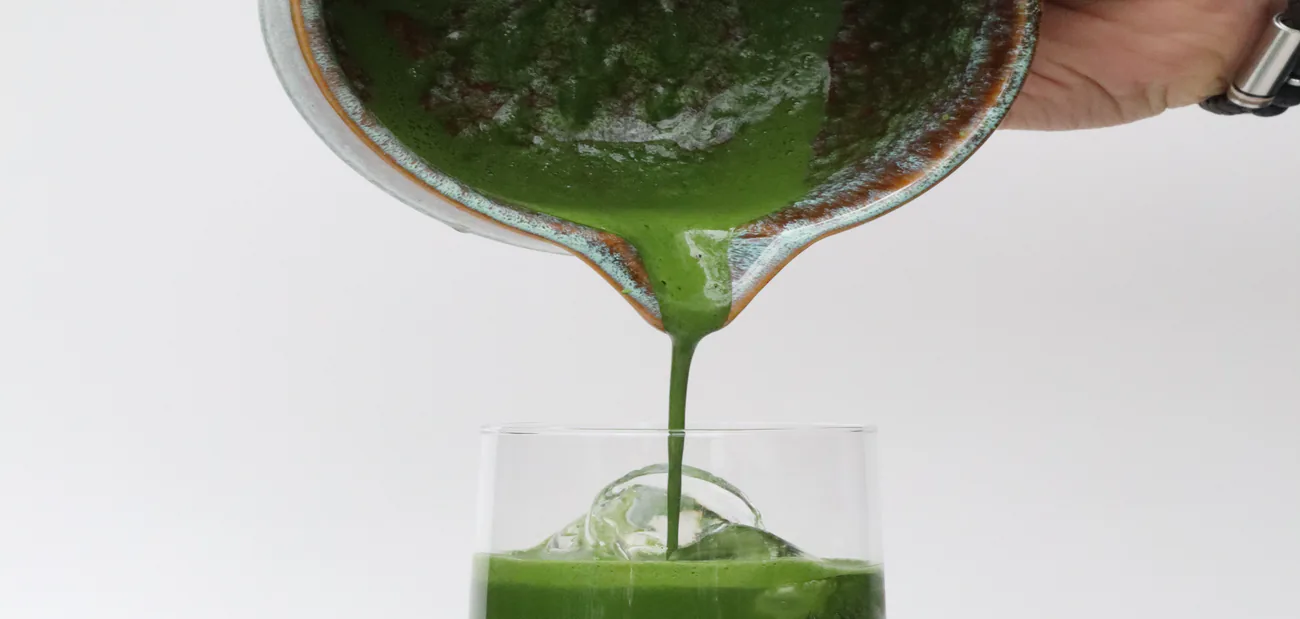
Iced matcha is not simply hot matcha over ice. The flavour profile shifts, and with it the ratios and the order of operations. The good news: the cold version is more forgiving — it is harder to ruin with bitterness.
Why cold tastes different
In hot water the catechins — the compounds behind astringency and bitterness — move into the drink quickly. In cold water they do so far more slowly, while the amino acids responsible for umami and sweetness cope with low temperatures much better.
The result is a drink that is gentler, smoother and noticeably sweeter without adding anything. That is why iced matcha is usually a good first encounter for someone who found the hot version too strong.
Three methods
| Method | Time | Kit | Result |
|---|---|---|---|
| Cold whisk | 1 minute | chasen or frother | closest to the classic taste, light foam |
| Shaken (in a jar) | 30 seconds | screw-top jar | fastest, no foam, nothing to clean |
| Cold brew | overnight in the fridge | a bottle | gentlest and sweetest, made ahead |
Method 1 — cold whisk
- Sift 2 g of matcha into a bowl or glass. With cold drinks, sifting matters more than usual.
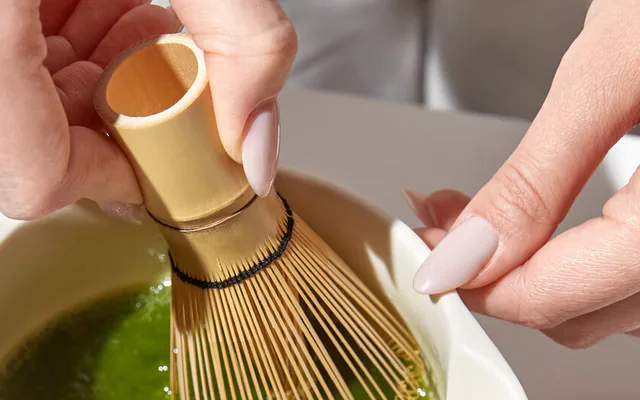
- Add 30–40 ml of lukewarm water (around 40 °C) and whisk smooth. This is the crucial step: the powder must disperse before it meets ice.
- Add ice and top up with cold water to 200 ml.
- Stir once and drink.
Why 40 °C: in water close to freezing, matcha particles resist wetting and clump into lumps that no chasen will break up afterwards.
Method 2 — shaken in a jar
Put 2 g of matcha into a screw-top jar, add 50 ml of lukewarm water and shake for 10 seconds. Only then add ice, top up with cold water and shake for another 10 seconds.
Ideal at work and while travelling, because it needs no chasen. Do not expect foam — a jar aerates differently from a whisk. More on what a chasen cannot be replaced by: chasen — how to choose →
Method 3 — cold brew
Put 2 g per 300 ml of cold water into a bottle, shake hard and refrigerate for 6–12 hours. Shake again in the morning and drink.
Important: matcha is a suspension, not an infusion. There is nothing to strain, and the powder will naturally settle overnight — which is why you shake before serving. Drink cold brew within 24 hours, after which it starts losing colour and freshness.
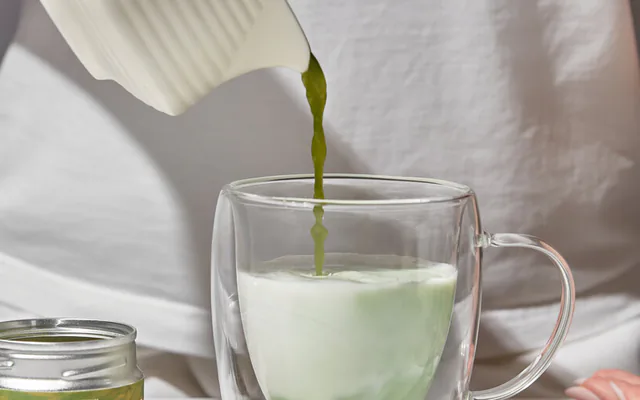
Iced matcha latte — the order matters
- Sift 2 g of matcha into a tall glass.
- Add 40 ml of lukewarm water and whisk smooth — no lumps, no exceptions.
- Fill the glass with ice.
- Pour in 150–180 ml of cold milk.
- Add the whisked matcha on top, slowly, over a spoon or down the side.
That last step is not only for looks — a green layer sinking into the milk means the matcha was not smashed against the ice and did not settle at the bottom. The classic hot recipe is here: matcha latte recipe →
Four mistakes that ruin cold matcha
- Powder straight into cold milk. The most common mistake of all. Fat and low temperature coat the particles before they can wet — nothing will remove those lumps afterwards.
- Sugar instead of syrup. Crystals do not dissolve in a cold drink and end up at the bottom. Use syrup, or dissolve the sugar in the lukewarm water from step two.
- Too much ice at the start. Ice dilutes the drink as it melts. Better to use less of it and genuinely cold milk.
- Rescuing culinary grade with sweetener. Cold softens bitterness but does not remove it. If the powder is bitter hot, cold it will merely be less bitter — how to recognise good matcha →
Plant milks
An iced latte is easier here than a hot one — nothing curdles. What remains is taste and separation:
- Oat (barista version). The safest choice: creamy, faintly sweet, does not separate over ice.
- Almond. Lighter and distinctly nutty — it can dominate a gentler matcha.
- Soy. Plenty of protein and a full body, but the most prone to separating with acidic additions such as lemon syrup.
- Coconut. A great flavour match, sometimes thin — look for a barista version.
For cafés: a batch base
Whisking every serving individually stands no chance against a queue. The standard answer is a concentrate: matcha dispersed in water in bulk and kept in a bottle in the fridge.
- Working ratio: 20 g of matcha per 500 ml of water — one serving is then 50 ml of concentrate.
- Disperse the powder in a small amount of lukewarm water first, then top up with cold.
- Keep it refrigerated in an opaque bottle and shake before every serving.
- Make it for a single shift. After a few hours the colour fades, and after a day the drink is simply different.
The cost per serving, margin and pack format for a venue are set out here: matcha on a café menu →, and the wholesale formats are in our B2B offer.
In short
Always disperse the powder in a little lukewarm water before adding ice or milk. The rest is only a choice of method: a chasen when you want foam, a jar when you are in a hurry, cold brew when you want it ready in the morning.
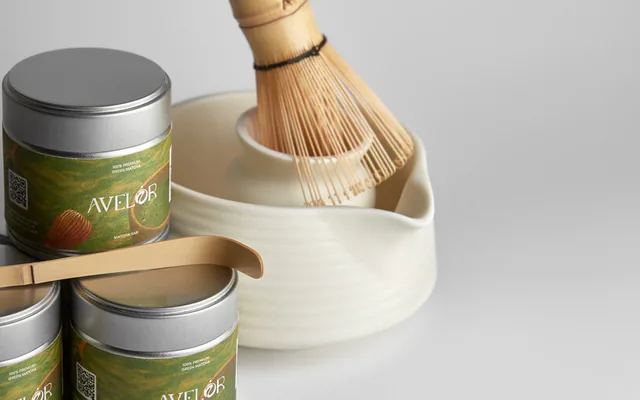
The gentler SABI line works well cold: see Avelor matcha →
How do you make iced matcha without lumps?
Always disperse the powder in 30–40 ml of lukewarm water (around 40 °C) and only then add ice or milk. In water close to freezing the particles resist wetting and clump into lumps that no chasen or frother will break up afterwards.
Is cold matcha less bitter?
Yes. At low temperatures the catechins behind astringency move into the drink more slowly, while the amino acids that give umami and sweetness cope much better. The result is gentler and sweeter without adding anything.
How much matcha per glass of a cold drink?
The standard is 2 g per 200 ml — the same as hot. For an iced latte those 2 g are dispersed in 40 ml of lukewarm water, with the rest of the volume made up by ice and 150–180 ml of cold milk.
How long does matcha cold brew keep?
Best drunk within 24 hours, kept refrigerated in a closed bottle. After that the drink loses colour and freshness. Matcha is a suspension rather than an infusion, so the powder settles — shake before serving.
Why will matcha not mix into cold milk?
Because fat and low temperature coat the particles before they can wet. That is why the order cannot be reversed: matcha smooth with lukewarm water first, then ice, and milk last.
Which plant milk suits iced matcha best?
Oat in a barista version is the safest — creamy, faintly sweet and stable over ice. Almond can be too nutty for a gentler matcha, and soy separates most readily with acidic additions.