Matcha lemonade — an iced recipe, the tonic version and three mistakes that ruin the colour
Matcha without milk, but with lemon and bubbles: matcha lemonade is lighter than a latte, has the same caffeine and is made in a jar. The only difficulty is the order — the matcha has to be dispersed before it meets the ice.
Everyone knows the matcha latte. Matcha lemonade is only just arriving on café menus — a pity, because it is the simplest cold drink you can make from the green powder: no milk to foam, no question about which milk, and a sharp, refreshing profile that copes well even with the bitterness of a weaker matcha. The base is the same as in every iced matcha drink: powder dispersed in a little water first, then the rest.
One thing to say up front, because a lemonade makes it easy to forget: this is a caffeinated drink. 2 g of matcha is about 60–70 mg, roughly an espresso — the refreshing taste does not change that number.
The base recipe: iced matcha lemonade
Ingredients for one tall glass (about 300 ml):
- 2 g matcha (a level teaspoon),
- 40 ml water — cold, or up to 80 °C, never boiling,
- 20 ml lemon juice (about half a lemon),
- 15 ml sugar syrup or a teaspoon of honey,
- 200 ml cold sparkling water,
- ice to the top, a slice of lemon to serve.
- Sieve 2 g of matcha into a jar with a lid or into a shaker.
- Add 40 ml of water, close and shake for 20–30 seconds, until there are no lumps and a fine foam appears on top.
- In a tall glass, mix 20 ml of lemon juice with 15 ml of syrup.
- Fill the glass with ice and add 200 ml of cold sparkling water.
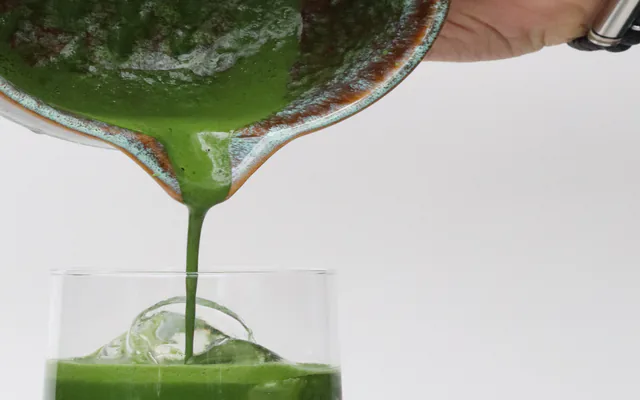
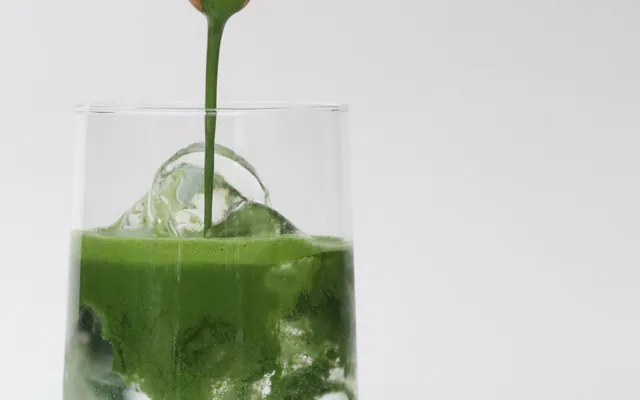
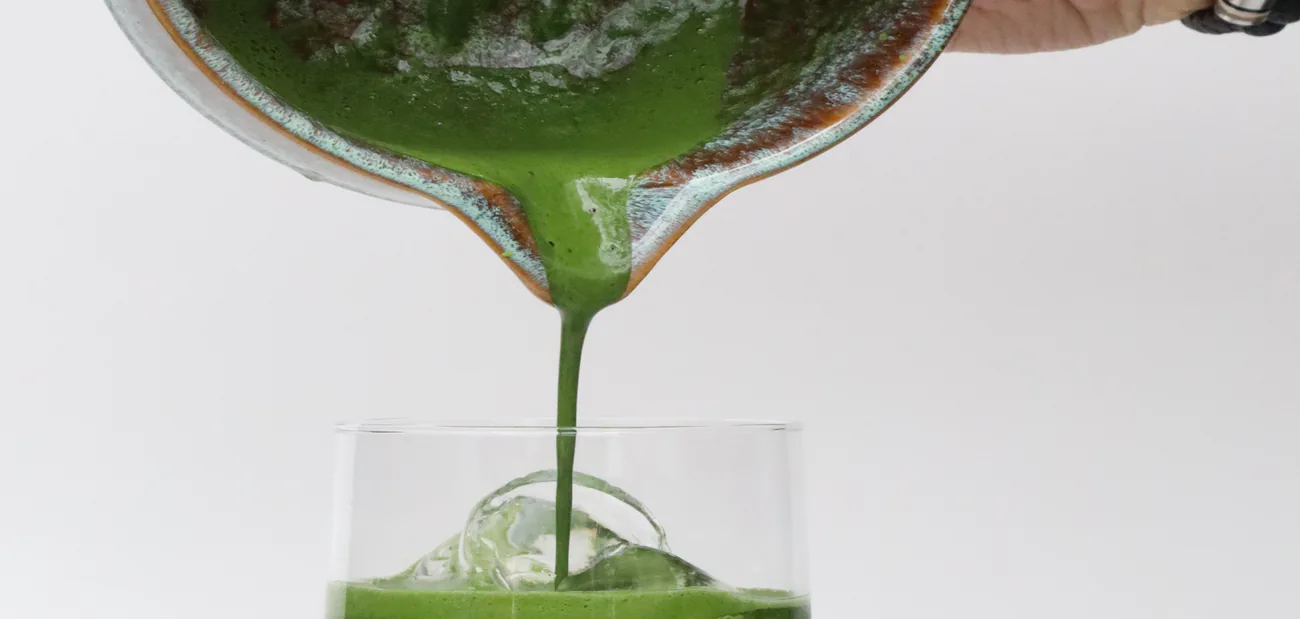
- Pour the matcha on top, over the ice — it will sit as a green layer for a moment, then stir.
- Serve immediately with a slice of lemon.
A jar instead of a chasen is not a compromise: when cold, shaking works better than a whisk, because in cold water the powder disperses more slowly and needs more vigorous movement. If you have warm water to hand (up to 80 °C), the base comes together faster — but wait a minute before pouring it over the ice, or you will melt half the cubes.
Matcha tonic — the lemonade's bitter sister
Same base, different liquid: instead of sparkling water with lemon and syrup — 150 ml of cold tonic water. The quinine in tonic is distinctly bitter and meets the bitterness of matcha; for some this is the best cold matcha drink there is, for others it is too much at once. The milder version: half tonic, half sparkling water, plus 5 ml of syrup.
- Base: 2 g of matcha shaken in 30–40 ml of water.
- A wine glass or a tall glass filled with ice to the top.
- 150 ml of tonic, then the matcha over the ice, a slice of lime on the rim.
Matcha tonic is also the simplest "no milk" item for a café — on the menu next to the latte, from the same powder and the same base for the shift.
The ratios in one place
| Drink | Matcha | The rest | Calories (approx.) |
|---|---|---|---|
| Matcha lemonade | 2 g in 40 ml water | 20 ml lemon, 15 ml syrup, 200 ml sparkling water | 55 kcal |
| Matcha tonic | 2 g in 30–40 ml water | 150 ml tonic, lime | 60 kcal |
| Matcha tonic "light" | 2 g in 30–40 ml water | 75 ml tonic + 75 ml sparkling water, 5 ml syrup | 40 kcal |
| Sugar-free lemonade | 2 g in 40 ml water | 20 ml lemon, 200 ml sparkling water, erythritol | 10 kcal |
Calories are counted as in the matcha latte calorie table: 2 g of matcha is about 6 kcal, 15 ml of sugar syrup about 45 kcal, 150 ml of tonic about 50 kcal. The caffeine is the same in every version — 60–70 mg from 2 g of matcha; more on how long that lasts.
Colour: why the lemonade sometimes turns brown
Matcha's green comes from chlorophyll, and chlorophyll dislikes two things: acid and time. A freshly made lemonade is vividly green; after an hour with lemon it starts to yellow, after a few hours it browns. That is not spoilage, just the same reaction that makes old matcha in a tin lose its colour, accelerated by acid. Three rules:
- Drink within 15–20 minutes. Matcha lemonade is made to order, not for a jug that sits all day.
- Base separately, lemon separately. Do not shake the matcha together with the juice — disperse it in plain water and add the acid only in the glass.
- For cafés: a base for the shift without lemon. Matcha in plain water holds its colour in the fridge for a few hours; lemon and tonic go in only when the order comes.
A separate matter is the grade of the powder: culinary matcha is more olive to begin with, so in a lemonade it simply comes out brownish green. Only ceremonial grade gives a vivid colour in a glass with lemon.
Variations that make sense
- With lime — a cooler, more "bar-like" profile; you need less lime (15 ml), because it is more sour.
- With ginger — 10 ml of ginger syrup instead of sugar syrup; it pairs well with matcha's bitterness. More spiced pairings: spiced matcha latte.
- With mint — a few leaves crushed at the bottom of the glass before the ice; no more than that, because mint quickly covers the matcha.
- In pink — the same lemonade with 2 g of ube powder instead of matcha gives a caffeine-free drink that turns pink with lemon. The recipe is in ube drinks.
Three mistakes that ruin the lemonade
- Matcha tipped straight into sparkling water. The powder clumps and floats on the surface; bubbles do not mix. Always the base in 40 ml of water first.
- Too much lemon. Above 30 ml the acid completely covers the umami of the matcha and takes the colour faster. 20 ml is the ratio at which you taste both.
- Sweetening at the end. Syrup poured onto ice sinks to the bottom and does not dissolve in a cold drink. Mix it with the lemon juice before adding the ice.
Where to start
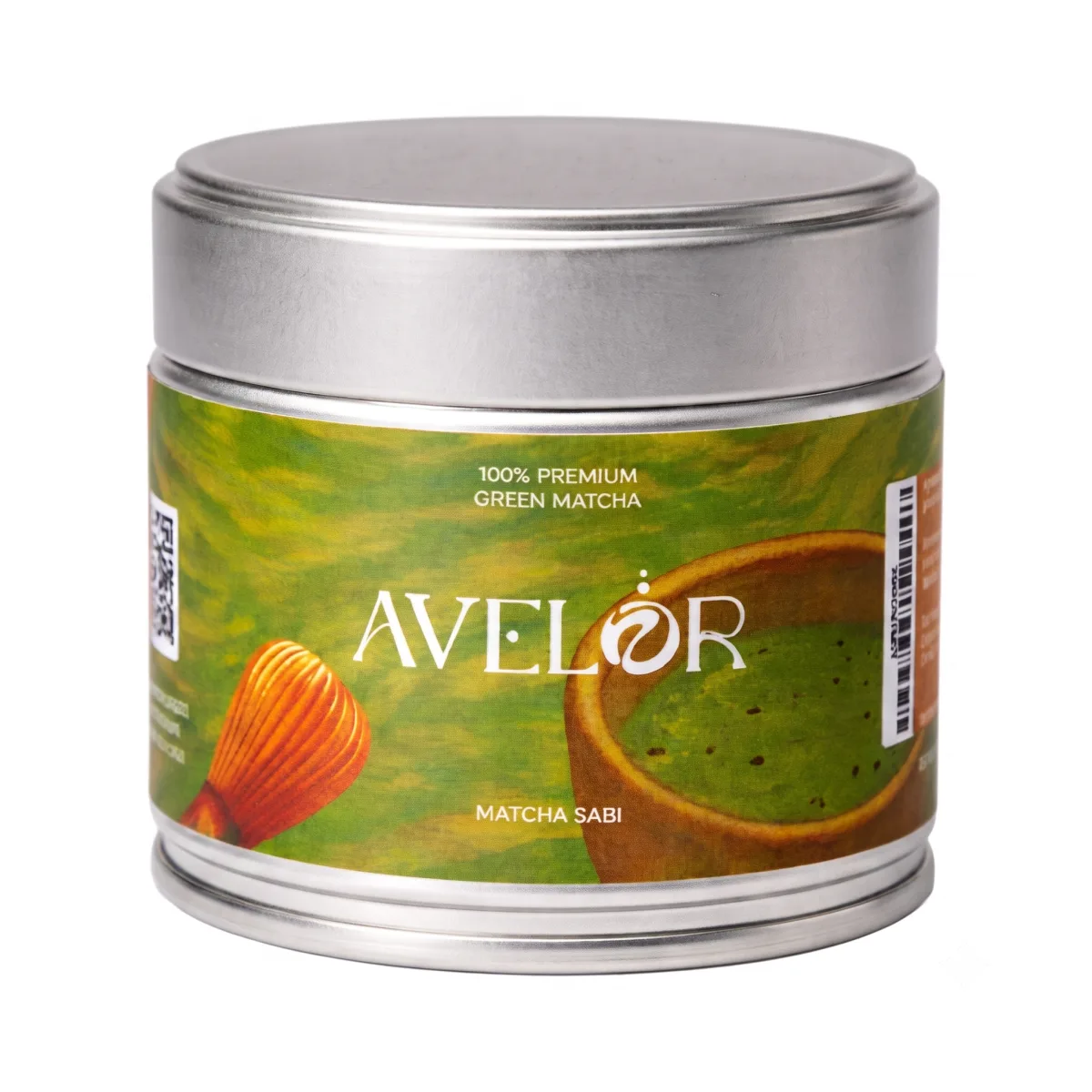
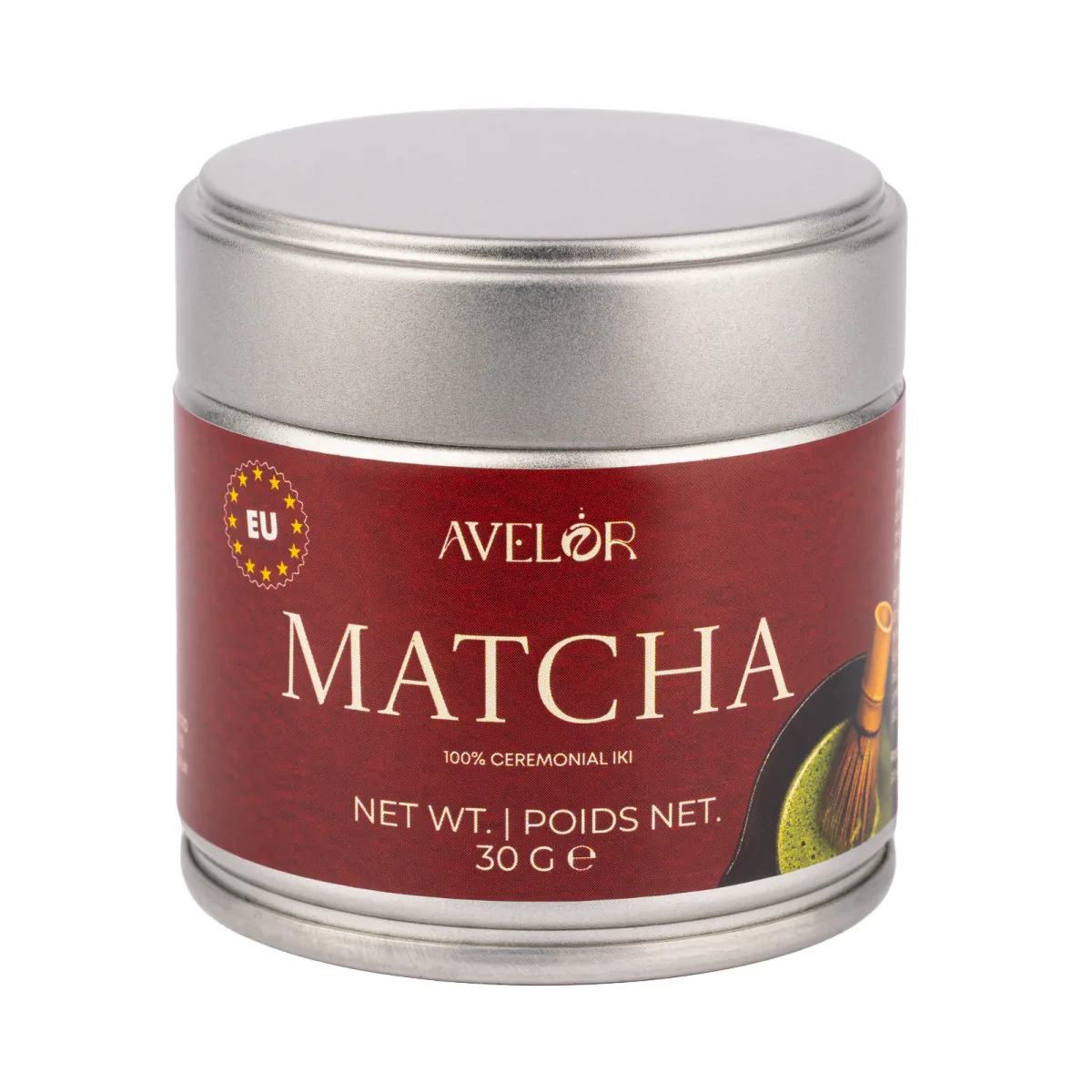
For lemonade and tonic the best match is a matcha with a distinct character that will not vanish in the lemon: IKI 30 g has intense umami and holds its taste even against tonic; SABI 30 g is milder and better for people who are just starting out. A 30 g tin makes 15 lemonades. A jar is enough for shaking; a full matcha set only becomes useful when you return to the warm bowl.
How do you make matcha lemonade?
Shake 2 g of matcha with 40 ml of water in a closed jar until there are no lumps. In a tall glass mix 20 ml of lemon juice with 15 ml of syrup, add ice and 200 ml of cold sparkling water, then pour the matcha over the ice and stir. Serve immediately.
Does matcha lemonade have caffeine?
Yes, as much as any drink with 2 g of matcha: about 60–70 mg, roughly an espresso. Lemon and sparkling water do not change the caffeine content. The caffeine-free version is a lemonade made with ube powder.
How do you make a matcha tonic?
Disperse 2 g of matcha in 30–40 ml of water, fill a wine glass or tall glass with ice, pour in 150 ml of cold tonic water and the matcha over the ice on top. Serve with a slice of lime. The milder version: half tonic, half sparkling water and 5 ml of syrup.
Why does matcha lemonade turn brown?
The chlorophyll that gives matcha its green colour breaks down with acid and time. A fresh lemonade is green; after an hour with lemon it starts to yellow. Drink it within 15–20 minutes and do not shake the matcha together with the juice — add the acid only in the glass.
How many calories are in matcha lemonade?
About 55 kcal with 15 ml of sugar syrup: 2 g of matcha is about 6 kcal, the syrup about 45 kcal, lemon juice a few kcal. Without syrup, with erythritol or stevia, the drink has about 10 kcal. A matcha tonic is about 60 kcal, because tonic water contains sugar.
Which matcha for lemonade?
Ceremonial — only ceremonial grade keeps a vivid green in an acidic drink; culinary matcha comes out olive-brown. For lemonade and tonic, powders with a distinct umami that does not vanish in lemon work best.
Try it yourself