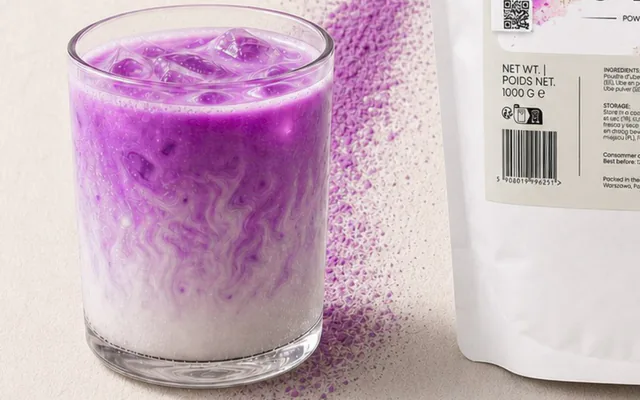
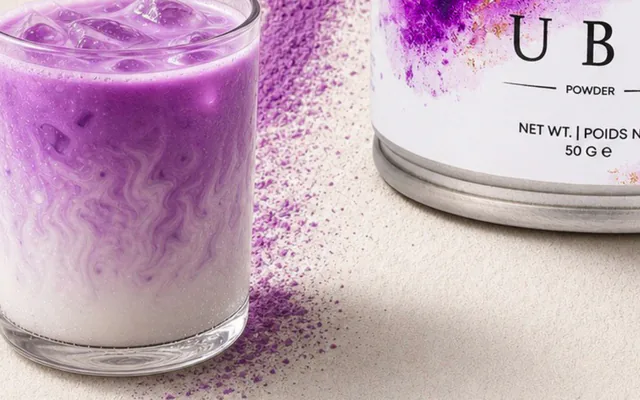
Ube drinks — five recipes beyond the latte: cream top, lemonade, spritz, shake and hot chocolate
Ube powder usually ends up in a latte, which is the least interesting thing it can do. One base — powder dispersed in warm water — gives you a foam for iced drinks, a lemonade that changes colour, a spritz, a shake and a hot chocolate. All of it caffeine-free.
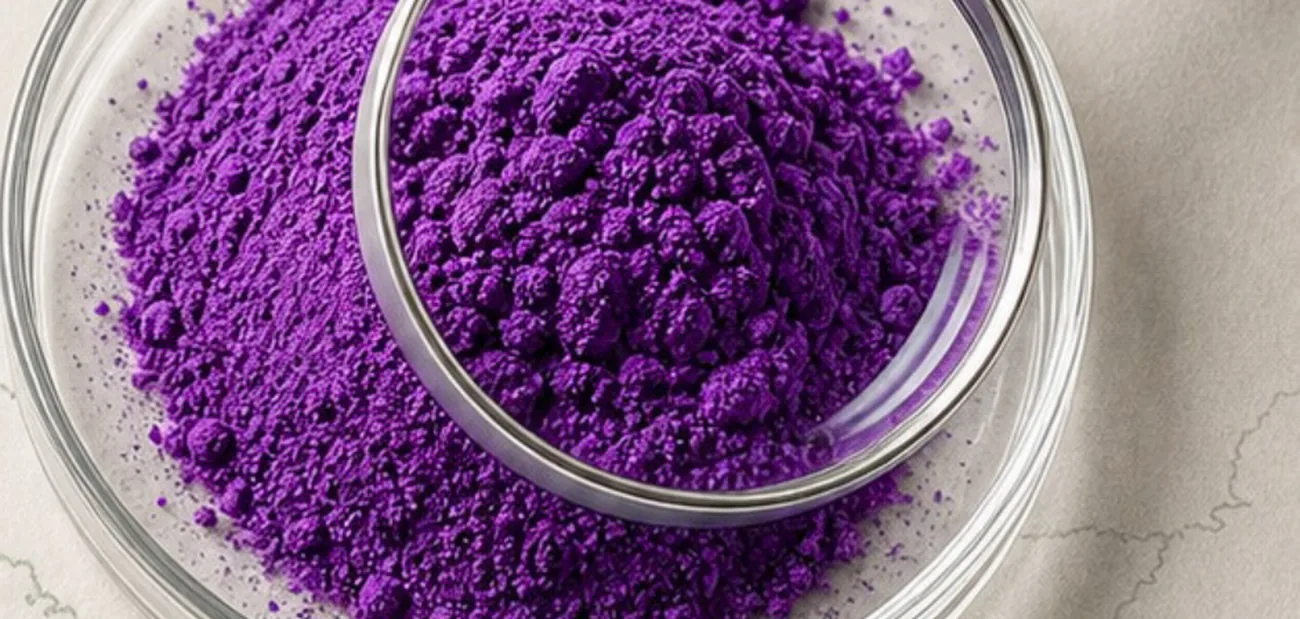
Ube is a purple yam — a tuber, not a tea and not a fruit — with a taste somewhere between vanilla, nuts and white chocolate. What it is exactly and how to read a label is covered in what is ube; the classic hot and iced ube latte has its own page. Here we collect five drinks that, at home or in a café, come from the same powder and look nothing alike.
Two things apply to every recipe below. First, ube contains no caffeine — each of these drinks can be served in the evening and to children. Second, ube's pigments are anthocyanins, which react to acid: with milk and water ube is purple, with lemon or fruit it shifts to pink and magenta. In a latte that is a flaw; in a lemonade it is the whole idea.
One base for everything
Every recipe starts the same way: 2–3 g of ube powder (a level to heaped teaspoon) dispersed in 30–40 ml of warm water at 60–70 °C, mixed with a frother or in a closed jar for 15–20 seconds until there are no lumps. It is the same step as in an ube latte. Powder tipped straight into a cold liquid clumps and gives a grey, grainy drink.
For one café shift — or a weekend at home — the base can be made in bulk: 30 g of powder to 400 ml of warm water, kept in the fridge, used within 24 hours. One tablespoon (about 40 ml) is one serving.
| Drink | Ube powder | The rest | Colour |
|---|---|---|---|
| Ube cream top | 2 g | 60 ml cold milk or cream | light purple |
| Ube lemonade | 3 g | 200 ml sparkling water, 20 ml lemon juice, 15 ml syrup | pink to magenta |
| Ube spritz | 3 g | 150 ml tonic or sparkling water, 10 ml syrup, lime | purple, pinker with lime |
| Ube shake | 3–4 g | 200 ml milk, 1 frozen banana | pastel purple |
| Ube white hot chocolate | 3 g | 200 ml milk, 20 g white chocolate | dark, creamy purple |
1. Ube cream top for iced drinks
A purple cloud on an iced matcha, a cold brew or plain milk. It works like the cold foam from chain cafés, only in colour.
- Make the base with 2 g of ube in 30 ml of warm water and let it cool (a minute in the fridge is enough).
- Add 60 ml of cold milk — ideally barista oat milk, or dairy milk with a tablespoon of 30 % cream; skimmed milk will not hold the foam.
- Froth with a handheld frother for 20–30 seconds until the volume doubles and the foam is thick but pourable.
- Spoon it onto the drink: on an iced matcha it gives a three-colour effect — white ice, green matcha, purple foam.
Foam sweetened with 5 ml of vanilla syrup holds longer. If you put it on matcha, remember that the caffeine is in the green layer, not in the foam.
2. Ube lemonade — pink, not purple
This is the drink where ube's chemistry works for you: pour the base into a sour lemonade and watch the purple turn pink. For café guests it is the best trick at the bar.
- Base of 3 g of ube in 40 ml of warm water, cooled.
- In a tall glass mix 20 ml of lemon juice and 15 ml of sugar syrup, add ice to the top.
- Add 200 ml of cold sparkling water.
- Pour the ube base in last, slowly, and stir — the colour changes within seconds.
The more acid, the closer to magenta; lime juice gives a cooler, pinker tone than lemon. Ube brings not only colour but a creamy, vanilla aftertaste that makes the lemonade feel like it came from a patisserie rather than a soda fountain.
3. Ube spritz — alcohol-free
Sparkling, slightly bitter, served in a wine glass. Instead of wine — tonic, which cuts through the sweetness of ube.
- Base of 3 g of ube in 40 ml of warm water, cooled.
- Fill a wine glass with ice, add 10 ml of syrup (vanilla, coconut or plain sugar).
- Add 150 ml of well-chilled tonic or sparkling water.
- Pour in the ube base, stir once, serve with a slice of lime on the rim.
Lime squeezed into the glass will push the colour towards pink — that is up to the guest. Tonic with quinine is distinctly bitter; for a milder version use half tonic, half sparkling water.
4. Ube banana shake
The thickest of the recipes and the only one that takes more powder: the frozen banana gives ice-cream texture without ice cream.
- Into the blender: 1 frozen banana in pieces, 200 ml of cold milk, 3–4 g of ube powder (here it can go in directly — the blender breaks the lumps), optionally 5 ml of syrup.
- Blend for 30–40 seconds until smooth.
- Serve immediately in a tall glass.
With coconut milk you get the version closest to the ube desserts you know from pastry shops; with oat milk, a lighter and more neutral one. The shake is also the simplest route to "ube ice cream" at home: freeze the finished mix in a container and take it out 15 minutes before serving.
5. Ube white hot chocolate
For winter. White chocolate and ube share a vanilla-milky profile, so the drink tastes like one thing, not two ingredients.
- Base of 3 g of ube in 40 ml of warm water.
- In a small pan heat 200 ml of milk with 20 g of chopped white chocolate, stirring until the chocolate melts — to 60–65 °C, not to the boil.
- Pour in the ube base, stir, pour into a mug.
Do not sweeten before tasting: the white chocolate already brings about 11 g of sugar per serving. A thicker version uses 30 g of chocolate and 180 ml of milk.
Calories and caffeine in one place
Ube powder itself is about 350 kcal per 100 g, i.e. about 10 kcal per 3 g serving. Everything else comes from the additions: 200 ml of 2 % milk is about 100 kcal, a frozen banana about 90 kcal, 20 g of white chocolate about 110 kcal, 15 ml of sugar syrup about 45 kcal. Lemonade and spritz on sparkling water with 10–15 ml of syrup stay within 40–60 kcal. None of the five drinks contains caffeine — it only appears when matcha enters the glass, as in an ube matcha latte.
Colour: how to keep it and how to change it on purpose
- Purple holds in a neutral environment: water, milk, cream, white chocolate, sugar or vanilla syrup.
- Pink and magenta appear with acid: lemon, lime, berries, some fruit syrups. In the lemonade and the spritz that is intended.
- Grey means a mistake: too little powder, powder tipped dry into a cold liquid, or milk overheated and kept warm. More in the ube latte troubleshooting.
- Light and time dull the colour — in the tin and in the prepared base alike. Keep the powder sealed in a dark cupboard; use the base within a day.
For cafés: one base, five menu items
From the bar’s point of view this is ube's best feature: one ingredient, one base per shift, and five drinks on the menu at different prices — from a foam as a small add-on to a spritz in a wine glass. The ingredient cost of each item is 2–4 g of powder; milk, tonic and lemon do the rest. 500 g and 1 kg packs and terms for venues: the business offer.
Where to start
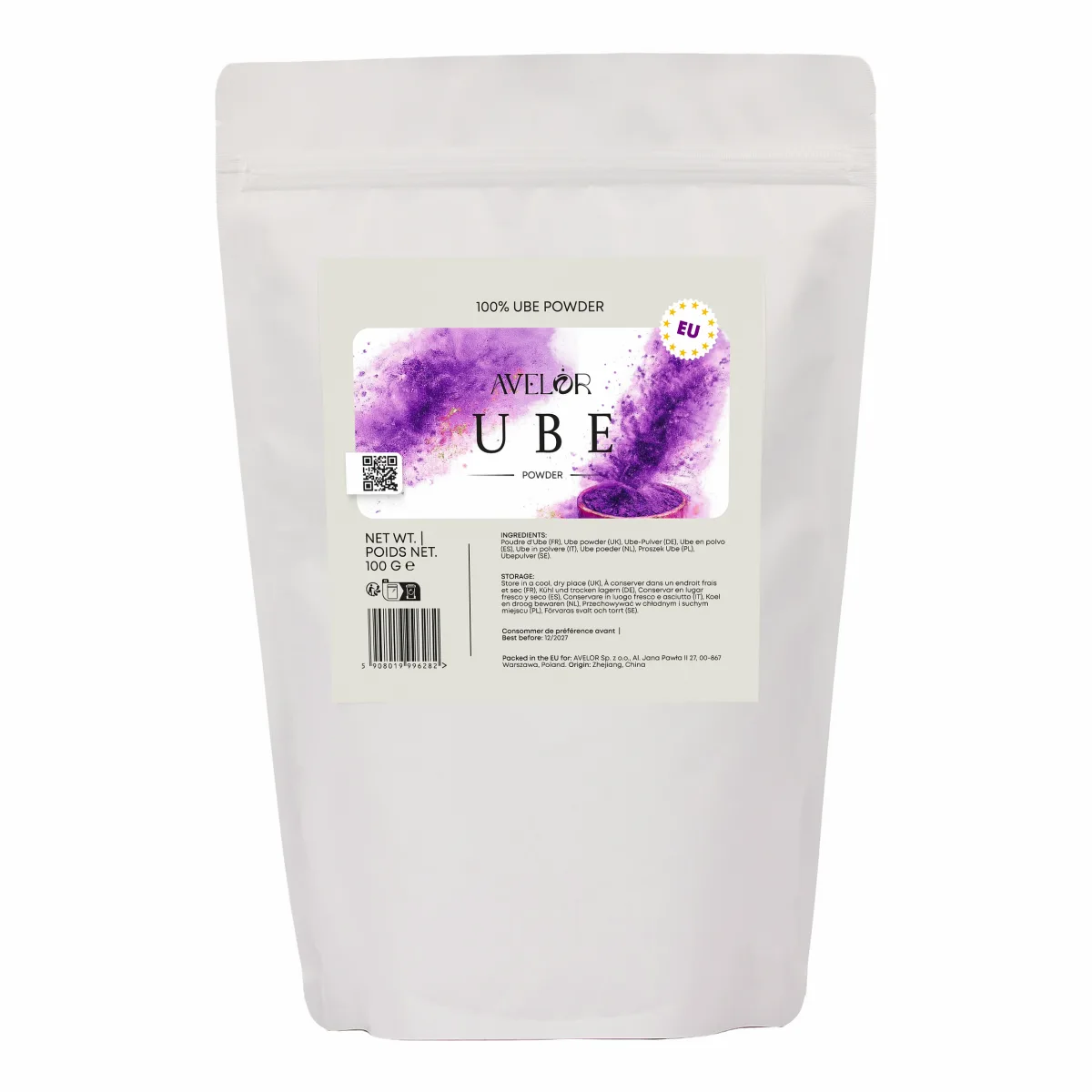
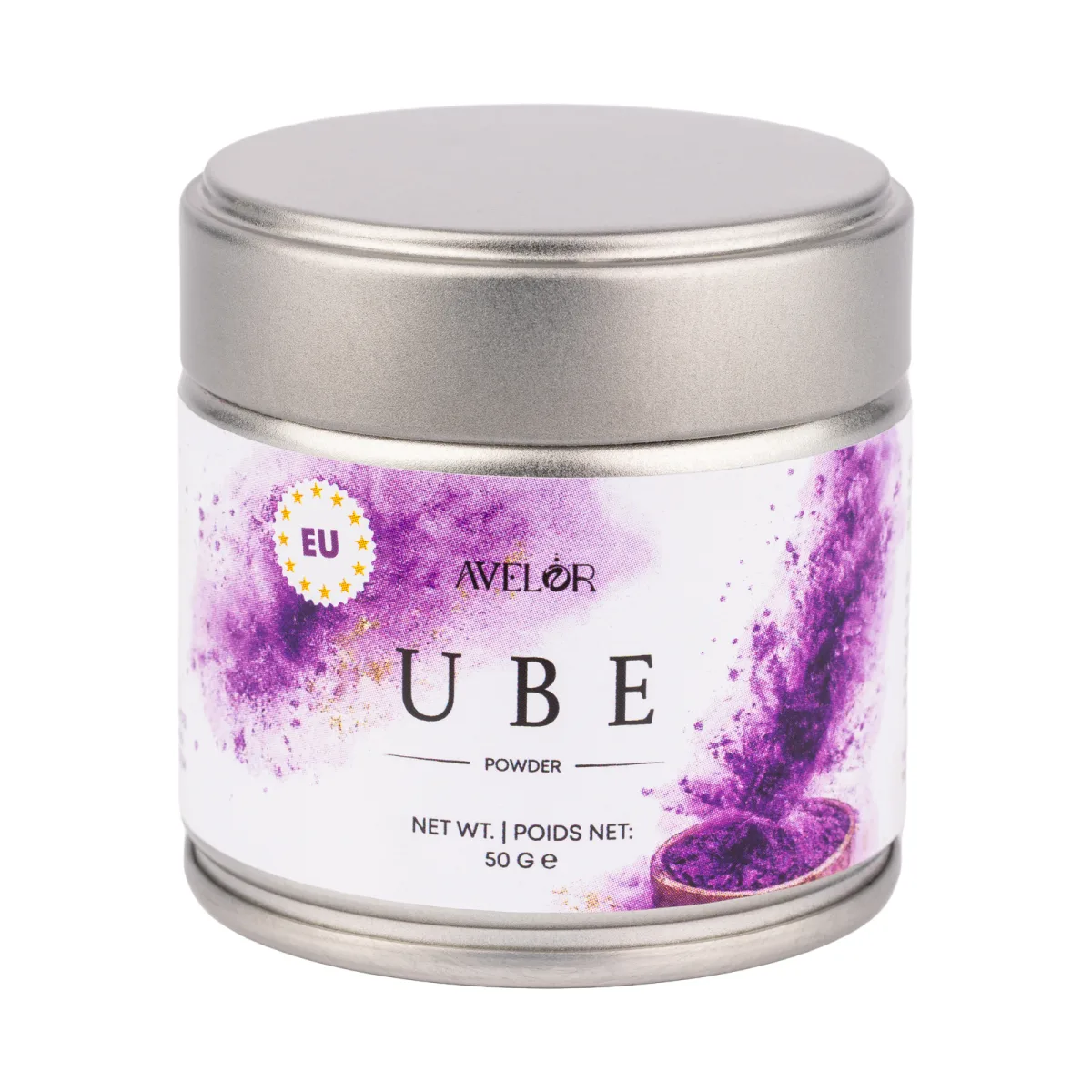
A 10 g sample covers three to four attempts, so exactly a latte, a lemonade and a cream top. For regular use at home, ube powder 50 g makes sense — about 16 servings; for cafés, the 100 g, 500 g and 1 kg packs.
The green version of the lemonade — with matcha instead of ube, with caffeine and no shift to pink — has its own recipe: matcha lemonade.
What can you make with ube powder besides a latte?
From the same base — 2–3 g of powder dispersed in 30–40 ml of warm water — you get a purple cream top for iced drinks, a lemonade that turns pink with lemon, a sparkling ube spritz on tonic, a shake with frozen banana and a white hot chocolate. The powder also works in desserts, ice cream and baking.
Why is ube lemonade pink rather than purple?
Ube’s pigments are anthocyanins, which react to acid: in a neutral environment (water, milk) they are purple, and with lemon or lime juice they shift to pink and magenta. In a lemonade or spritz that is the intended effect; in a latte, sweeten neutrally to keep the purple.
Do ube drinks contain caffeine?
No. Ube is a tuber, so none of the drinks made with ube alone — cream top, lemonade, spritz, shake, hot chocolate — contains caffeine. Caffeine only appears when matcha is added to the glass, for example in an ube matcha latte.
How do you make an ube cream top for iced drinks?
Disperse 2 g of ube in 30 ml of warm water, let it cool, add 60 ml of cold barista oat milk or milk with a little cream, and froth with a handheld frother for 20–30 seconds until the volume doubles. Spoon it onto an iced matcha, a cold brew or milk.
How much ube powder per drink?
Usually 2–3 g per serving, 3–4 g in a shake. A base for several servings is 30 g of powder to 400 ml of warm water, kept in the fridge and used within a day; one tablespoon of base is one serving.
How many calories are in ube drinks?
The powder itself is about 10 kcal per 3 g serving. Lemonade and spritz on sparkling water stay within 40–60 kcal, a shake with banana and milk is about 200 kcal, and an ube white hot chocolate about 220 kcal — depending on the milk and the sweetening.