Ube latte recipe — hot, iced and layered with matcha
Purple, creamy, gently sweet and caffeine-free. An ube latte takes five minutes, provided the powder goes into warm water first and not straight into the milk — after that it is only a matter of ratios.
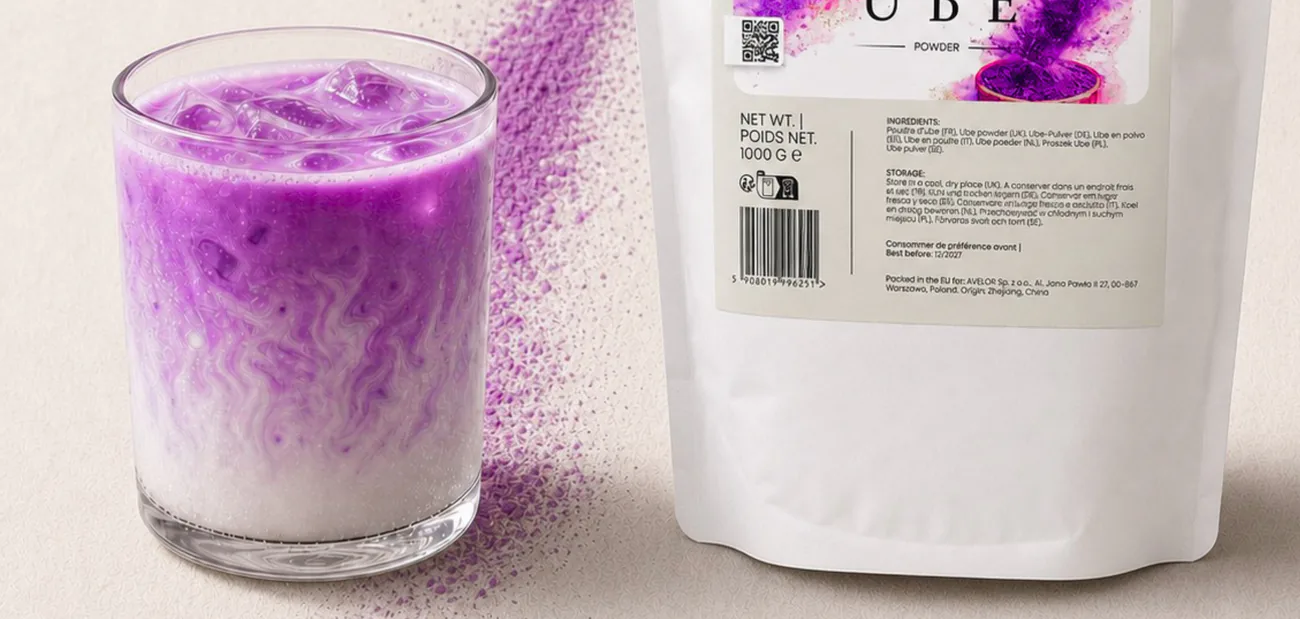
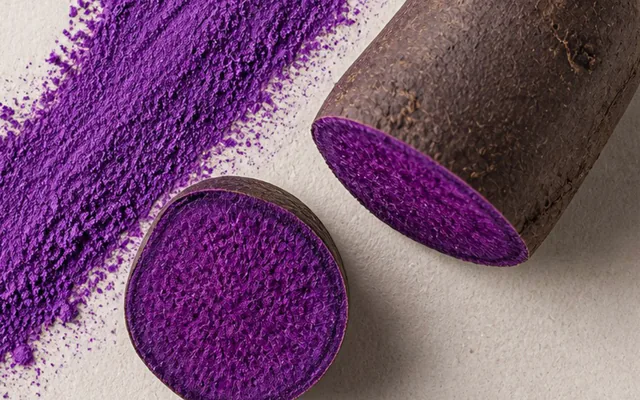
An ube latte is a drink you look at before you taste it: intensely purple, creamy, gently sweet, with notes of vanilla and nuts. It is made with ube powder — purple yam (Dioscorea alata), a tuber long used in Filipino cuisine. What the plant is and how it tastes is covered separately in what is ube. This article is only about how to make an ube latte that is smooth and properly purple.
One thing up front: ube is a tuber, so it contains no caffeine. A plain ube latte can be drunk at any time of day. The exception is the version with matcha — more on that below.
The base recipe: hot ube latte
Ingredients for one serving (about 230 ml):
- 2–3 g ube powder (a level teaspoon; a scale is the reliable way),
- 30–40 ml warm water at about 60–70 °C,
- 180–200 ml milk, dairy or plant-based,
- a sweetener, if you want one.
- Put 2–3 g of ube powder into a cup or jug. If the powder has clumped, pass it through a sieve.
- Add 30–40 ml of warm water (about 60–70 °C).
- Mix with a frother or a small whisk for 15–20 seconds, until you have a smooth, even base with no lumps.
- Heat and foam 180–200 ml of milk to 60–65 °C.
- Pour the milk onto the base. Taste it, and only then sweeten if needed.
The whole craft sits in step three. The base of water and powder plays the same role as espresso in a coffee latte: a concentrated shot that you simply top up with milk. If you know our matcha latte recipe, the order is identical — only the powder and the water temperature change.
No frother? A small jar with a lid will do: add the powder, pour in the warm water, close it and shake for 20–30 seconds. The water should be warm, not boiling — at 60–70 °C the powder disperses quickly and the base does not overheat the milk afterwards. You can also skip the foaming: milk warmed in a pan to 60–65 °C gives a drink that is less fluffy but just as purple.
Iced ube latte
The base stays the same: 2–3 g of powder dispersed in 30–40 ml of warm water. What changes is the order in the glass.
- Prepare the base as in the hot recipe.
- Fill a tall glass with ice.
- Pour in 150–180 ml of cold milk. If you sweeten, stir the syrup into the milk now.
- Pour the ube base in last, slowly, over the ice cubes.
A water-based mixture is lighter than milk, so for a while it sits on top and gives you two layers: purple and white. Stir before drinking — the layers are for the photo, not for the flavour. The same logic applies to the green powder, as described in iced matcha.
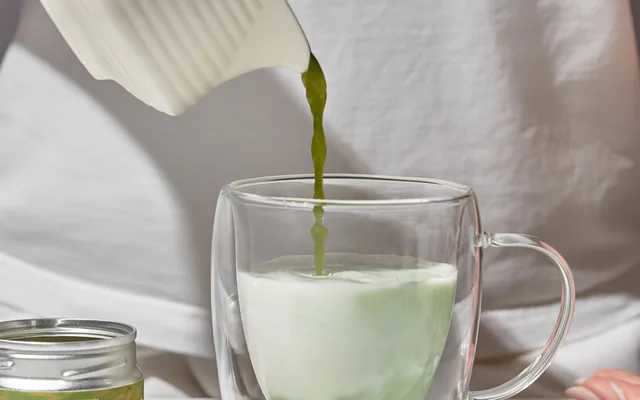
Ube matcha latte — purple below, green above
This is the version cafés sell mostly on looks. It has three levels:
- Bottom: the ube base (2–3 g of powder in 30–40 ml of warm water) mixed with 150 ml of cold milk and, optionally, syrup.
- Middle: ice to the top.
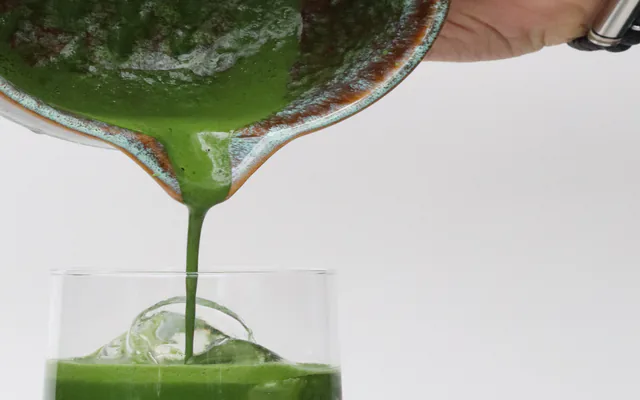
- Top: 2 g of matcha whisked in 40 ml of water at 70–80 °C, poured slowly over the ice.
The order follows density. Milk — sweetened milk especially — is heavier than water, so it stays at the bottom. Matcha whisked in water alone is the lightest part, and the ice breaks the stream so it cannot punch into the milk. That is why you always sweeten the bottom layer: sugar weighs it down and the line between the colours stays sharper. Sweetened matcha would sink.
This version does contain caffeine — 2 g of matcha is about 60–70 mg, roughly the same as an espresso. A plain ube latte has none at all, so if that is the reason you drink it in the evening, stay with the version without the green layer.
Which milk for an ube latte
| Milk | Colour | Taste |
|---|---|---|
| Oat barista | pastel, even lilac; stable foam | neutral, slightly cereal-like; sweet on its own, so syrup is rarely needed |
| Coconut | clean, cool purple against white | the classic pairing — coconut lifts the vanilla and nutty notes |
| Almond | paler, more translucent; weaker foam | light and nutty; worth using the full 3 g of powder |
| Dairy | warm, creamy shade of lilac | the fullest and most dessert-like; milky sweetness |
If this is your first ube latte, start with coconut or oat barista. The first gives the most characteristic flavour, the second the easiest foam.
The colour went wrong — three usual causes
- Greyish or dull. Usually too little powder for the amount of milk, or milk that was too hot and held at that temperature for too long. Stay with 2–3 g per 180–200 ml and do not go above 60–65 °C.
- Pink instead of purple. The colour of ube comes from anthocyanins — pigments that react to pH. Acidic additions such as lemon or some fruit syrups shift the shade towards pink. It is not a fault in the powder, just the chemistry of the pigment.
- Lumps and dark specks. The powder went straight into cold milk. Always warm water and a smooth base first, milk second.
How to sweeten it
Ube is gently sweet by itself, so try the drink without anything added first. If you sweeten a cold drink, use syrup rather than crystals — sugar does not fully dissolve in cold milk and ends up at the bottom. Vanilla and coconut syrups work best because they reinforce what is already in ube. Fruit syrups can be acidic and may change the colour.
We do not quote a calorie figure for the powder itself, but in practice the total for the glass is decided by the milk and the syrup, not by 2–3 g of ube. How to work that out for different milks is shown for the green counterpart here: calories in a matcha latte.
For cafés: a concentrate for one shift
At several dozen cups a day it makes no sense to mix a base for every order. A concentrate at a ratio of 1 : 15 works well: 50 g of ube powder to 750 ml of warm water (60–70 °C), blended until smooth. Each latte takes 40 ml of concentrate, which is 2.5 g of powder — a batch like this gives about 20 drinks.
- Keep it in a closed bottle in the fridge.
- Shake before every use — the powder settles.
- Make only as much as you will use in one shift; pour away what is left at closing.
For cafés we offer 500 g and 1 kg packs — wholesale terms are on the business page.
In short
Two to three grams of powder, 30–40 ml of warm water, a smooth base, then 180–200 ml of milk at 60–65 °C. Iced, the base goes in last; with matcha, the green layer goes on the very top. To try it, the 10 g sample is enough for 3–5 servings; for regular use at home the 50 g tin is more convenient.
How do you make an ube latte at home?
Disperse 2–3 g of ube powder in 30–40 ml of warm water (about 60–70 °C) and mix with a frother until the base is smooth. Then add 180–200 ml of foamed milk heated to 60–65 °C. Sweetening is optional, because ube has a gentle sweetness of its own.
Does an ube latte have caffeine?
No. Ube is a tuber and contains no caffeine, so a plain ube latte can be drunk at any time of day. Only an ube matcha latte has caffeine — a 2 g serving of matcha is about 60–70 mg, roughly the same as an espresso.
How much ube powder do you need for one latte?
One serving takes 2–3 g of ube powder, 30–40 ml of warm water and 180–200 ml of milk. With lighter milks such as almond it is better to use 3 g. A 10 g sample makes 3–5 servings.
Why is my ube latte grey or pink instead of purple?
A greyish, dull colour usually means too little powder, or milk that was too hot and kept hot for too long. A pink shade appears after acidic additions such as lemon or some syrups, because the pigments in ube — anthocyanins — react to pH.
Which milk is best for an ube latte?
Coconut milk is the classic pairing and lifts the vanilla and nutty notes of ube. Oat barista gives the most stable foam and a neutral taste, dairy milk the fullest, most dessert-like character, and almond is the lightest and needs slightly more powder.
How do you make a layered ube matcha latte?
Pour the ube base mixed with 150 ml of cold milk into the bottom of the glass, fill it with ice, then slowly pour 2 g of matcha whisked in 40 ml of water at 70–80 °C on top. Milk is denser than water, so it stays below while the matcha floats. Only the bottom layer is sweetened.