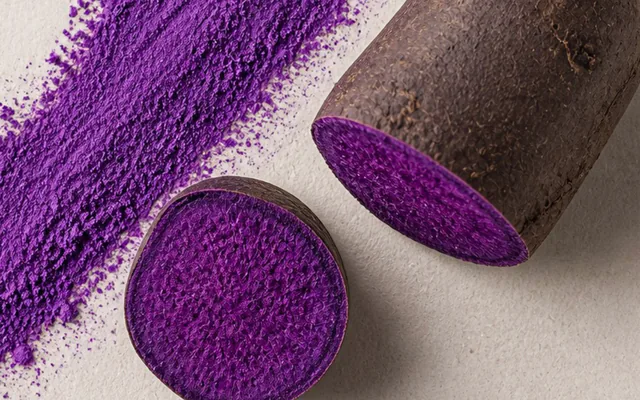
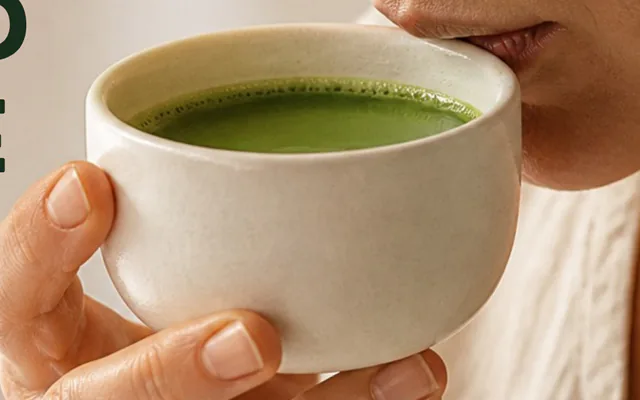
Ube matcha latte — a layered latte recipe: purple below, green above
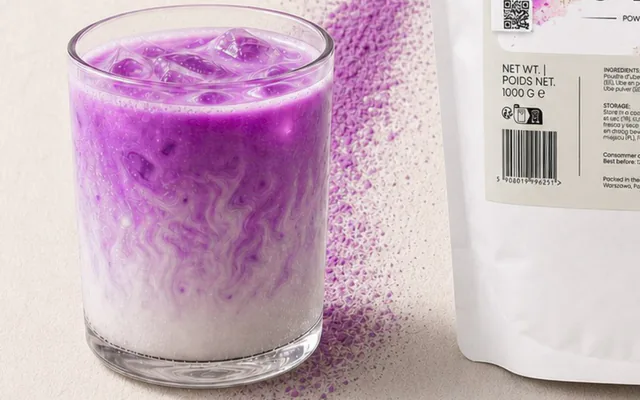
An ube matcha latte is two drinks in one glass: a purple, caffeine-free ube base at the bottom and green whisked matcha on top. The layers are not a trick — they come from density. All you need is the right order.
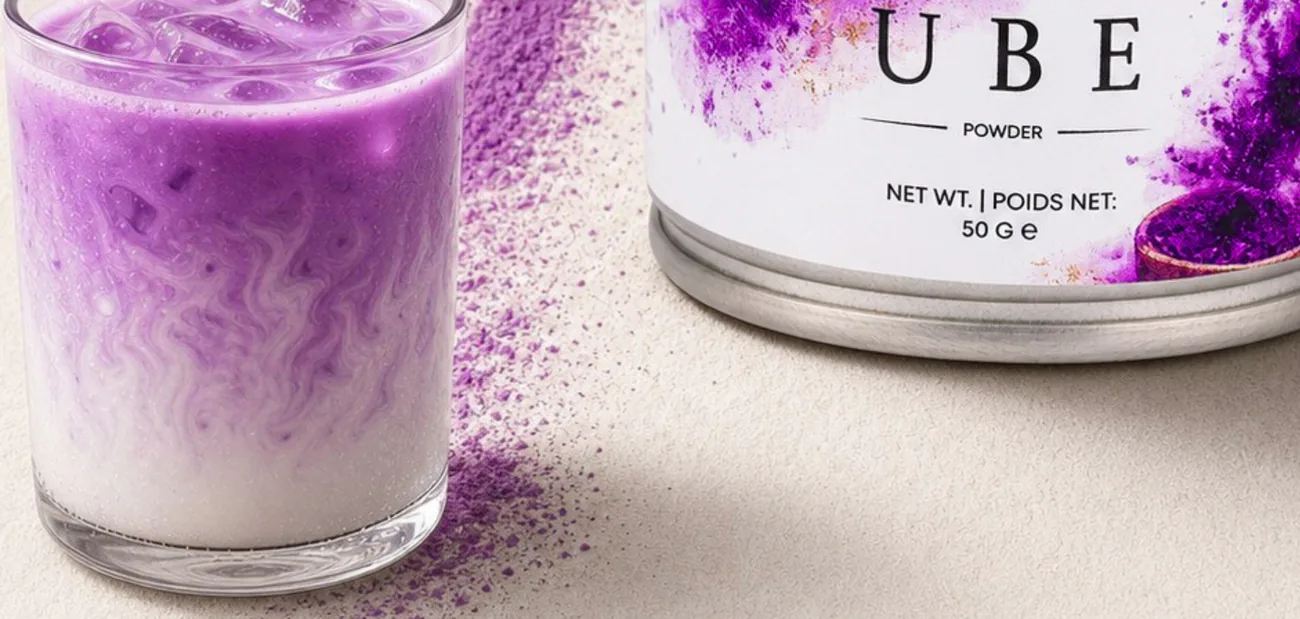
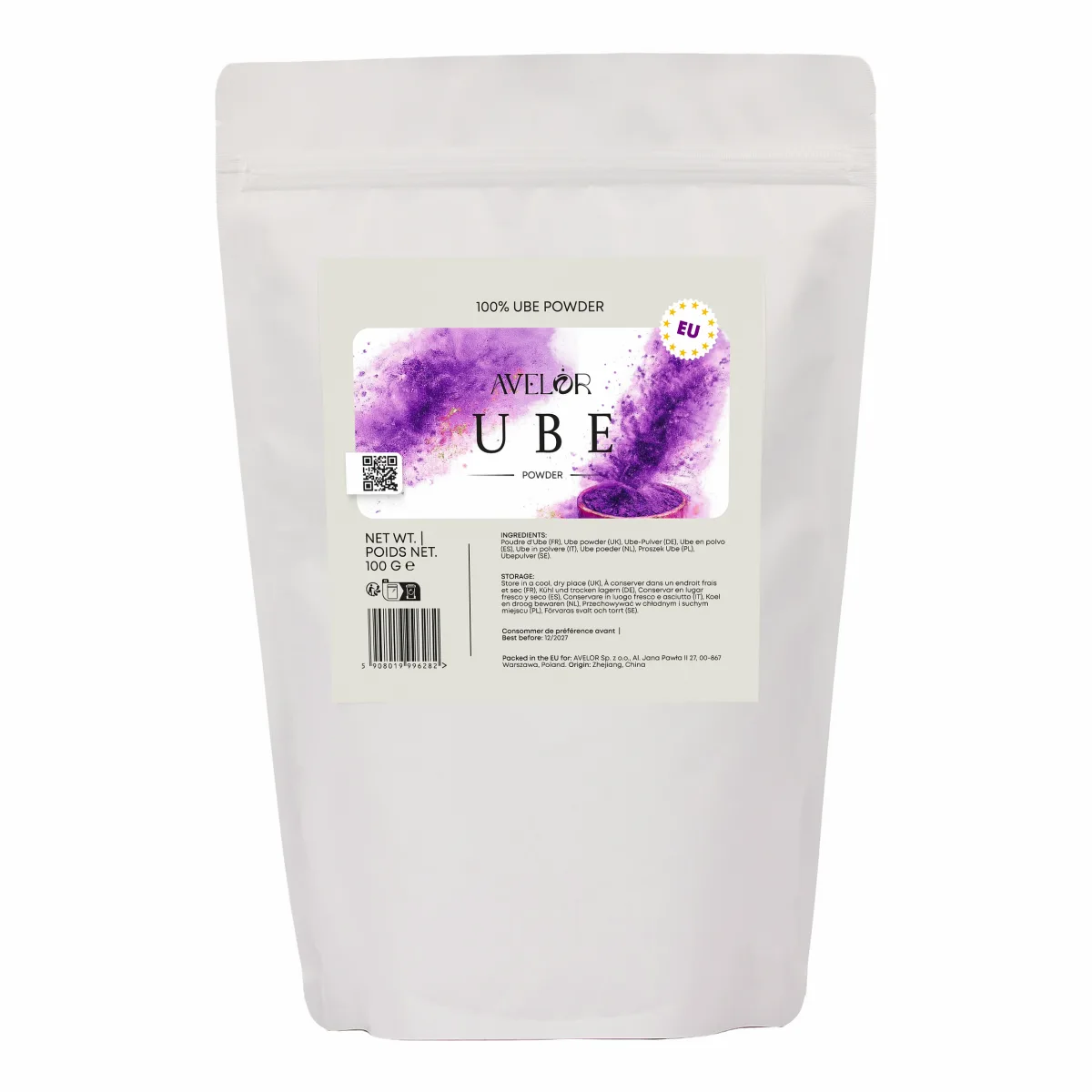
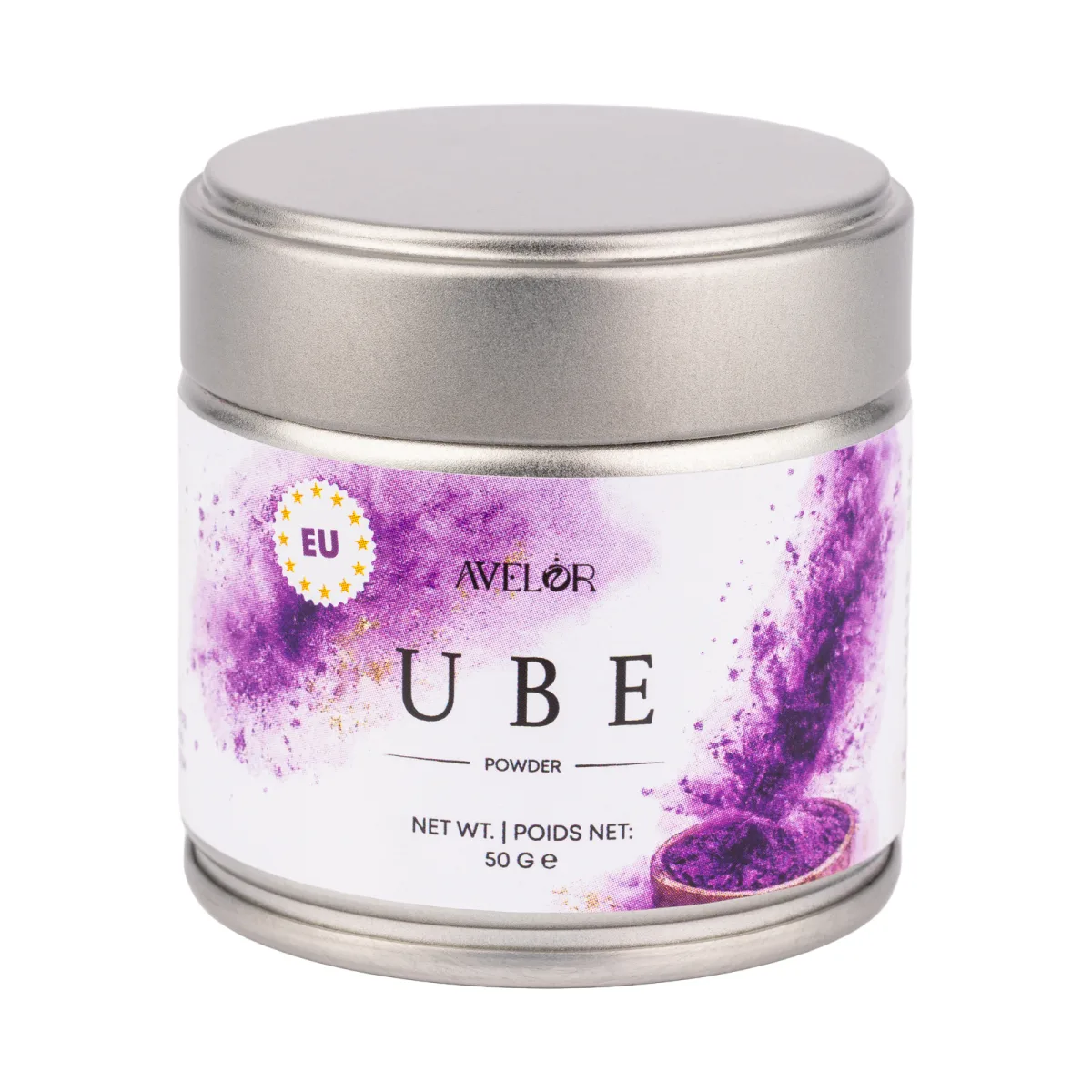
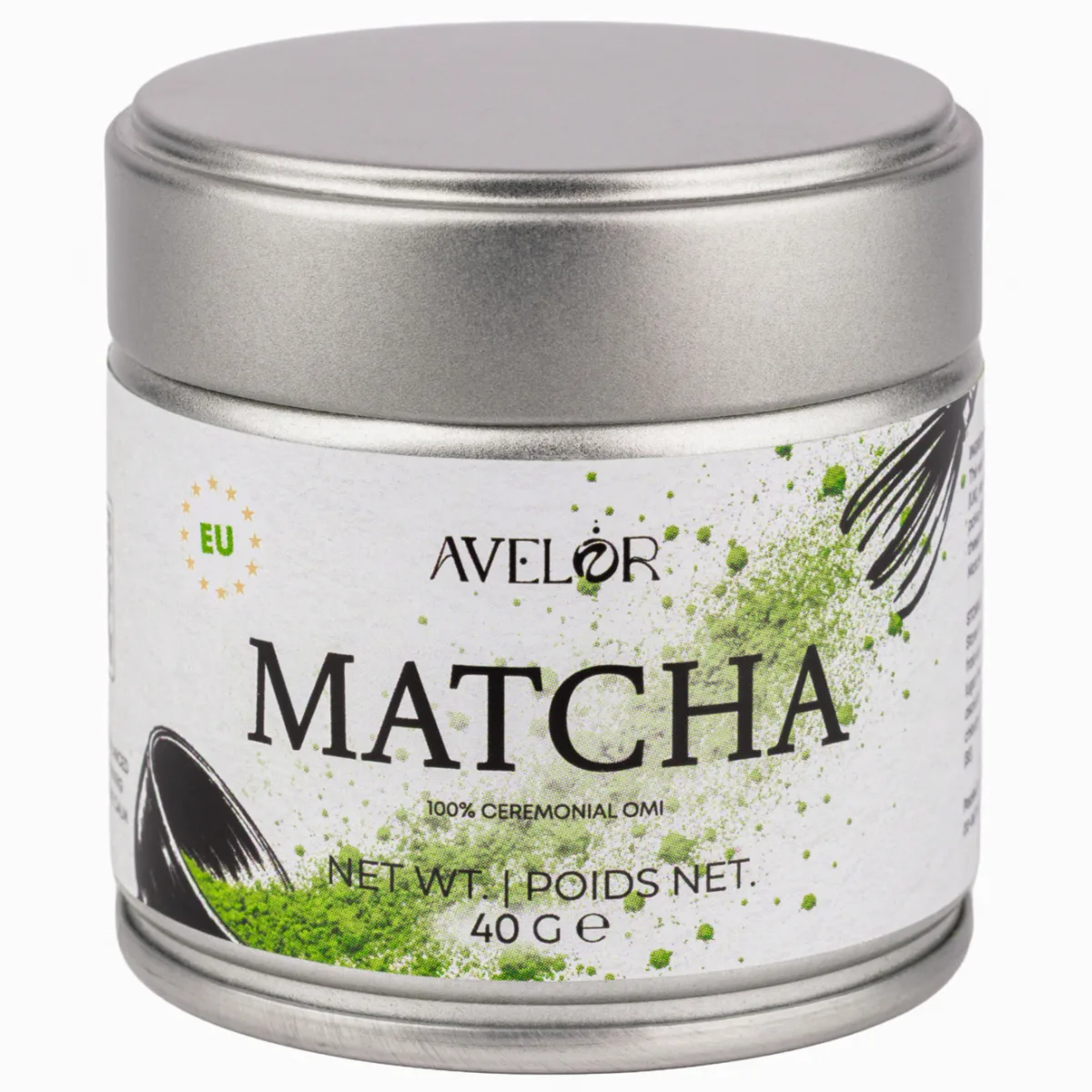
A purple-and-green glass does more for a café than most adverts, and it works just as well at home. You need two powders: ube, the ground purple yam, and matcha. Each is prepared separately, exactly as in a plain ube latte and a matcha latte — then they meet in one glass in a specific order. This article is about that order.
One thing up front: ube has no caffeine, matcha does. An ube matcha latte therefore contains as much caffeine as the green layer alone — with 2 g of matcha that is about 60–70 mg, roughly an espresso. If you reach for ube precisely because it does not stimulate, this version is not for the evening.
The base recipe: iced, layered ube matcha latte
Ingredients for one tall glass (about 350 ml):
- 3 g ube powder (a heaped teaspoon — we take the upper end here, because the base goes into cold milk),
- 30–40 ml warm water at about 60–70 °C for the ube,
- 150 ml cold milk, dairy or plant-based,
- optionally 5–10 ml of syrup or a teaspoon of sugar,
- ice to the top,
- 2 g matcha (a level teaspoon),
- 40 ml water at 70–80 °C for the matcha.
- Put 3 g of ube powder into the glass, add 30–40 ml of warm water (60–70 °C) and mix with a frother or a small whisk for 15–20 seconds until the base is smooth, with no lumps.
- Add 150 ml of cold milk to the base. If you sweeten, do it now — only the bottom layer gets sweetened.
- Fill the glass with ice to the rim.
- In a separate bowl, sieve 2 g of matcha, add 40 ml of water at 70–80 °C and whisk with a chasen or a frother in a W motion for 15–20 seconds.
- Pour the matcha slowly over the ice cubes, from the top. The green layer will settle on the purple one.
- Serve with a straw or a spoon; stir before drinking.
Why the layers hold
There is no special syrup involved, only a difference in density. Milk — sweetened milk even more so — is heavier than water. Matcha whisked in plain water is the lightest thing in the glass, and the ice breaks the stream so it cannot punch through the milk. Three rules decide everything:
- Sweeten only the bottom. Sugar weighs down the purple layer and sharpens the colour line. Sweetened matcha would become heavier and sink.
- Matcha on water, not on milk. The green layer has to be light. Whisk the matcha into milk and you get a uniform, muddy-green drink — tasty, but with no storeys.
- Ice to the top, pour slowly. A stream poured straight into the milk breaks the layer. Poured over ice, it slides down gently and spreads across the surface.
The same physics works in every iced matcha drink — there the green layer lands on white milk, here on purple.
The ratios in one place
| Ingredient | Amount | What it does |
|---|---|---|
| Ube powder | 3 g | colour and a creamy, vanilla-nutty base |
| Warm water for the ube (60–70 °C) | 30–40 ml | disperses the powder without lumps |
| Cold milk | 150 ml | body of the bottom layer |
| Syrup or sugar (optional) | 5–10 ml / 1 teaspoon | sweetness and weight for the bottom layer |
| Ice | to the top | chills and separates the layers |
| Matcha | 2 g | the green layer, the caffeine |
| Water for the matcha (70–80 °C) | 40 ml | whisks without bitterness |
A 30 g tin of matcha makes 15 of these glasses; 50 g of ube makes about 16. If you are making the drink for the first time, weigh both powders: a teaspoon is the wrong tool, and ube and matcha have different densities.
The hot version
Hot, the layers make no sense — hot milk and hot matcha blend on their own. Instead you make one smooth base:
- Disperse 3 g of ube in 30–40 ml of warm water as above.
- Sieve 2 g of matcha into the same bowl, add 40 ml of water at 70–80 °C and whisk everything together.
- Foam 180 ml of milk heated to 60–65 °C and pour it onto the base.
The colour will be dark, somewhere between purple and olive — that is normal. The taste is more interesting than the look suggests: the sweetness and nuttiness of ube soften matcha’s umami and bitterness, which is why this version suits people who find plain matcha too "green". If colour is the point, stay with the iced version.
Caffeine and calories
Only the matcha carries caffeine: 2 g is about 60–70 mg, and the effect is usually felt for 3–6 hours — more in how long matcha lasts. Want it milder? Use 1 g of matcha in 30 ml of water; the layer will be thinner but still green. Want no caffeine at all? Then it is simply an ube latte.
Calories: 3 g of ube is about 10 kcal, 2 g of matcha about 6 kcal, 150 ml of 2 % milk about 75 kcal. An unsweetened glass is therefore about 90 kcal; every 10 ml of syrup adds 30–35 kcal. The breakdown for other milks is the same as in the matcha latte calorie table.
Three mistakes that ruin the layers
- Ube tipped straight into milk. The powder clumps and the base turns grey and grainy. Warm water always comes first.
- Matcha whisked with boiling water. Above 80 °C you get a bitterness you cannot undo, and the whole top layer tastes harsh.
- Acidic syrup. Ube’s pigments — anthocyanins — react to pH: lemon syrup or fruit turns the purple pink. Sometimes that is the point (see other ube drinks), but in an ube matcha latte sweeten neutrally: sugar, vanilla or coconut syrup.
For cafés: two bases, one glass
Behind the bar an ube matcha latte needs no new equipment — just two ready bases. The ube base (powder in warm water) is made for one shift and kept in the fridge; the matcha is whisked to order as always. The drink sits on the menu as a premium item, because it is visible from the other end of the room; the ingredient cost is two servings of powder, i.e. the same sum as for a matcha latte plus 3 g of ube. 500 g and 1 kg packs of both powders and terms for venues: the business offer.
Where to start
For the first attempts, a 10 g ube sample (3 glasses) and SABI 30 g — a mild, creamy matcha that does not fight the sweetness of ube — are enough. If you already have ube, a 50 g pack covers about 16 servings.
How do you make a layered ube matcha latte?
Pour the ube base (3 g of powder in 30–40 ml of warm water) mixed with 150 ml of cold milk and optional syrup into the glass, fill it with ice, then slowly pour 2 g of matcha whisked in 40 ml of water at 70–80 °C over the ice. Sweetened milk is heavier than water, so it stays at the bottom and the matcha floats on top.
Does an ube matcha latte have caffeine?
Yes — but only from the matcha. Ube is a tuber and contains no caffeine, while 2 g of matcha is about 60–70 mg, roughly an espresso. The caffeine-free version is a plain ube latte without the green layer.
Why do my layers mix?
Usually because the matcha was whisked into milk instead of water, was sweetened, or was poured in a stream straight into the milk. Matcha should be on plain water, unsweetened, poured slowly over ice; only the bottom, purple layer gets sweetened.
Can you make an ube matcha latte hot?
Yes, but without layers: whisk 3 g of ube and 2 g of matcha together in 70–80 ml of water (the ube in 60–70 °C water first, then the matcha at 70–80 °C), then add 180 ml of milk foamed to 60–65 °C. The colour is dark, between purple and olive, and the taste is milder than plain matcha.
How many calories are in an ube matcha latte?
Unsweetened, about 90 kcal per glass: 3 g of ube is about 10 kcal, 2 g of matcha about 6 kcal, and 150 ml of 2 % milk about 75 kcal. Every 10 ml of syrup adds 30–35 kcal.
Which milk for an ube matcha latte?
Barista oat milk gives the sharpest layer line and a neutral taste, coconut milk lifts the vanilla notes of ube, and dairy gives the fullest, dessert-like character. Almond milk is the lightest; with it, use the full 3 g of ube.