Can children drink matcha — the caffeine maths for a child and a teenager, and green alternatives without caffeine
Matcha is green, slightly sweet and looks like a children’s drink. It is also a drink with espresso-level caffeine. This article works out what that means for a child of different body weights, and shows what to serve when a child wants "the same as mum".
The question comes up in every café with matcha on the menu: a child sees the green latte and wants to try it. The short answer: not for small children, with caution and in a small serving for teenagers, and if it is about the colour and the ritual, there are better caffeine-free options. The long answer needs one number and one table.
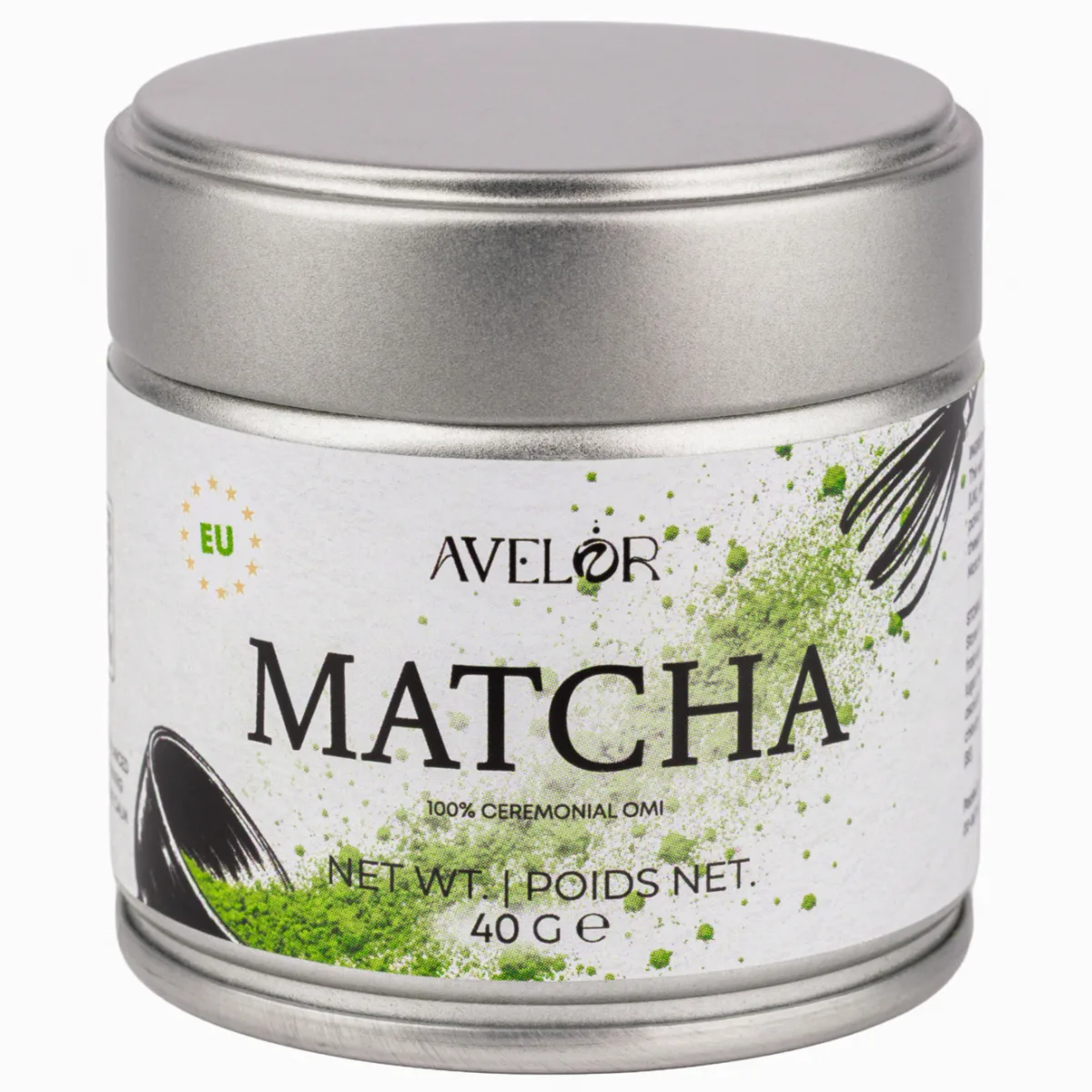
The number: a serving of matcha made with 2 g of powder contains about 60–70 mg of caffeine — as much as an espresso, twice as much as a can of cola (about 32 mg in 330 ml) and not much less than an energy drink (about 80 mg in 250 ml). A matcha latte on milk has exactly the same amount, because milk does not dilute the caffeine — only the taste.
What the EFSA thresholds say
The European Food Safety Authority, in its 2015 scientific opinion on caffeine, gives 400 mg per day and 200 mg in a single dose as amounts of no safety concern for adults. For children and adolescents there is no separate daily figure — EFSA indicates that a single dose of up to 3 mg per kilogram of body weight raises no concern, and notes that there is less data for this group. Let us convert that into servings of matcha:
| Body weight | 3 mg/kg = single dose | Serving of matcha (2 g, 60–70 mg) | What it means |
|---|---|---|---|
| 20 kg (about 5–6 years) | 60 mg | 100–115 % of the threshold | one serving uses up or exceeds the threshold |
| 30 kg (about 8–9 years) | 90 mg | 65–80 % of the threshold | one serving is most of the threshold — with no other sources |
| 40 kg (about 11–12 years) | 120 mg | 50–60 % of the threshold | half a serving (1 g) leaves a margin |
| 50 kg (teenager) | 150 mg | 40–45 % of the threshold | one small serving fits with room to spare |
The table is not a recommendation, only arithmetic: it shows that for a child weighing 20 kg an ordinary bowl of matcha is a dose EFSA describes for an adult as "one strong espresso", and for that child's body weight as the entire permissible single dose. Add the caffeine from cola, chocolate, cocoa and tea, which children usually do not count. In case of doubt the paediatrician decides, not the table.
Why a child reacts differently from an adult
- The same dose on a smaller body. 65 mg for a 70 kg person is under 1 mg/kg; for a 20 kg child — over 3 mg/kg. It is the same bowl.
- No tolerance. Adults who drink coffee every day get used to caffeine. A child who does not get it feels the full effect: a faster heartbeat, restlessness, difficulty falling asleep.
- Sleep. Caffeine acts for several hours and stays in the body longer; for a child who goes to bed at 8 pm, matcha drunk after lunch is still active in the evening. The eight-hour rule for children means, in practice: mornings only.
- Iron. Compounds in green tea hinder the absorption of iron from a meal, and children and teenagers are among the groups in which iron deficiency is more common. If at all, matcha should not accompany a meal — more in the article on matcha side effects.
What the label says — and what it does not
In the European Union, drinks with more than 150 mg of caffeine per litre must carry the statement "High caffeine content. Not recommended for children or pregnant or breast-feeding women". Matcha usucha has about 65 mg in 70 ml, i.e. over 900 mg per litre, and a matcha latte about 65 mg in 250 ml, i.e. about 260 mg per litre — both versions exceed that threshold several times over. The labelling obligation does not apply to tea-based drinks, however, so you will not find such a warning on a tin of matcha. No statement does not mean no caffeine; the same caution that applies to matcha in pregnancy applies to children.
From what age and how much
- Up to about 12 years: in our view there is no reason to give a child a drink with espresso-level caffeine. The colour, sweetness and ritual can be provided without caffeine (below).
- Teenagers: if they want to try, a small serving — 1 g of matcha (about 30–35 mg of caffeine) in a latte, in the morning, not every day, with no cola or energy drinks the same day. That is still half an espresso.
- At any age: not on an empty stomach, not with an iron-rich meal, not in the afternoon. If the child takes medication or has heart, sleep or hyperactivity issues — that is a question for a doctor, not for us.
What to serve instead: "the same as mum", but without caffeine
A child usually does not want caffeine — they want a colourful drink in the same glass. Three solutions that work at home and in a café:
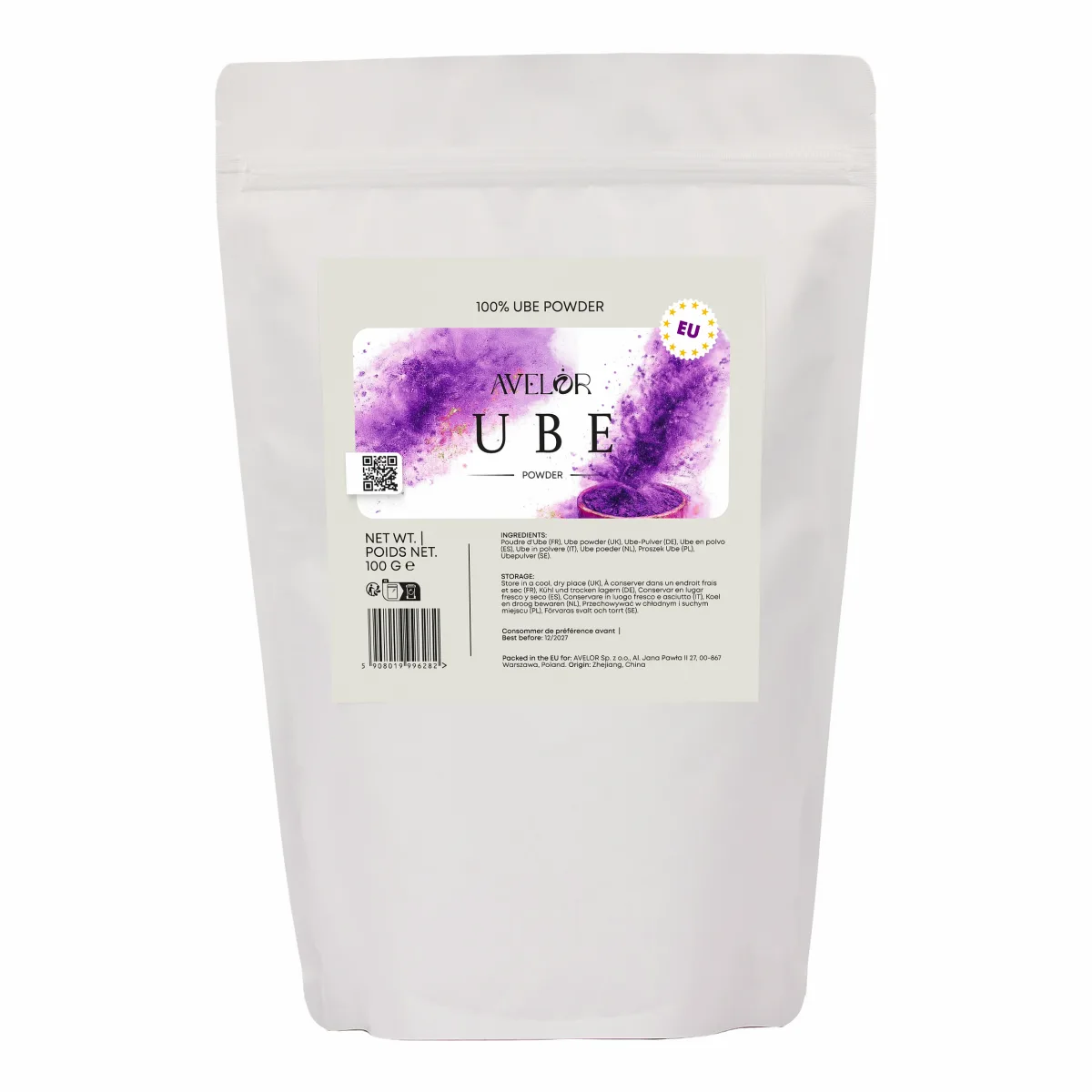
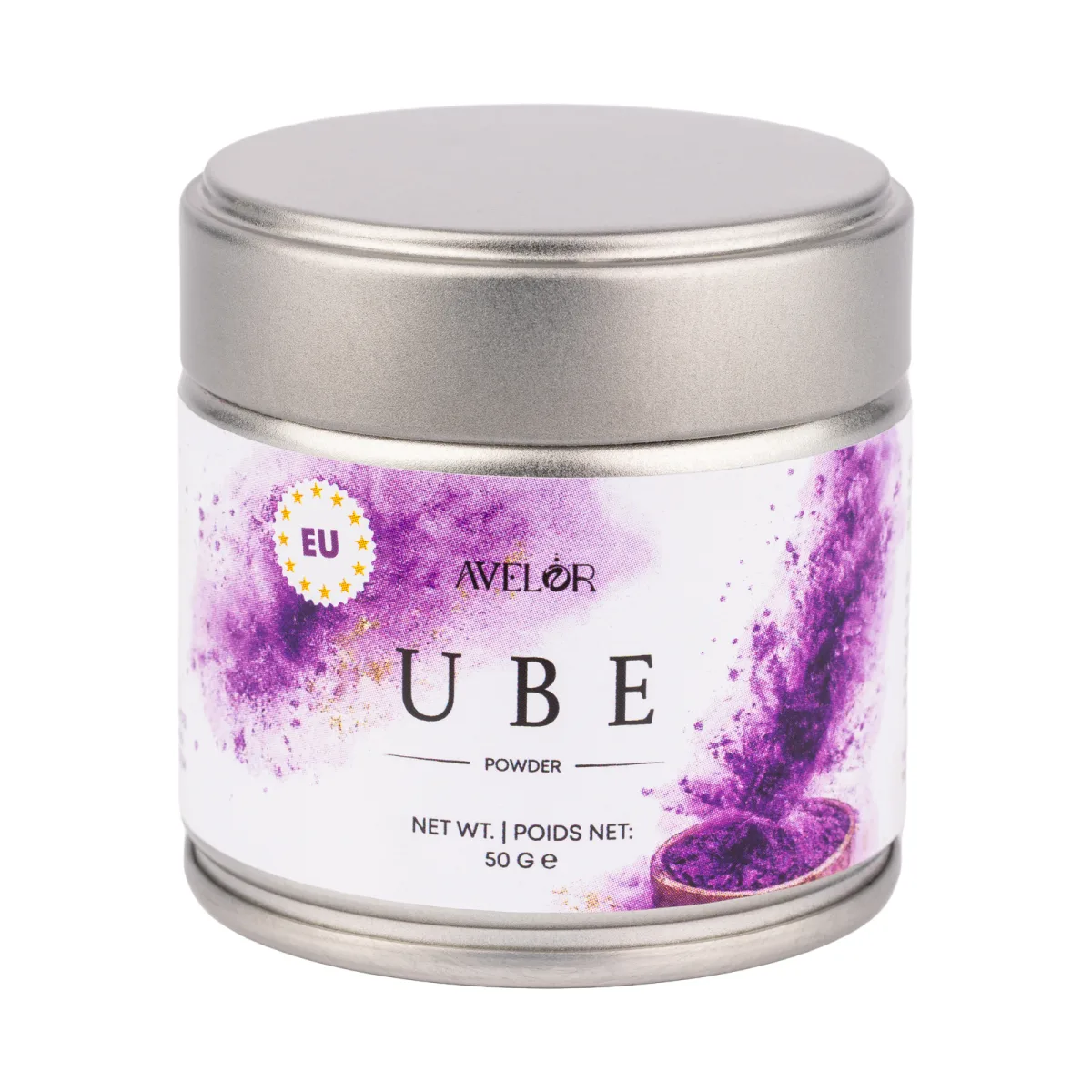
- Ube latte — purple, creamy, naturally slightly sweet and caffeine-free, because ube is a tuber, not a tea. The same preparation as a matcha latte, so the child gets their drink at the same time as the adult. More purple options: ube drinks.
- Milk with a fruit layer — the bottom layer as in a strawberry matcha latte, just without the green top: strawberry purée, ice, milk.
- Warm milk with a pinch of matcha for colour — if a teenager insists on green: 0.5 g of matcha (about 15 mg of caffeine, as much as a square of dark chocolate) in 200 ml of milk gives a light green colour and a trace dose. For younger children, better to stay with ube.
For cafés: a "for kids" item on the menu
Parents ask, so it pays to have the answer ready: an ube latte in a small glass as the caffeine-free drink next to matcha. One more base, no new equipment, and a table with a child orders one more item. Matcha on a café menu and the business offer describe how to set it up.
Summary
Matcha for a child is a question about caffeine, not colour. One serving is an espresso's dose; for a child of 20–30 kg that is all or almost all of the single-dose threshold EFSA describes as safe. Small children — no; teenagers — a small serving in the morning, occasionally; everyone — a purple ube latte when the point is having a drink of their own. A 10 g ube sample is enough for three glasses to find out whether the child likes it.
Can children drink matcha?
Small children — in our view no: a serving of matcha made with 2 g of powder has 60–70 mg of caffeine, as much as an espresso, and for a child weighing 20 kg that is the entire single-dose threshold of 3 mg/kg that EFSA describes as safe. Teenagers can try a small serving (1 g) in the morning, occasionally. In case of doubt the paediatrician decides.
How much caffeine is in a matcha latte for a child?
The same as for an adult: 60–70 mg from 2 g of matcha, because milk does not dilute caffeine. A version with 1 g of matcha has 30–35 mg (half an espresso), with 0.5 g — about 15 mg, as much as a square of dark chocolate.
From what age can you drink matcha?
There is no official age limit. EFSA gives children and adolescents a single dose of up to 3 mg of caffeine per kilogram of body weight as raising no concern; with 2 g of matcha that threshold is reached by a child weighing about 20–22 kg. In practice: up to about 12 better without, a small serving for teenagers.
Is matcha better for children than coffee or cola?
A serving of matcha has as much caffeine as an espresso and twice as much as a can of cola, so in terms of caffeine it is not "gentler". It contains no sugar or phosphoric acid, though. For a child what counts is the caffeine dose per kilogram of body weight, and in matcha that is high.
What to serve a child instead of matcha?
An ube latte: purple, creamy, naturally slightly sweet and caffeine-free, because ube is a tuber. It is made the same way as a matcha latte, so the child gets their drink together with the adults. The second option is milk with a layer of strawberry purée at the bottom.
Can a teenager drink matcha every day?
Daily matcha is a daily dose of caffeine like an espresso, at an age when sleep matters particularly. If at all, a small serving (1 g) in the morning, not every day, with no cola or energy drinks the same day. With sleep or heart problems or medication — a question for a doctor.