Matcha in pregnancy — how much caffeine, what to watch and what to ask your doctor
This is not medical advice and it does not replace a conversation with your doctor or midwife. What it does give you is concrete arithmetic: how much caffeine a serving of matcha holds, how that sits against the commonly cited limit, and two things beyond caffeine worth considering.
Let us start with the most important sentence: the decision belongs to the clinician looking after your pregnancy, not to a tea shop. Every pregnancy is different, and guidance depends on your health, your medication and the rest of your diet. Below are the numbers and the questions worth bringing to an appointment — not a substitute for that appointment.
The caffeine limit in question
The European Food Safety Authority and national public health bodies usually cite for pregnancy an indicative ceiling of around 200 mg of caffeine a day from all sources — roughly half what is assumed for other adults.
Two words matter here: all sources. This is not a limit on matcha, coffee or cola separately, but on the sum of everything you drink and eat over the day.
How much caffeine matcha holds — and how to count it
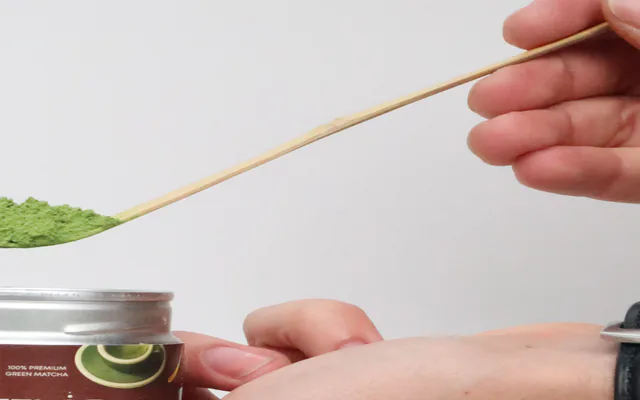
A standard serving is 2 g of powder, which is 60–70 mg of caffeine. For comparison:
| Source | Serving | Caffeine |
|---|---|---|
| Matcha (usucha) | 2 g | 60–70 mg |
| Espresso | 30 ml | ~63 mg |
| Filter coffee | 240 ml | 95–120 mg |
| Black tea | 240 ml | 40–50 mg |
| Green tea (infusion) | 240 ml | 25–35 mg |
| Cola | 330 ml | ~32 mg |
| Dark chocolate | 50 g | ~40 mg |
Against a 200 mg limit that works out at roughly two to three servings of matcha a day — but only if you are not also drinking coffee or tea. One filter coffee plus two bowls of matcha is already about 240 mg, above the guidance.
A safer approach than counting up to the line: treat 200 mg as a ceiling rather than a target, and leave yourself room.
Three traps in the counting
- Matcha is not a "light tea". Many people assume that since it is green tea it holds as much caffeine as an infusion. It holds two to three times more, because you drink the whole ground leaf.
- Koicha is a double dose. The thick ceremonial version uses 4 g of powder — 120–140 mg in a single bowl.
- Café servings can be larger. In a big cup a barista often scoops a double portion of powder. It is worth asking.
Two things beyond caffeine
Iron. Compounds present in tea can reduce the absorption of non-haem iron (the kind from plants and supplements) from a meal. In pregnancy iron requirements rise and anaemia is common, so this is a real consideration rather than a detail. The commonly used solution is simple: drink matcha with a gap from meals and from any iron tablet, usually about an hour. If you take iron preparations, agree the interval with your doctor.
Extract supplements. This is an entirely different category from a drink. Capsules of concentrated green tea extract deliver EGCG doses unreachable by drinking, and food safety bodies have examined liver-related reports in connection with them. In pregnancy supplements are not chosen on your own — that is a question for a clinician, not the internet.
What about breastfeeding
Caffeine guidance here is usually similar — also in the region of 200 mg a day, with part of the caffeine passing into milk. Infants, newborns especially, metabolise it far more slowly than adults, so they sometimes react with restlessness or poorer sleep at doses that make no difference to the mother.
A practical tip often heard: if you notice irritability or sleep trouble in your baby, caffeine is one of the things worth testing by stopping for a few days. Discuss the specifics with a doctor or a lactation consultant.
What to ask at your appointment
To keep the conversation concrete, arrive with your questions ready:
- What daily caffeine limit is right in my case?
- I take an iron preparation — what gap should I keep from tea?
- Do any of my medications interact with caffeine?
- Given my results, is there a reason to stop altogether?
Bring the number with you: "a serving of matcha is 60–70 mg of caffeine, and I drink this many servings a day." That makes answering much easier.
If you want to cut caffeine without giving it up
- Reduce the serving to 1–1.5 g of powder. The flavour stays, the caffeine falls proportionally.
- Choose usucha, not koicha. The thick version is a double dose.
- Shift the timing to the morning — sleep is often harder in pregnancy anyway, and caffeine has a half-life of 5–6 hours.
- Consider a lower-caffeine tea, such as roasted hojicha, or a green tea infusion instead of powder.
More on caffeine itself and why it behaves differently than in coffee: how much caffeine matcha has →. The other points worth knowing: matcha side effects →
Summary
Matcha is not a forbidden product in pregnancy, but it is a substantial source of caffeine — at espresso level, not ordinary tea level. Against the commonly cited 200 mg daily limit, two to three servings usually fit, provided there are no other sources. Add to that the iron question and the rule that extract supplements are not chosen on your own.
Everything above is general information. Your situation is assessed by the clinician caring for you — and their answer is the binding one, not this article.
Can I drink matcha while pregnant?
That is a question for the clinician looking after your pregnancy, as it depends on your health and your whole diet. In general matcha is not a forbidden product, but it is a substantial source of caffeine: a serving from 2 g of powder is 60–70 mg, the same as an espresso.
How much caffeine a day in pregnancy?
Public health bodies usually cite an indicative ceiling of about 200 mg a day from all sources, roughly half the figure assumed for other adults. What counts is the total from coffee, tea, cola and chocolate, not each product separately.
How many servings of matcha fit within 200 mg?
Roughly two to three, but only if you are not also drinking coffee or tea. One filter coffee and two bowls of matcha already come to about 240 mg, above the guidance.
Does matcha interfere with iron absorption?
Compounds present in tea can reduce the absorption of non-haem iron from a meal. Iron requirements rise in pregnancy, which is why tea is usually recommended with a gap from meals and from any iron preparation. Agree the interval with your doctor.
Is matcha safe while breastfeeding?
Caffeine guidance is similar to pregnancy, around 200 mg a day. Part of the caffeine passes into milk and infants metabolise it far more slowly than adults, so if your baby is restless or sleeping poorly it is worth discussing with a doctor or lactation consultant.
Are green tea supplements safe in pregnancy?
Extract supplements are not chosen on your own — they are a different category from a drink, with EGCG doses unreachable by drinking tea. The decision belongs to a clinician.
How can I cut caffeine without giving up matcha?
Reduce the serving to 1–1.5 g of powder, choose usucha rather than thick koicha, and move your drink to the morning. Caffeine has a half-life of 5–6 hours, so timing matters for sleep.