Matcha set — what you really need, what is nice to have and what is pointless
Your first bowl of matcha needs three things, a comfortable daily routine needs five, and shops sell sets with ten. We take the kit apart: what each piece does, what you cannot do without and what you can replace with something from the kitchen.
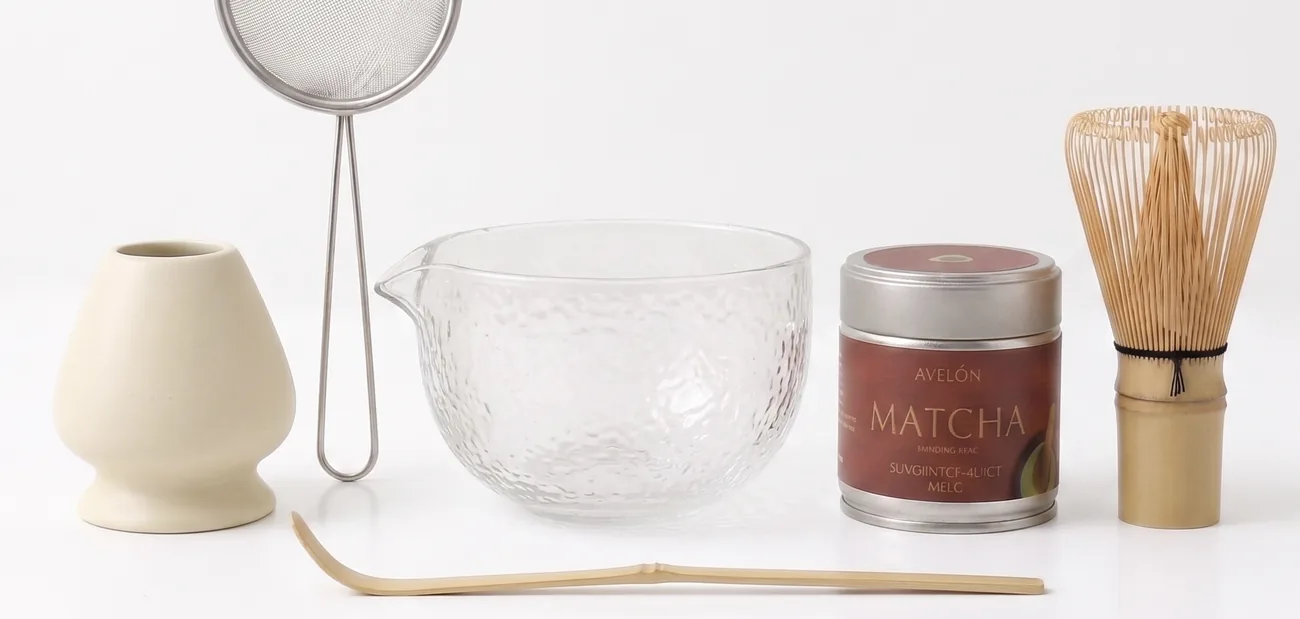
"Matcha set" is a label that covers very different boxes: from a whisk and a tin to kits with scoops, stands, cloths and ceremony instructions. Before buying, it helps to know which pieces work at every bowl and which lie in a drawer. If you first want to see what preparation looks like at all, read how to make matcha step by step — the list below is the equipment for exactly those steps.
The short answer: three levels
| Level | What it contains | Who it is for |
|---|---|---|
| Minimum | matcha + chasen + a wide bowl from the kitchen | the first weeks, finding out whether this is your drink at all |
| Comfortable | matcha + chasen + chawan + sieve + chashaku | daily drinking, repeatable taste and foam |
| Complete | the above + a whisk stand (kusenaoshi) + a milk jug for lattes | people who drink several times a day or make lattes for the household |
1. Chasen — the only piece that cannot be replaced
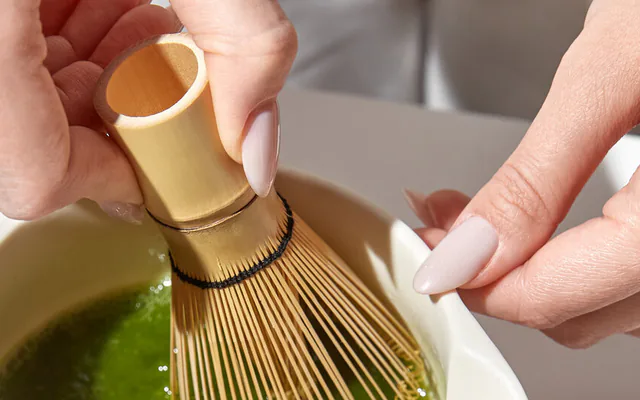
The bamboo whisk is the heart of the set. Its tines break up lumps and force air into the drink — without it, matcha is cloudy, with sediment at the bottom and no foam. A teaspoon does not do this, and neither does an ordinary kitchen whisk: its wires are too thick and too few. An electric frother is the only sensible substitute, and it works well in a latte, less well in plain usucha, where a fine foam matters.
When choosing, the number of tines counts: about 100 is the universal start for daily usucha. How to care for the whisk, when to replace it and how the 80 and 120 variants differ — in the separate article chasen: how to choose and use it.
2. Chawan — a bowl you can whisk in
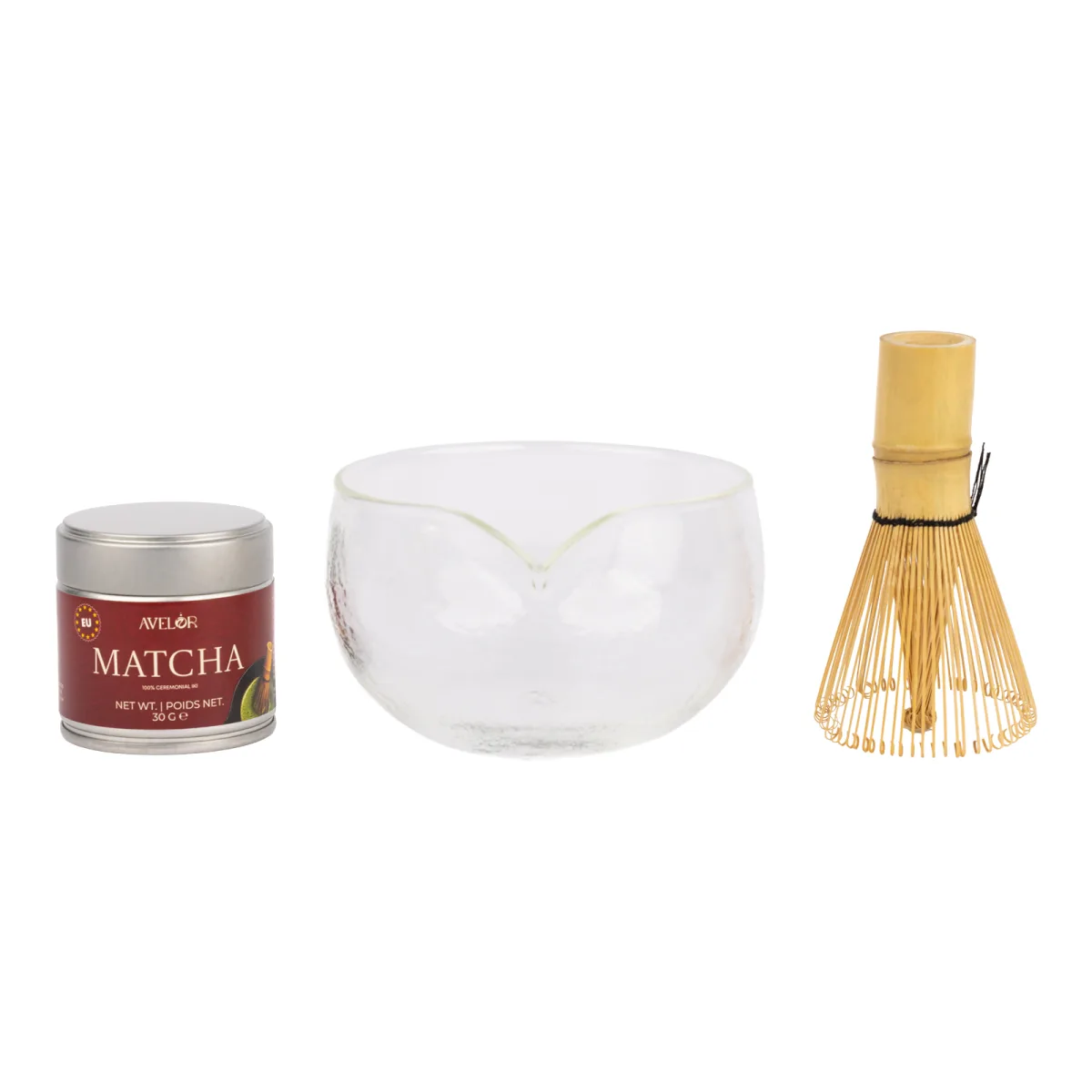
A chasen needs room for the W motion: the bowl must be wide (12–13 cm) and have a flat bottom. In a tall mug the tines hit the walls, no foam forms and the powder stays in the corners. To begin with, a wide cereal bowl is enough — it works. A real chawan differs in two things: walls that hold heat, and a shape in which the motion is natural. A glass chawan has one more advantage for beginners: you can see the colour and foam from the side, so you know at once when the whisking is done.
3. Sieve — the cheapest piece, the biggest difference
Matcha clumps in the tin from moisture and static. Sieving 2 g through a fine mesh before adding water removes lumps the chasen cannot break and halves the whisking time. It is an ordinary kitchen tea strainer; dedicated "matcha sieves" differ only in fitting over the bowl. If the set has no sieve, add your own — do not skip this step.
4. Chashaku — the scoop that replaces the scales
The bamboo chashaku scoop takes about 1 g; two scoops make a 2 g serving. An ordinary teaspoon is inaccurate, because matcha is light and fluffy: a level teaspoon is about 2 g, a heaped one 3–4 g, and the difference between them is the difference between a mild and a bitter bowl. The chashaku is convenient, but kitchen scales accurate to 0.1 g do the same job better — how many grams of matcha per serving explains why it matters.
5. Kusenaoshi — the stand that extends the life of a chasen
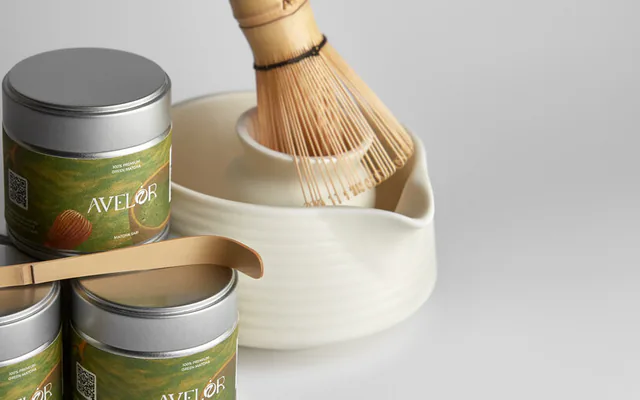
A ceramic cone on which the whisk dries. Without it, wet tines dry in whatever shape they were left in — they close inward, and after a few weeks the chasen stops foaming. The stand keeps them spread. It is a "nice" piece, not a "necessary" one: a whisk can be dried tines-up in a dry glass, you just have to remember to do it.
What not to buy
- Sets with matcha that has no grade or harvest stated. Equipment from a cheap box can be upgraded; the powder cannot. A set is worth as much as the matcha inside — how to recognise good matcha.
- A plastic or metal chasen. It does not foam and scratches the bowl; if bamboo is out of the question, an electric frother is better.
- Duplicate pieces. Two sieves, two scoops, a "spare" chasen — if the first one is dried properly, it lasts for months.
- "Ceremonial" sets with ten accessories for someone who simply wants to make lattes. A latte needs a chasen or a frother, a sieve and a milk jug.
A set for lattes versus a set for plain matcha
If you mainly plan on matcha lattes, the priorities shift: the base of 2 g of matcha and 40–60 ml of water is whisked in a small vessel, and the rest is milk. Then a chasen or an electric frother, a sieve and a milk-frothing jug are enough; the chawan and chashaku are a nice extra. Iced, a chasen is not needed at all — a jar with a lid does the same job better, as we describe separately.
Avelor sets: what is in which
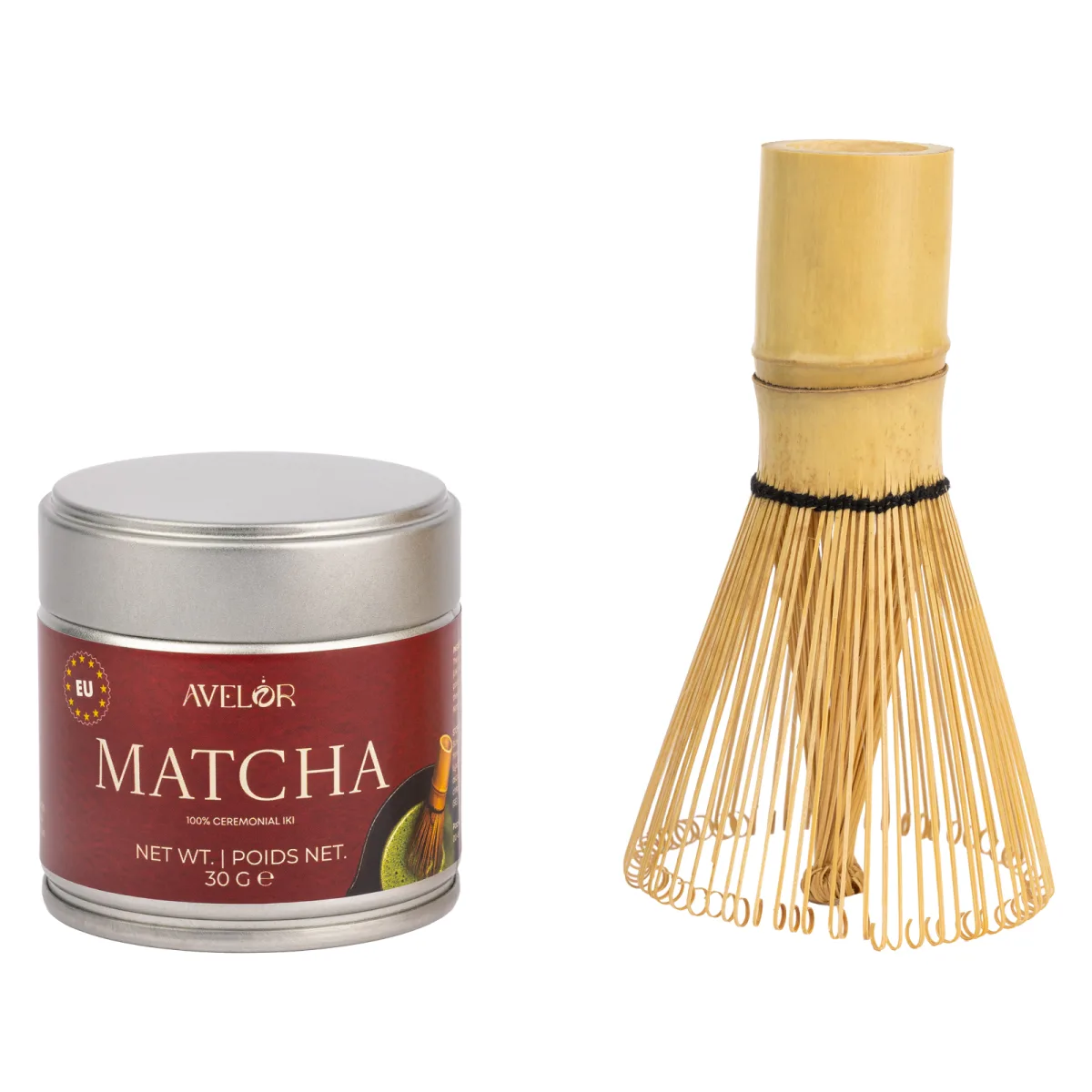
- Starter Set — matcha and a bamboo chasen in a gift box. The minimum that works from day one; you take the bowl and sieve from the kitchen.
- Classic Set — the same plus a glass bowl. For someone just starting out, watching matcha being whisked through glass is half the pleasure and the fastest way to learn when the foam is ready.
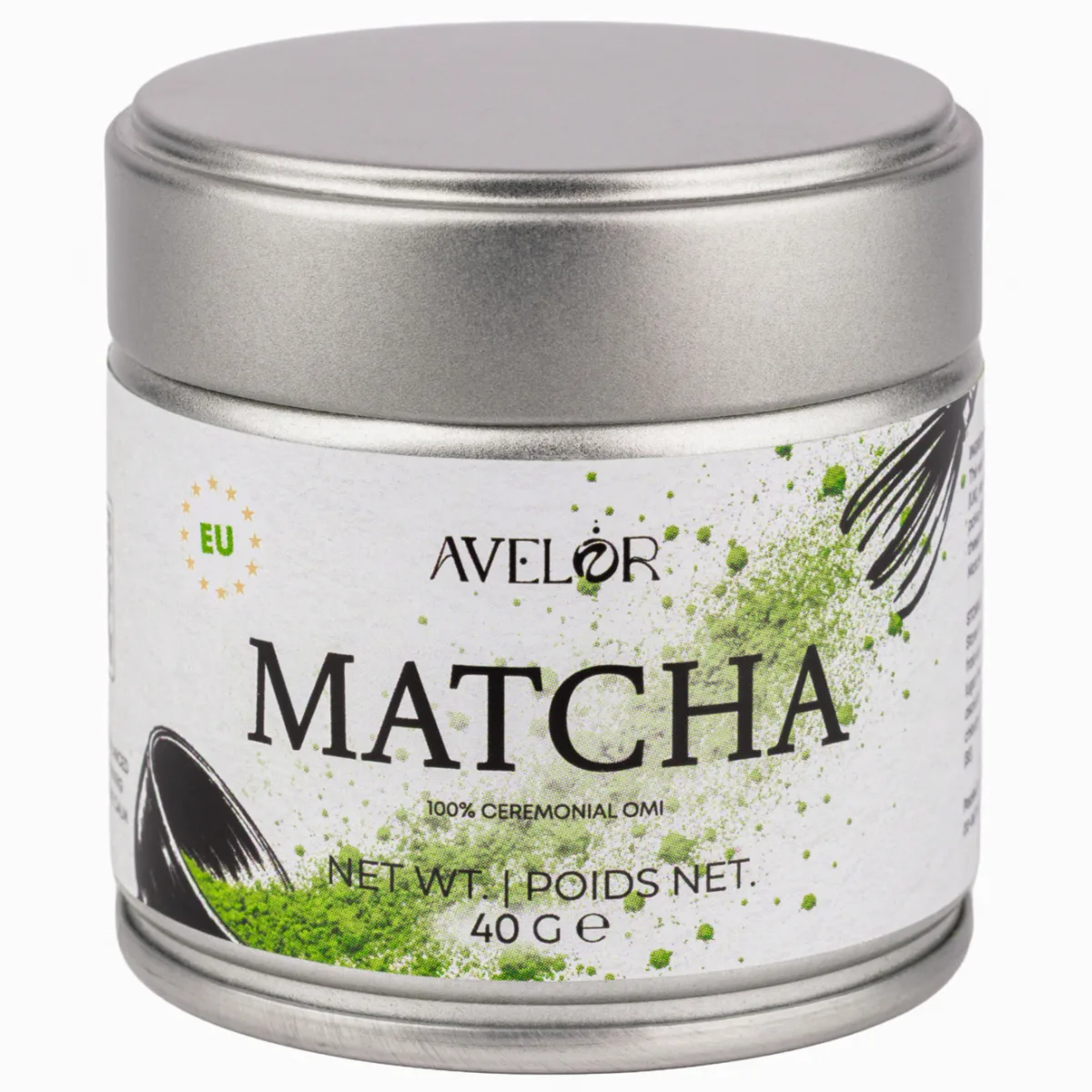
- IKI & SABI duo — no accessories, two 30 g tins: for someone who already has a chasen and wants to compare the lines. How they differ — in a separate article.
All of them are in the sets and gifts category; if the set is to be a present, matcha as a gift — which set to choose will help.
How many servings a set gives
A 30 g tin is 15 servings of 2 g — two weeks of daily drinking or a month with a latte every other day. With proper drying, a chasen lasts several months of daily use; the bowl, sieve and scoop — years. The first set is therefore an investment in equipment, and later purchases are powder only: a 100 g tin is about 50 servings.
What must a matcha set contain?
Only the chasen is essential — the bamboo whisk without which matcha has no foam and leaves sediment. For comfortable daily use add a wide bowl (chawan), a fine sieve and a chashaku scoop. A whisk stand and a milk jug are nice extras, not necessities.
Can you make matcha without a set?
Yes, to begin with: a wide kitchen bowl replaces the chawan, a tea strainer the matcha sieve, and kitchen scales the chashaku. The only piece nothing in the kitchen can replace is the chasen; iced, you can skip it by shaking the matcha in a closed jar.
Which chasen for a first set?
About 100 tines — the universal choice for daily usucha and lattes. The 80-tine variants are for thick koicha, the 120-tine ones for people who have been drinking daily for months and want the finest foam. A plastic or metal chasen does not foam and scratches the bowl.
Do you need a whole set for a matcha latte?
No. For a latte a chasen or an electric frother, a sieve and a milk-frothing jug are enough: the base of 2 g of matcha is whisked in a small vessel, and the milk does the rest. Iced, a chasen is not needed at all — a jar with a lid will do.
What is the difference between the Starter Set and the Classic Set?
The Starter Set is matcha and a bamboo chasen in a gift box; the Classic Set adds a glass bowl. Glass shows the colour and foam from the side, so a beginner sees at once when the whisking is done.
How many servings of matcha are in a 30 g tin?
15 servings of 2 g — two weeks of daily drinking or about a month with a latte every other day. With 3 g of powder per latte, 10 servings. A 100 g tin is about 50 servings.
Try it yourself