Matcha vs coffee — caffeine, energy and what really separates them
This is not a piece about coffee being bad. Coffee is excellent. But matcha solves specific problems that coffee does not — and it is worth knowing which. Below: the numbers, the mechanism, and a ready-made switching plan if you decide to try.
The question "matcha or coffee" usually comes up in one of three moments: when coffee starts causing palpitations, when it upsets your stomach, or when the 2 p.m. crash arrives. The answer is different in each case — and in each it helps to know the numbers.
Caffeine: how much there really is
| Drink | Serving | Caffeine |
|---|---|---|
| Espresso | 30 ml | 60–80 mg |
| Filter coffee | 240 ml | 95–165 mg |
| Matcha (usucha) | 2 g | 60–70 mg |
| Matcha (koicha, thick) | 4 g | 120–140 mg |
| Loose-leaf green tea | 240 ml | 25–45 mg |
The conclusion that surprises most people: a serving of matcha holds roughly as much caffeine as an espresso. Matcha is not a "caffeine-free" or "gentle" drink — there is plenty of it, because you drink the whole ground leaf rather than an infusion.
It is also worth knowing that the figure is not fixed. There is more caffeine in young leaves and in tea shaded before harvest — which is precisely what ceremonial grade is. Culinary matcha from later harvests tends to be weaker in this respect; we broke it down in how much caffeine matcha contains.
So why does it feel different?
The difference is not in the amount of caffeine but in what comes with it.
L-theanine is an amino acid that coffee does not contain at all and that matcha holds in unusual quantity — because the bushes grow in shade before harvest, which raises its concentration. L-theanine slows the absorption of caffeine while increasing alpha brainwave activity, associated with a state of calm focus.
There is a second, simpler difference: drinking speed. An espresso goes down in seconds; a bowl of matcha is sipped over several minutes. The same dose of caffeine spread over longer gives a gentler onset.
The practical effect:
- Coffee: peak at 30–45 minutes, pronounced, then a crash.
- Matcha: a gentle rise, a plateau lasting 4–6 hours, no crash.
That is why matcha at 3 p.m. usually does not cost you sleep while coffee at the same hour can. Caffeine has a half-life of roughly five hours whatever the source — but with coffee the whole dose hits the bloodstream at once and the peak lands high.
Stomach and pH
Coffee is acidic (pH around 4.8–5.1) and stimulates gastric acid secretion — hence the discomfort for people with reflux or excess stomach acid, especially on an empty stomach. Matcha is mildly alkaline (pH around 7.5–8.5) and most people tolerate it far better. This is one of the most common real reasons people move to matcha — not fashion, but digestion.
One caveat in the other direction: matcha on a completely empty stomach is unpleasant for some, because catechins are astringent. The simple fix is to drink it after breakfast or with a splash of milk. We gathered more of these nuances in matcha side effects.
Antioxidants
Both contain plenty of beneficial compounds, but different ones. Coffee supplies chlorogenic acids. Matcha supplies catechins, above all EGCG. Because you drink the whole leaf, one bowl delivers many times more of them than an infusion of ordinary green tea. Add chlorophyll and, importantly for many, zero calories in the unsweetened version (about 3 kcal per serving).
An honest caveat: these are differences in composition, not health promises. No drink treats or prevents disease, and nobody should sell it that way.
Calories: matcha latte versus flat white
Here lies a misunderstanding that costs people a good deal of disappointment. Plain matcha has about 3 kcal. Black coffee is similar. The entire calorie difference in a café comes from milk and syrup, not from the base.
A matcha latte is sometimes higher in calories than a flat white for one reason: standard café recipes add syrup to mask the bitterness of cheap powder. With good matcha the syrup is unnecessary. We took it apart in how many calories a matcha latte has.
Taste — let us be honest
Here coffee has the advantage of familiarity. Matcha tastes unlike anything you know: vegetal, creamy, with pronounced umami — closer to a vegetable broth than to a fruity tea. The first bowl rarely delights. The third usually does.
There is one condition: it must be ceremonial grade. Cheap, bitter culinary matcha has put more people off this drink than anything else. If you have tried matcha and disliked it, there is a fair chance the problem was the tea, not you. See how ceremonial grade differs from culinary.
Switching from coffee to matcha — a three-week plan
Quitting coffee abruptly ends in a headache and the conviction that "matcha does not work". The headache has nothing to do with matcha — it is caffeine withdrawal, from a substance that used to arrive in one hit.
- Week 1. Keep your morning coffee; put matcha in place of the afternoon one. Change nothing else.
- Week 2. Swap the morning coffee for matcha every other day. On matcha days drink two bowls: one in the morning, one around midday.
- Week 3. If you feel good, move to matcha for good. If not, stay with the week-one arrangement. This is not an exam.
Two things decide whether it works: drink it regularly at the same time (matcha's effect is even, so it is easy to miss when you are looking for an espresso-style kick) and do not expect the same sensation. Matcha does not kick. It sustains.
When to choose which
- Stay with coffee if you love the taste, tolerate it well and need a fast, strong lift.
- Choose matcha if coffee gives you palpitations or irritability, upsets your stomach, if you work in blocks demanding sustained focus, or if you need afternoon energy without paying for it with a sleepless night.
- Take both if — like most people — you simply enjoy each of them.
The most common real-world scenario is not binary at all: coffee in the morning, matcha in the afternoon. You do not have to pick a side.
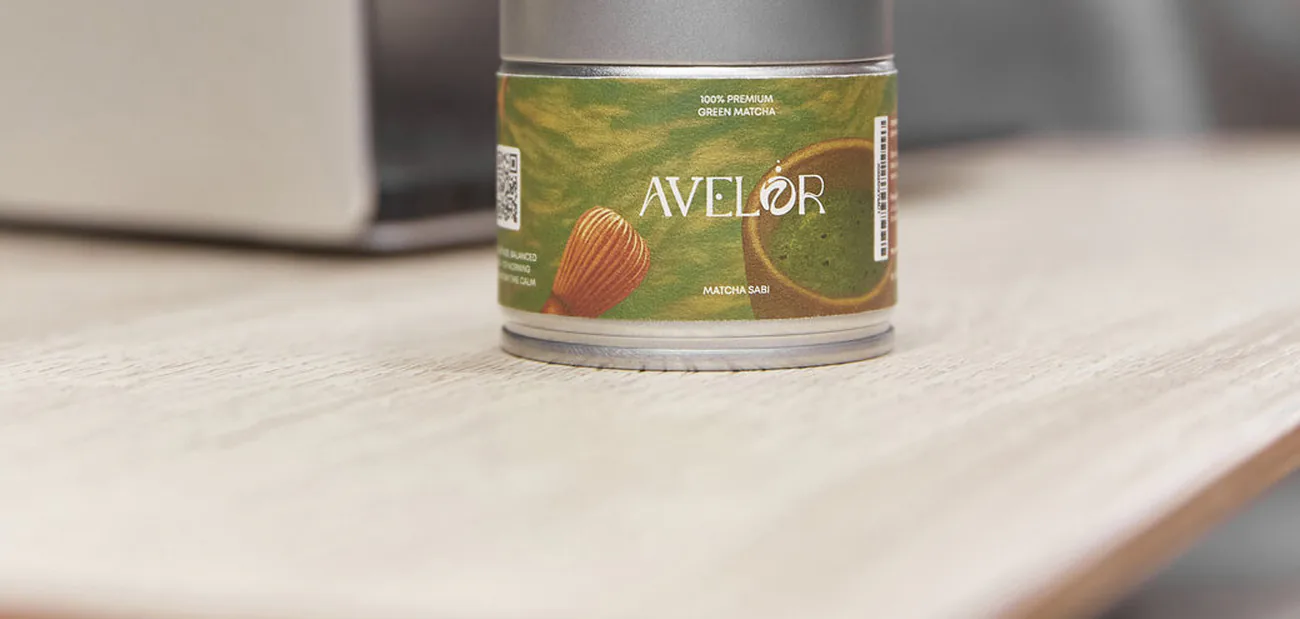
If you want to try, start with SABI — milder and friendly to people coming from coffee. Instructions: how to make matcha step by step. And if you are adding matcha to a menu where coffee rules, check the wholesale terms.
Does matcha have more caffeine than coffee?
A serving of matcha (2 g) contains 60–70 mg of caffeine, roughly the same as an espresso and less than a large filter coffee (95–165 mg). The difference is not the amount but the pace of release.
Why is there no energy crash after matcha?
Because of L-theanine, an amino acid coffee does not contain. It slows caffeine absorption, so energy holds steady for 4–6 hours instead of producing a peak and a drop.
Is matcha better for the stomach than coffee?
Usually yes. Coffee is acidic (pH around 4.8–5.1) and stimulates gastric acid, while matcha is mildly alkaline (pH around 7.5–8.5). People with reflux or excess stomach acid tolerate it far better.
Can I drink matcha in the afternoon?
Yes — it is one of its main uses. The caffeine is released gradually, so a bowl at 3 p.m. usually does not disturb sleep, unlike coffee at the same hour.
Can matcha replace coffee entirely?
It can, but it need not. The most common pattern is coffee in the morning and matcha in the afternoon. If you switch completely, drink two bowls a day for the first week to avoid a withdrawal headache.
Why do I get a headache after switching to matcha?
That is caffeine withdrawal, not an effect of matcha. Coffee delivered it in one hit; matcha spreads the same dose over time. Drink two bowls a day for the first week and it usually passes.
Does a matcha latte have fewer calories than a coffee with milk?
Matcha itself has about 3 kcal, the same as black coffee. Calories come from the milk and any syrup, not from the base. A matcha latte is higher only because cafés sweeten it to mask the bitterness of cheap powder.
Can I drink matcha and coffee on the same day?
Yes. Just add up the caffeine: an espresso plus two bowls of matcha is already around 200 mg. For most adults the commonly cited guide is about 400 mg a day.