L-theanine in matcha — what it is, how much there is, and what is really known about the duo with caffeine
Every description of matcha mentions “L-theanine” — usually next to a promise of calm and focus. Here it is in order: what the compound is, why matcha has more of it than other teas, what studies of its combination with caffeine showed, and where science ends and marketing begins.
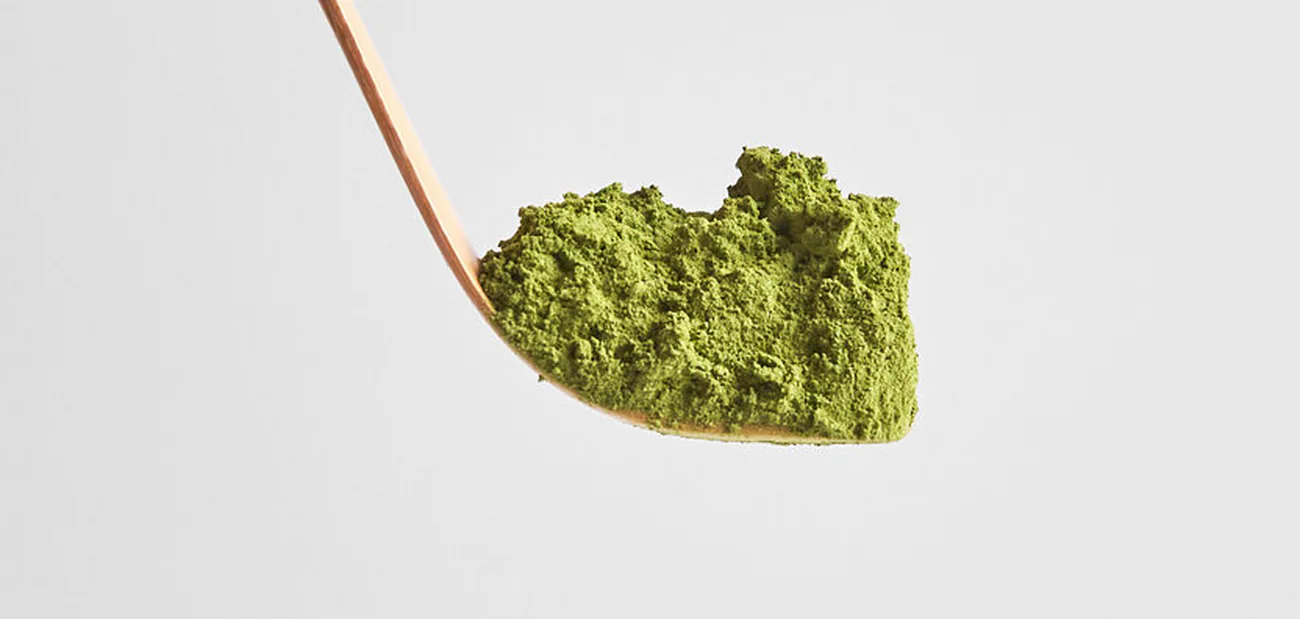
If you know one thing about matcha besides the fact that it is green, it is probably this: it contains L-theanine. The word appears on packaging, on café menus and in every text about “calm energy”. What rarely follows is an explanation of what the compound actually is, how much a serving holds and where its reputation came from. This article is about exactly that — no promises, with numbers wherever we have them.
What L-theanine is
L-theanine is an amino acid — the same family of compounds that proteins are built from, except that it does not occur in proteins; the plant carries it as a free molecule. Chemically it is a derivative of glutamine. Outside the tea plant it is rare in nature (it has been described in one species of mushroom), which is why it is called “the tea amino acid”. It was isolated in 1949 from the leaves of shade-grown tea — and that is no coincidence, as we will see in a moment.
In the leaf, L-theanine is responsible for two things you can taste without a laboratory: sweetness and umami. It is what makes good matcha drunk plain taste creamy and “brothy” in the background rather than bitter. If you have wondered what matcha should taste like, you are largely asking about theanine.
Why matcha has more of it than ordinary green tea
The plant produces L-theanine in its roots and transports it to the leaves. There, under the influence of light, the amino acid is gradually converted into catechins — the compounds responsible for astringency and bitterness. A leaf grown in full sun therefore has less theanine and more catechins; a leaf grown in shade keeps its theanine.
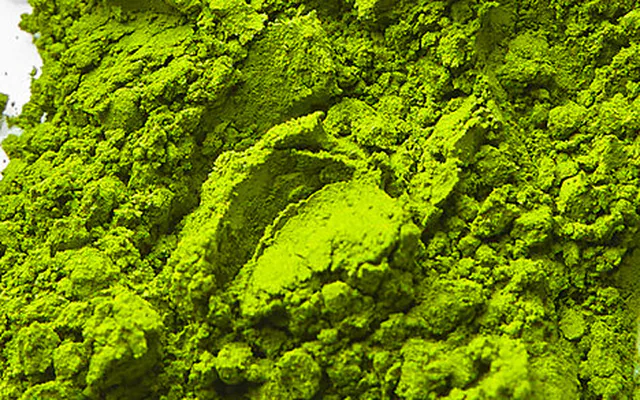
Matcha bushes are covered with nets for several weeks before harvest for exactly this reason. Shading does three things at once: it retains theanine, raises chlorophyll (hence the intense green) and lowers catechins. Then there is a second factor: when you drink matcha, you consume the whole ground leaf, not an infusion. With ordinary green tea only what the water manages to extract reaches the cup; with matcha — everything that was in the leaf.
For the same reason ceremonial grade has more theanine than culinary grade: the first, youngest leaves from bushes shaded for longer carry the season’s highest concentration of amino acids. Later harvests are shaded less, are older and richer in catechins — hence their bitterness, which does not matter in a cake but does in a bowl.
How much L-theanine is in a serving of matcha
Here it has to be said honestly: the spread is wide. Analyses of matcha report anything from the low teens to over forty milligrams per gram of powder, depending on shading, harvest and line. For a standard 2 g serving that gives a figure in the tens of milligrams — roughly the same as, or a little less than, the caffeine, of which the same serving holds 60–70 mg.
| Drink | L-theanine per serving | Caffeine per serving |
|---|---|---|
| Ceremonial matcha, 2 g in water | tens of mg | 60–70 mg |
| Loose-leaf green tea, infusion of 2 g | a few to a dozen mg | 20–40 mg |
| Espresso | 0 | 60–80 mg |
Two things from this table are worth remembering. First, coffee contains no theanine at all — a real chemical difference between the drinks, not a slogan. Second, the theanine-to-caffeine ratio in matcha is unusually favourable precisely because the leaf was shaded and ground whole.
L-theanine and caffeine: what the studies showed
Theanine’s reputation comes from a series of studies in which volunteers were given it together with caffeine while attention, reaction time and self-rated arousal were measured. In many of them the combination behaved differently from caffeine alone: participants described alertness without jitteriness, and attention scores were sometimes better than with caffeine on its own. This is the basis of the phrase “calm energy” that has attached itself to matcha.
Three caveats that marketing leaves out:
- Doses. Typical studies gave 100–250 mg of L-theanine — several times more than one bowl contains. Whether the effect scales down to a 2 g serving is not known.
- Caffeine lasts just as long. L-theanine does not speed up its breakdown — the half-life is still 5–6 hours, so matcha works for the same length of time whether theanine is in it or not. What may change is the character of the sensation, not its presence.
- The law. In 2011 the European Food Safety Authority assessed applications for health claims about L-theanine — concerning concentration, stress and sleep — and found none of them substantiated. In the EU it is therefore not permitted to state on a package or in a shop that theanine “improves concentration” or “reduces stress”. We do not say it either.
What remains once the promises are subtracted is still interesting: many people describe the lift from matcha as gentler and more even than from coffee, and the chemistry of the leaf gives that a plausible explanation. It is an observation, not a guarantee — and should be treated as such.
Does matcha with theanine calm you down or help you sleep?
No. This is the most common misunderstanding about the amino acid. Theanine may change how you experience caffeine, but the caffeine in the bowl stays there in full — 60–70 mg, as much as an espresso. Matcha drunk in the evening “because it has theanine” will act like any caffeinated drink. The details, and the eight-hour rule, are in our article on matcha and sleep.
How to prepare matcha without losing theanine
Theanine dissolves readily in water, cold water included, and is relatively stable. Catechins and tannins — responsible for bitterness — come out of the leaf more strongly the hotter the water. Three practical rules follow from this asymmetry:
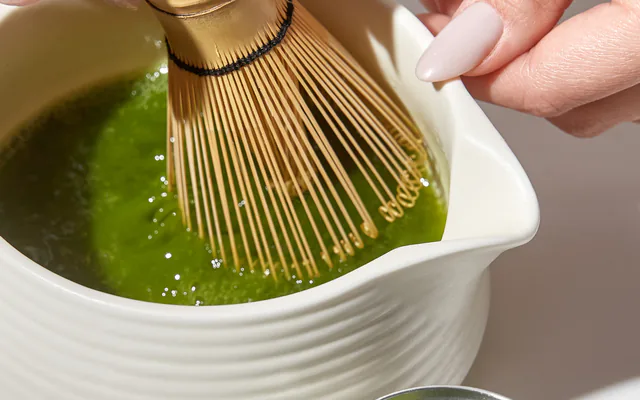
- Water at 70–80 °C, never boiling. Not because boiling water “destroys” theanine, but because it extracts more catechins, which cover up its sweetness. More in our guide to water temperature for matcha.
- Cold matcha tastes sweeter. Theanine dissolves in cold water; catechins do so to a far lesser extent — which is why cold brew and iced latte rarely need sweetening.
- Freshness. Once the tin is open, amino acids oxidise faster than catechins. Old matcha does not become more bitter — it stops being sweet, because its theanine is dwindling and the bitterness is left without a counterweight. That is why a tin is best finished within 4–6 weeks and kept sealed, cool and dark.
Which matcha has the most theanine
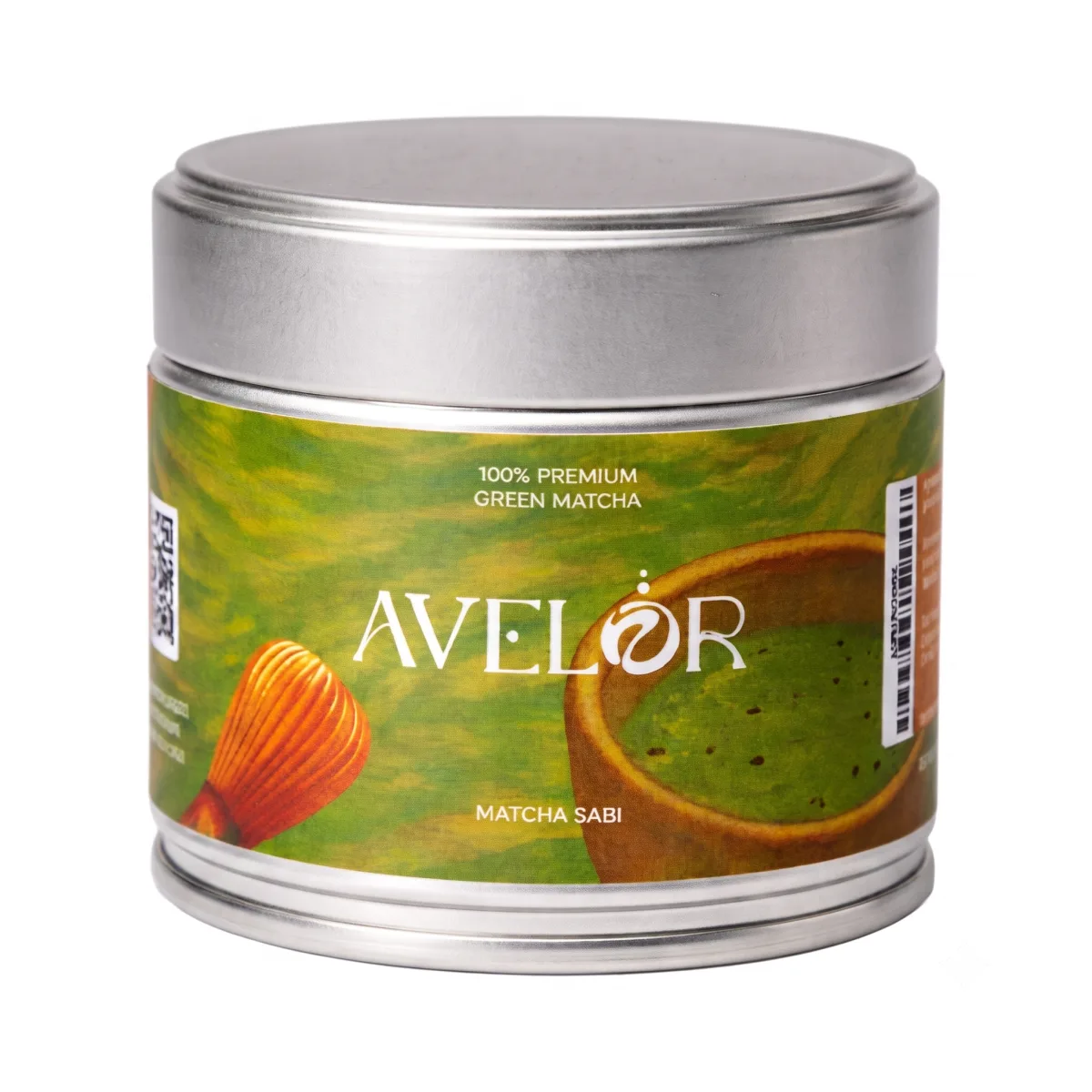
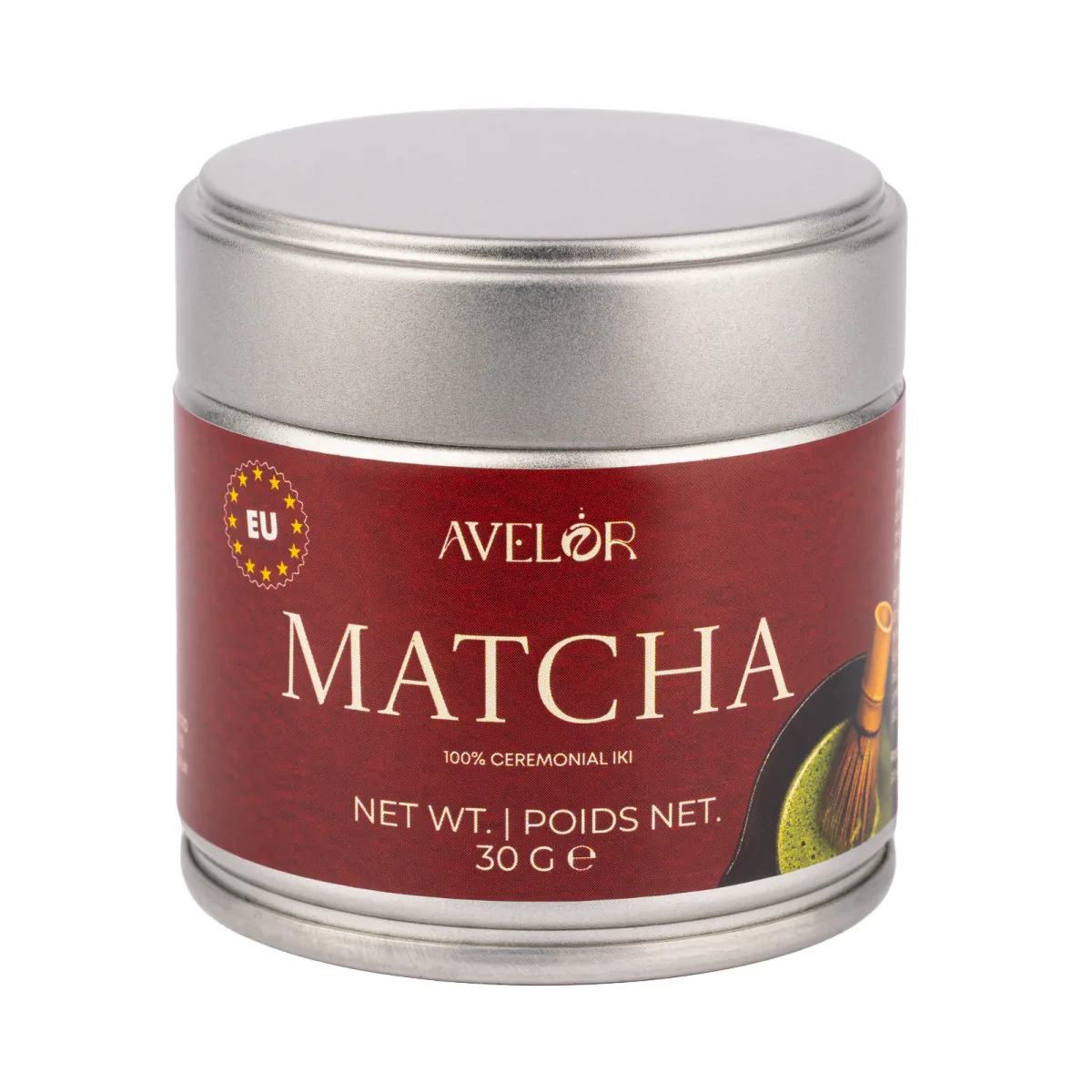
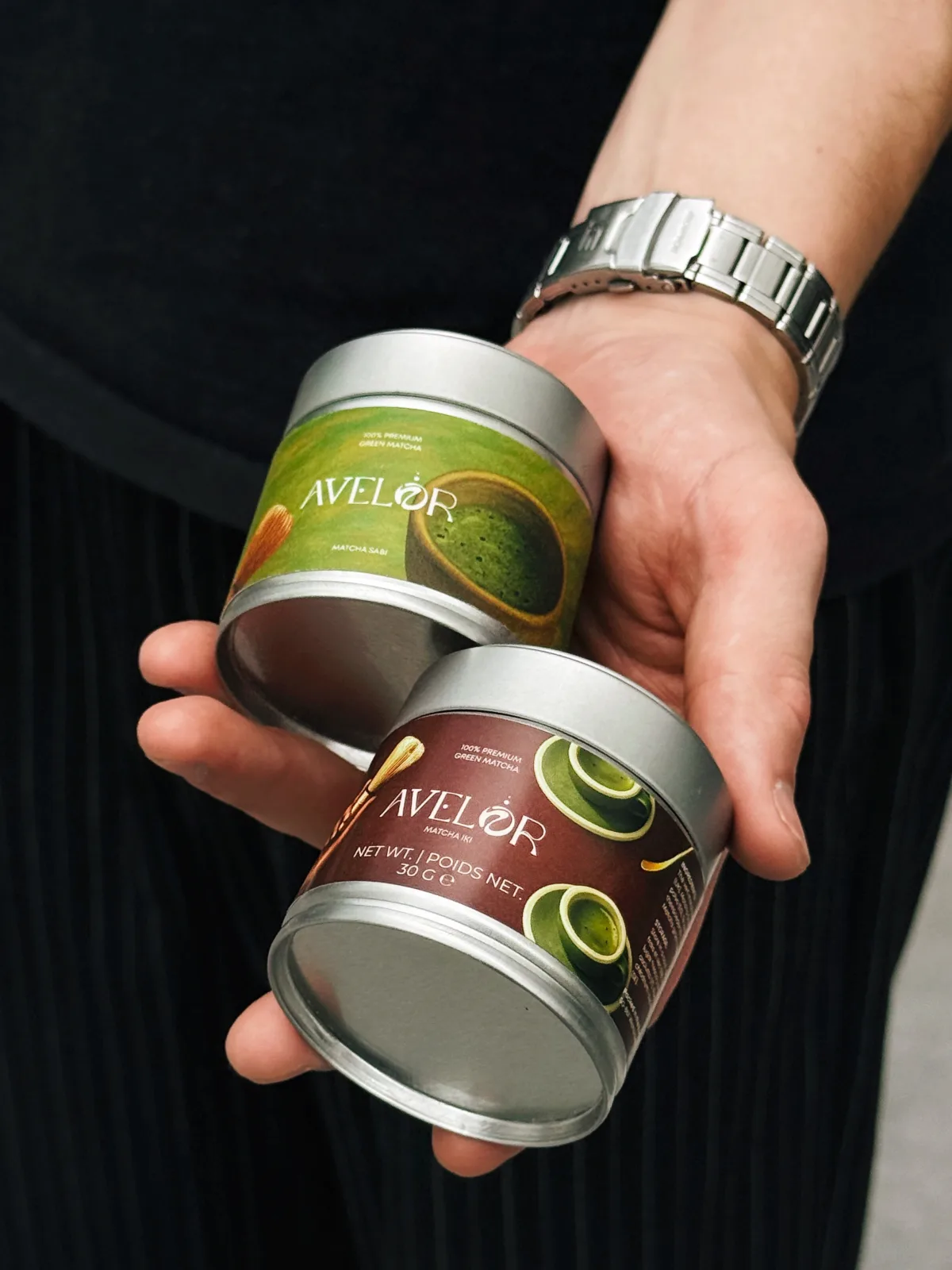
We do not measure theanine in every batch and will not pretend to know the figure to the milligram. What we do know is what it depends on: shading, the youth of the leaf and whether it is the first harvest. IKI and SABI come from the first harvest — IKI from the youngest leaves, with an intense, creamy umami; SABI gentler, for every day. OMI has a pronounced umami and low bitterness, which is the same signal in the taste. To compare, the overview of the three lines is here, and the simplest test is a plain bowl: sweetness and the absence of bitterness are theanine you can taste without a laboratory. Every Avelor batch is lab-tested for purity — that is a different analysis from amino-acid content, and we do not confuse one with the other.
In short
L-theanine is the tea amino acid responsible for matcha’s sweetness and umami. There is a lot of it because the bushes grow in shade and the whole leaf is consumed; a 2 g serving gives tens of milligrams. Studies of its combination with caffeine are interesting, but used higher doses, and in the EU no health claims may be made on their basis. It does not remove caffeine and does not shorten its effect. There is most of it in young, shaded first-harvest leaf, prepared with water below 80 °C and drunk while the tin is fresh.
What is L-theanine?
An amino acid found almost exclusively in tea leaves, chemically a derivative of glutamine. In the leaf it is responsible for sweetness and umami; it does not occur in proteins — the plant stores it as a free molecule.
How much L-theanine is in a serving of matcha?
Tens of milligrams in a 2 g serving. Analyses of matcha report from the low teens to over forty milligrams per gram, depending on shading, harvest and line. The same serving holds 60–70 mg of caffeine.
Why does matcha have more L-theanine than ordinary green tea?
For two reasons: matcha bushes are shaded before harvest, which keeps theanine in the leaf instead of converting it into catechins, and when you drink matcha you consume the whole ground leaf, not just an infusion.
Does L-theanine remove caffeine or shorten its effect?
No. The caffeine in a serving of matcha stays there in full and its half-life is still 5–6 hours. Studies describe a different character of the perceived stimulation, not a shorter duration.
Is it allowed to say that L-theanine improves concentration?
Not in the European Union. In 2011 EFSA assessed health-claim applications for L-theanine and found none substantiated, so such statements on food are prohibited. Studies of theanine combined with caffeine exist, but used doses higher than one bowl.
Does boiling water destroy L-theanine?
Not in any practical sense — theanine is fairly stable. The problem with boiling water is different: it extracts more catechins and tannins, which cover the sweetness of theanine. That is why matcha is prepared with water at 70–80 °C.
Try it yourself
 How much caffeine is in matcha — compared with coffee, cola and energy drinks
9 min read
 How long does matcha last — a timeline of one serving, from the first sip to the last milligrams of caffeine
7 min read
 Matcha and sleep — will it keep you up, how late to drink it, and where the calming myth comes from
8 min read