Ceremonial matcha in healthy food — benefits, brewing, and why cafés love it
Powdered green tea has become a symbol of healthy living — from morning rituals to the menus of the best cafés. Here is what ceremonial matcha really is, what science says about it, and how to get the most out of it.
A decade ago matcha was a curiosity for a small circle of tea enthusiasts. Today it is one of the fastest-growing segments of the healthy-food industry: it appears in morning rituals instead of espresso, on café menus next to flat whites, and in artisan patisserie desserts. That growth is not about a fashionable colour — matcha simply delivers what healthy eating has been looking for: clean energy with no sugar and no jitters.
What is ceremonial matcha?
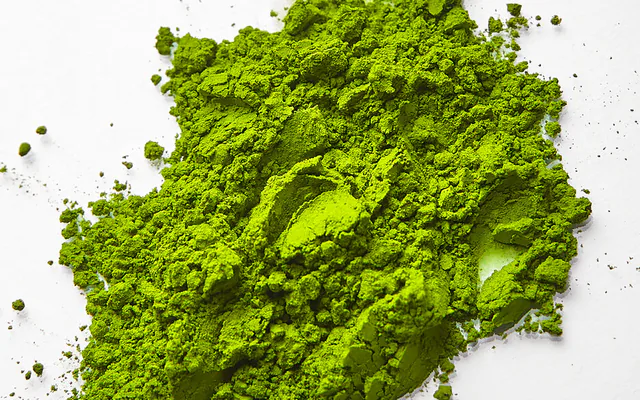
Ceremonial matcha is the highest grade of powdered green tea. A few weeks before harvest the bushes are covered with nets — growing in shade, the leaves accumulate more chlorophyll and L-theanine. Only the youngest first-harvest leaves are picked; stems and veins are removed and the pure leaf flesh is slowly stone-ground into a silky-fine powder.
- Colour: vivid, electric green instead of dull olive.
- Taste: creamy umami and natural sweetness — none of the bitterness that dominates cheaper powders.
- Use: ceremonial grade shines drunk straight or as a latte; culinary grade is mostly for baking.
If you drink matcha straight or make lattes, ceremonial grade is not a luxury — it is the condition for the drink to taste good at all. See what first-harvest ceremonial matcha looks like →
Matcha benefits: what science says
- L-theanine + caffeine. Matcha combines natural caffeine (about 60–70 mg per serving) with L-theanine, an amino acid that supports focus. The effect is often described as “calm alertness”: energy releases gradually over 4–6 hours, without coffee’s spike and crash.
- Catechins (EGCG). Matcha is one of the richest natural sources of catechin antioxidants, which research links to metabolic support and protection against oxidative stress.
- Zero sugar, clean label. A serving of matcha is about 3 kcal. In an industry where customers read labels, a drink whose ingredient list says “100% tea leaf” defends itself.
Matcha vs coffee — which to choose?
It is not a better-or-worse contest but a difference in the character of energy. Coffee hits fast and hard, but for many people ends in a crash and irritability. Matcha starts gently and holds a steady level for longer — which is why creatives, athletes and anyone whose heart rate spikes on espresso choose it. Increasingly it complements rather than replaces coffee: espresso in the morning, matcha in the afternoon — no sleepless nights.
How to brew matcha step by step
- Sift 1–2 g (a level teaspoon) through a strainer into the bowl — the drink will be smoother.
- Pour 30 ml of water at 70–80 °C. Never boiling — heat draws out bitterness.
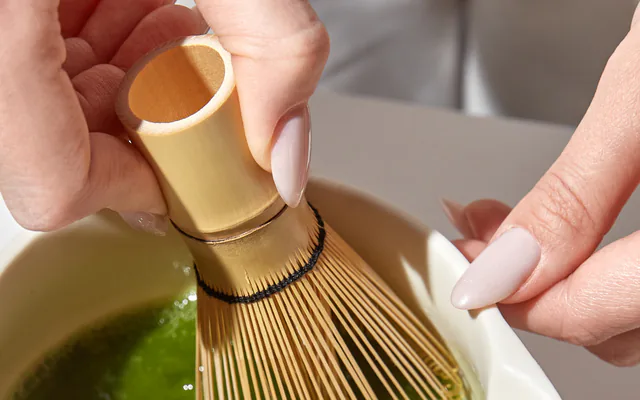
- Whisk with a bamboo chasen in a “W” motion for 15–20 seconds until a velvety foam appears.
- Drink straight or top up with milk — a perfect matcha latte with no syrups or sugar.
To start you need a bowl, a strainer and a chasen — all included in our ceremonial set; for first tries the best choice is SABI 30 g.
Matcha in food service: why cafés love it
For cafés and patisseries matcha is that rare product which builds the brand and earns money at the same time. A serving is just 2 g of powder, so a kilogram yields around 500 drinks — at typical matcha-latte prices the margin per cup is among the highest on the menu. Add a colour that does its own social-media marketing and a customer who actively looks for sugar-free options. One condition: repeatable quality batch after batch — guests come back for the taste. See the B2B offer and calculate your margin →
How to recognise good matcha
- Colour: intense, vivid green. Olive or yellowish tones betray older leaves or poor storage.
- Harvest: first harvest — young leaves give sweetness and umami.
- Lab tests: a reliable seller tests batches in a laboratory and says so openly.
- Freshness: airtight packaging, cool and dark storage; best within 4–6 weeks of opening.
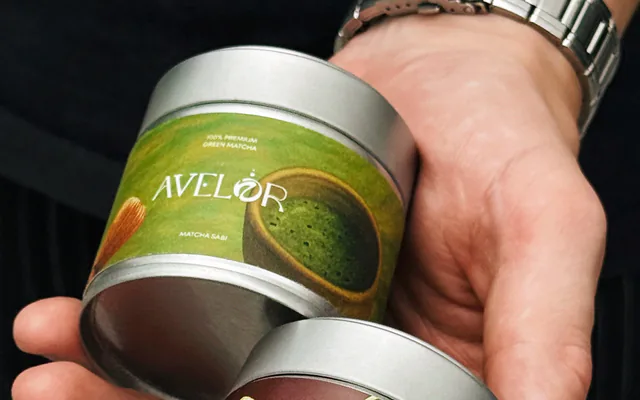
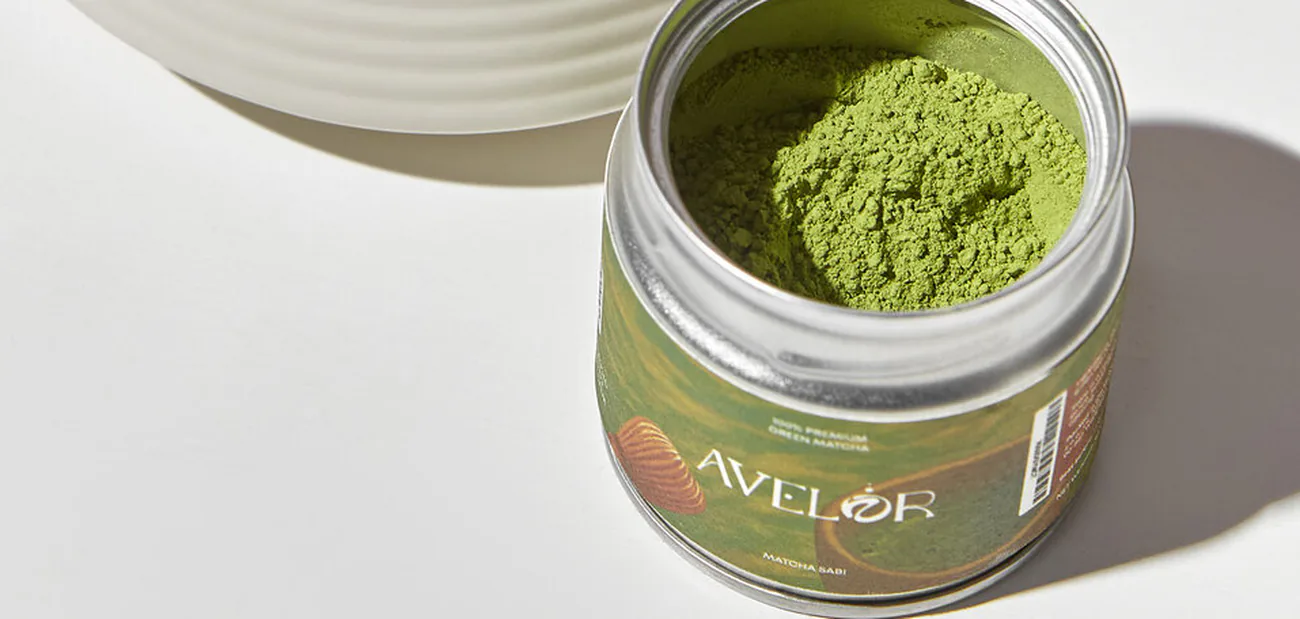
At Avelor we import exclusively first-harvest ceremonial matcha — IKI with a vivid, vital energy and SABI with a creamy, gentle profile. Every batch is lab-tested.
How is ceremonial matcha different from regular matcha?
Ceremonial matcha is made only from young, shade-grown first-harvest leaves, stone-ground in granite mills. It has a vivid green colour, creamy umami and no bitterness. Culinary grades come from later harvests — darker and bitter, suited mainly to baking.
How much caffeine does matcha have?
A 2 g serving contains about 60–70 mg of caffeine — similar to an espresso. Thanks to L-theanine the energy releases gradually over 4–6 hours, without a spike and crash.
What water is best for matcha?
Water at 70–80 °C. Boiling water destroys the delicate amino acids and draws out bitterness — the most common first-time mistake.
Is matcha healthier than coffee?
Matcha provides catechins (EGCG) and L-theanine, which coffee lacks, and its caffeine acts more gently and for longer. For people sensitive to coffee it is usually a more pleasant source of energy — though both drinks have their place in a healthy diet.